
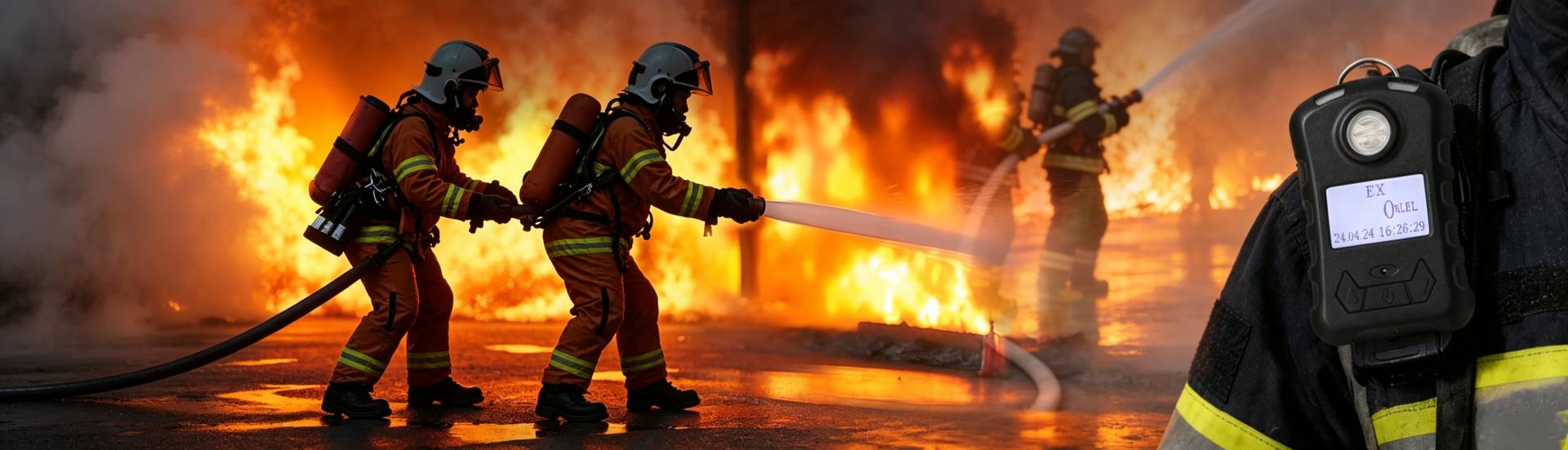
Zero calibration of portable four-in-one gas detector: complete operation guide
Portable four-in-one gas detector is a common safety detection equipment in industrial production and limited space operation, which can detect combustible gas, oxygen, carbon monoxide and hydrogen sulfide at the same time. By monitoring the concentrations of various gases in the environment in real time, it can help workers find potential gas hazards in time.
In order to ensure the accuracy and reliability of the test data, it is very important to calibrate the zero point correctly. This paper will introduce in detail the function, operation method and matters needing attention in the zero calibration of portable four-in-one gas detector.
What is zero calibration?
Zero calibration refers to adjusting the basic reading of gas sensor under the known zero reference condition, so that the sensor can establish the correct reference value.
In the process of long-term use, the gas sensor may be affected by temperature, humidity, sensor aging, environmental pollution and long-term work, resulting in a certain degree of zero drift.
If the zero point of the sensor is deviated, the gas detector may still display a certain gas concentration without the target gas, thus affecting the actual detection results.
Correct zero calibration can help the gas detector to restore stable reference reading and provide more reliable data for subsequent gas concentration detection.
What gases can the four-in-one gas detector detect?
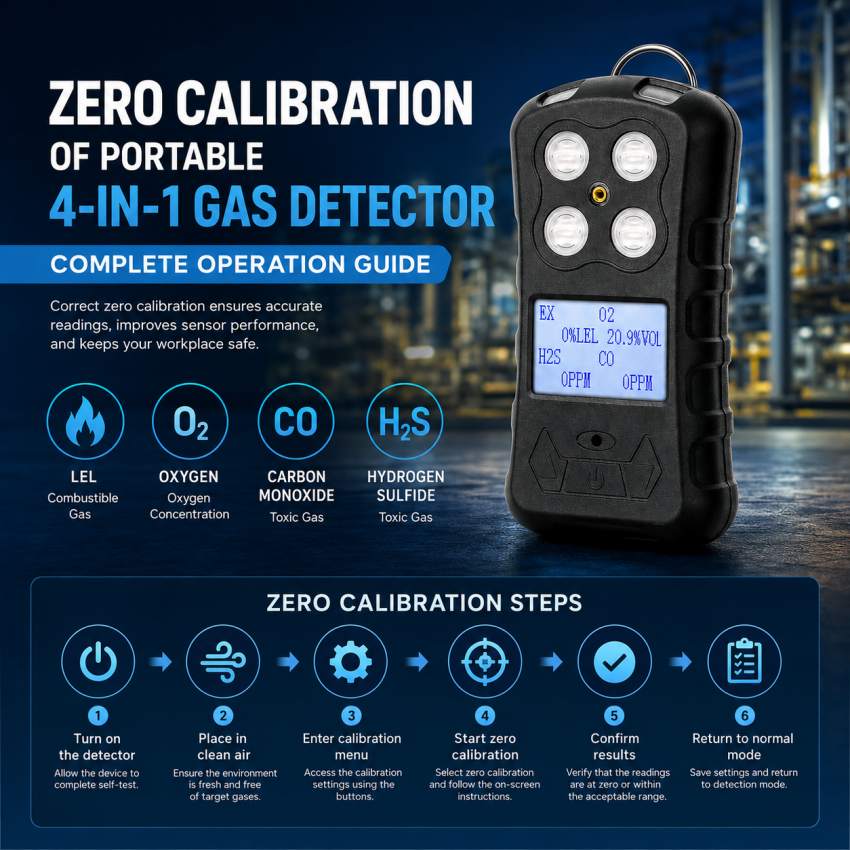
Common portable four-in-one gas detector mainly detects the following four gases:
- LEL: combustible gas concentration
- O: oxygen concentration
- CO: carbon monoxide
- Hs: hydrogen sulfide
These gases correspond to different safety risks in the industrial environment. Flammable gas may cause fire or explosion danger after reaching a certain concentration; Abnormal oxygen concentration may lead to personnel hypoxia or other safety problems; CO and HS are toxic gases and need to be continuously monitored.
Why is zero calibration important?
Accurate zero calibration is the basis to ensure the normal operation of gas detector.
Regular zero calibration can help:
- Improve gas detection accuracy
- Reduce sensor zero drift
- Keep the test reading stable.
- Improve the reliability of alarm function
- Timely detection of sensor anomalies
- Provide reliable gas detection data for limited space operation.
- Prolong the stable working time of the equipment.
For oil, natural gas, chemical industry, mines, sewage treatment and limited space operations, zero calibration should be a part of daily equipment inspection and maintenance.
How to calibrate the zero point of portable four-in-one gas detector?
Different models of gas detectors may be different in menu and key operation, but the basic zero calibration process is usually similar.
Step 1: Turn on the gas detector.
First, turn on the portable four-in-one gas detector, so that the equipment can complete the normal self-test.
Check the sensor status on the display screen, the battery level and whether there is a sensor fault or an alarm prompt.
If the equipment has abnormal conditions such as sensor failure and low battery, the related problems should be solved first, and then the calibration should be carried out.
Step 2: Place the detector in a suitable environment.
Place the gas detector in a known clean air environment, or operate according to the zero calibration conditions specified in the equipment manual.
During calibration, zero calibration should be avoided in the presence of combustible gas, toxic gas or other environment that may interfere with the sensor.
If the target gas already exists in the surrounding environment, the detector may mistakenly take the actual gas concentration as zero, which will lead to the deviation of the subsequent detection data.
Step 3: Enter the calibration menu.
Enter the calibration setting menu of gas detector according to the specific model.
Some devices may need to enter a password when entering the calibration menu, or they may need to operate according to a specific key combination.
After entering the calibration interface, select the corresponding sensor or zero calibration function as needed.
Step 4: Start zero calibration.
Select the zero calibration function and follow the prompts on the device screen.
During calibration, the detector should be kept stable to avoid the equipment contacting the target detection gas.
For different types of sensors, the zero reference conditions may be different, so it should be set in strict accordance with the operating instructions of the corresponding products.
Step 5: Confirm the calibration results.
After the zero calibration is completed, return to the normal detection interface and check the display data of each sensor.
Under the normal zero reference environment, the relevant sensors should display the reference readings that meet the requirements of the equipment.
If a sensor still displays abnormal data after calibration, it is not recommended to simply repeat the calibration, but to further check the possible problems.
Common reasons include:
- Sensor aging
- Sensor is contaminated.
- The calibration environment is incorrect.
- Changes in ambient temperature or humidity
- Sensor failure
- Device parameter setting is abnormal.
If necessary, the sensor should be inspected or replaced by professionals.
What is the difference between zero calibration and range calibration?
Zero Calibration and Span Calibration) are two different calibration methods.
Zero calibration is mainly used to establish the basic reading of the sensor under zero or specified reference conditions.
Range calibration is to use the standard calibration gas with known concentration to adjust or verify the response of the sensor at a specific concentration.
In professional gas detection applications, zero calibration and range calibration may be required at the same time according to the equipment model, sensor type and actual use environment.
When do you need to calibrate the gas detector?
The specific calibration period should be determined according to the sensor type, the use environment, the frequency of equipment use and the manufacturer’s suggestion.
In the following cases, zero calibration or calibration check can be considered:
- Before carrying out important gas detection operations.
- Reuse equipment after long-term storage.
- The detector has abnormal reading.
- The use environment has changed obviously.
- During regular equipment maintenance
- When calibrating according to the requirements of enterprise safety management system
In addition, before using the gas detector for safe operation, it is also possible to check whether the sensor and alarm function can respond normally through bump test and standard gas with appropriate concentration.
Application field of portable four-in-one gas detector
Portable four-in-one gas detector is suitable for working environment where there may be many gas hazards, such as:
- Oil and gas industry
- Petrochemical enterprises
- Chemical production workshop
- mine
- Sewage treatment plant
- Industrial equipment maintenance
- Limited space operation
- Inspection of storage tanks and pipelines
- public service
- Emergency safety inspection
Small and portable design is convenient for workers to carry around, and can be used for daily inspection, equipment maintenance and dangerous area operations.
HIREP portable four-in-one gas detector
HIREP portable four-in-one gas detector is mainly used to detect LEL, O, CO and HS at the same time, which provides a convenient gas monitoring solution for industrial safety detection and limited space operation.
The portable device can display the gas concentration in real time. When the detected gas concentration reaches the set alarm value, it can give an alarm to the staff by means of sound, light and vibration.
In order to ensure the long-term good detection performance of the detector, it is suggested that zero calibration, range calibration and function test should be carried out regularly according to the product specifications of specific models and the requirements of the use environment.
summary
Zero calibration is an important operation to maintain the detection performance of portable four-in-one gas detector. Correct zero calibration can help the sensor to establish a stable reference reading, reduce zero drift and improve the reliability of combustible gas, oxygen and toxic gas detection.
It should be noted that zero calibration cannot replace regular function test, range calibration, sensor inspection and professional maintenance. In actual use, a reasonable calibration and maintenance plan should be made according to the requirements of the equipment manufacturer, and certified standard calibration gas should be used when necessary.
HIREP focuses on portable gas detectors, fixed gas detectors and industrial gas detection solutions, providing professional gas safety detection equipment for industries such as oil and gas, chemical industry, mining and limited space operations.


 WhatsApp: 8619339980364
 E-mail: contact@hirepsafety.com