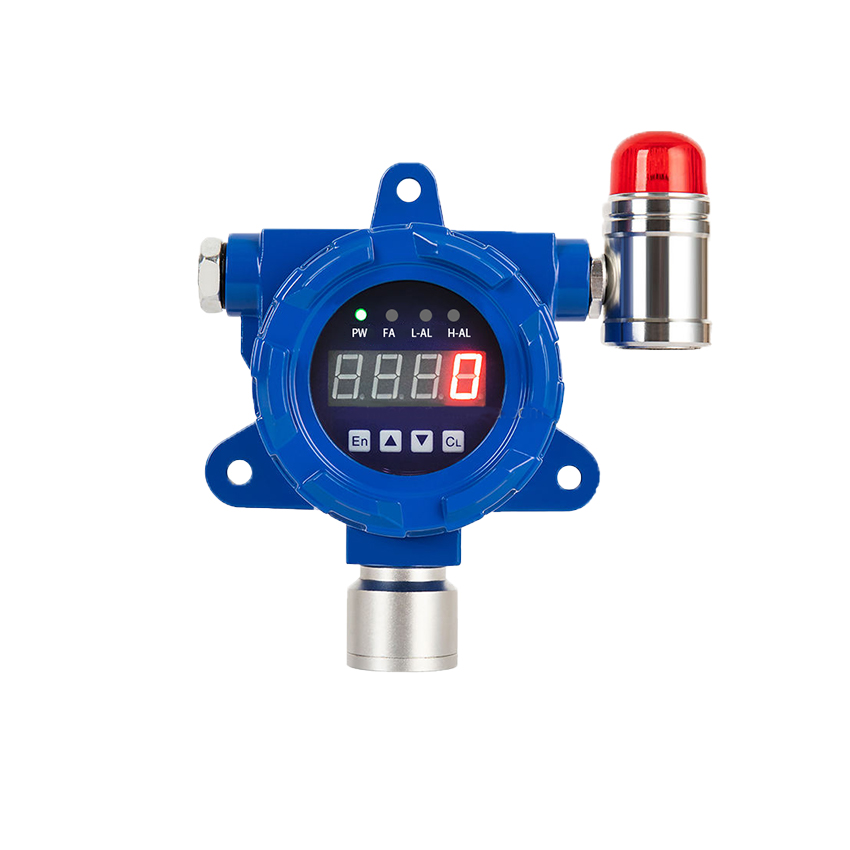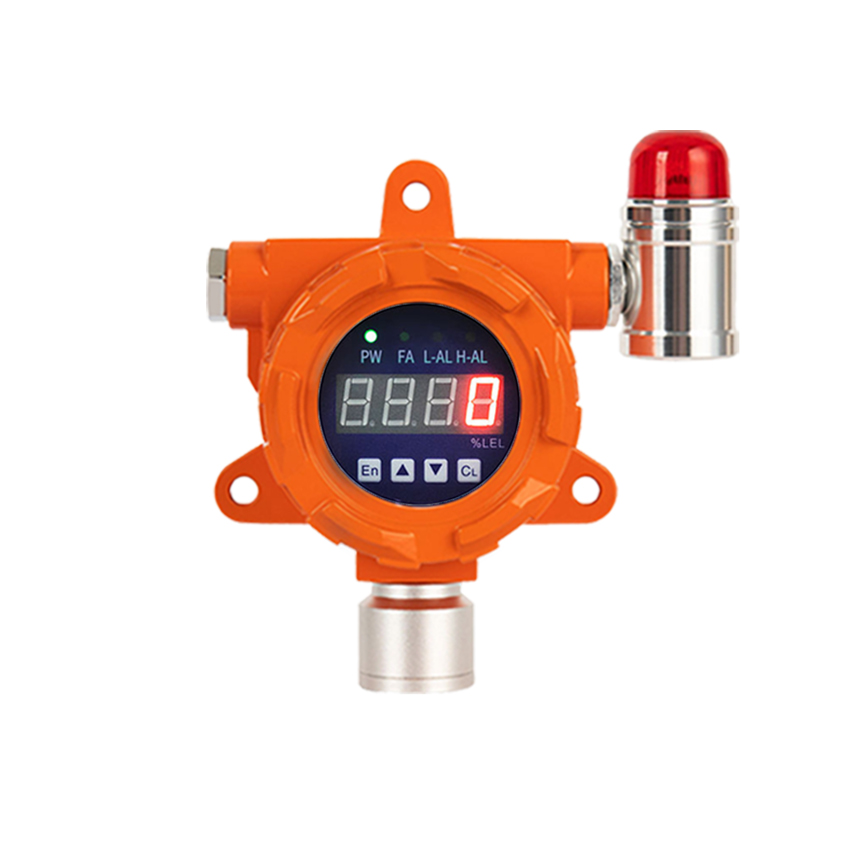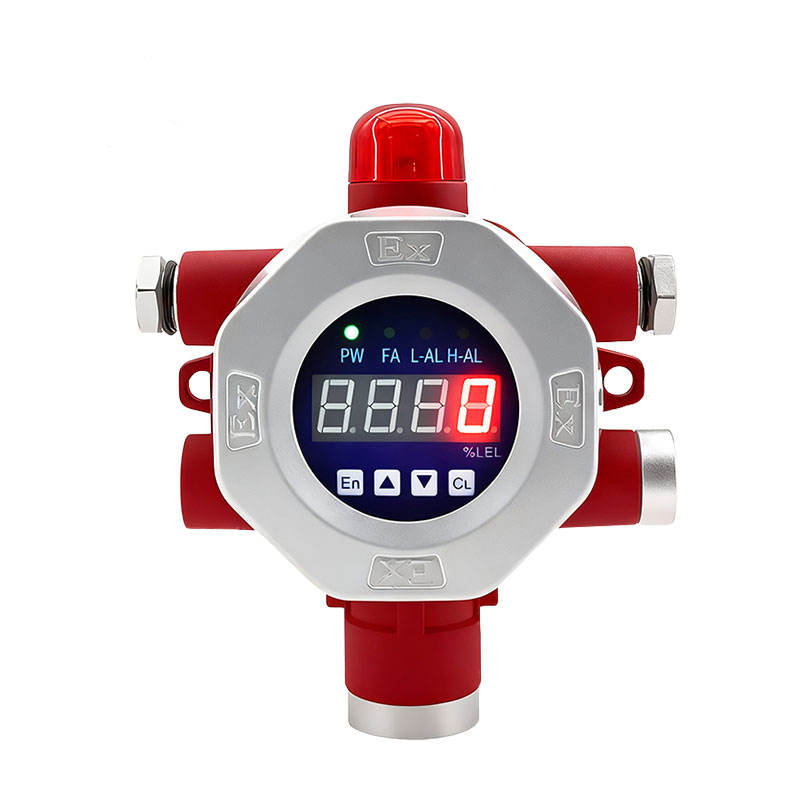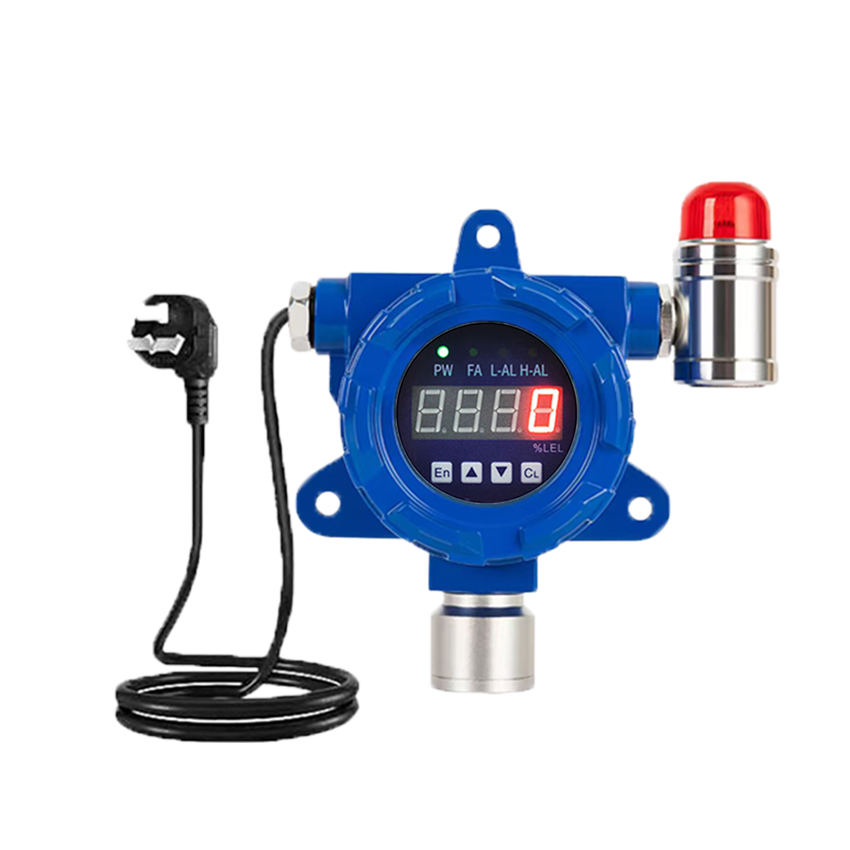
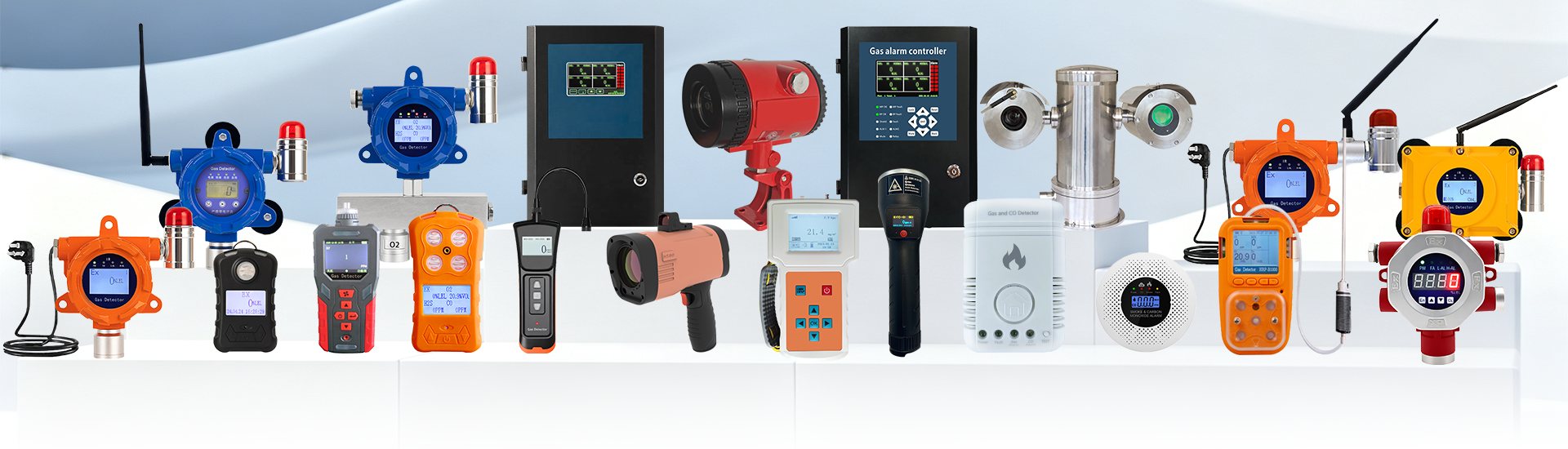
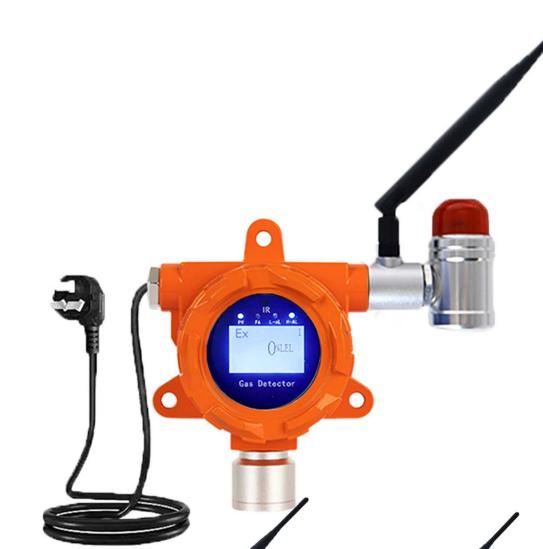
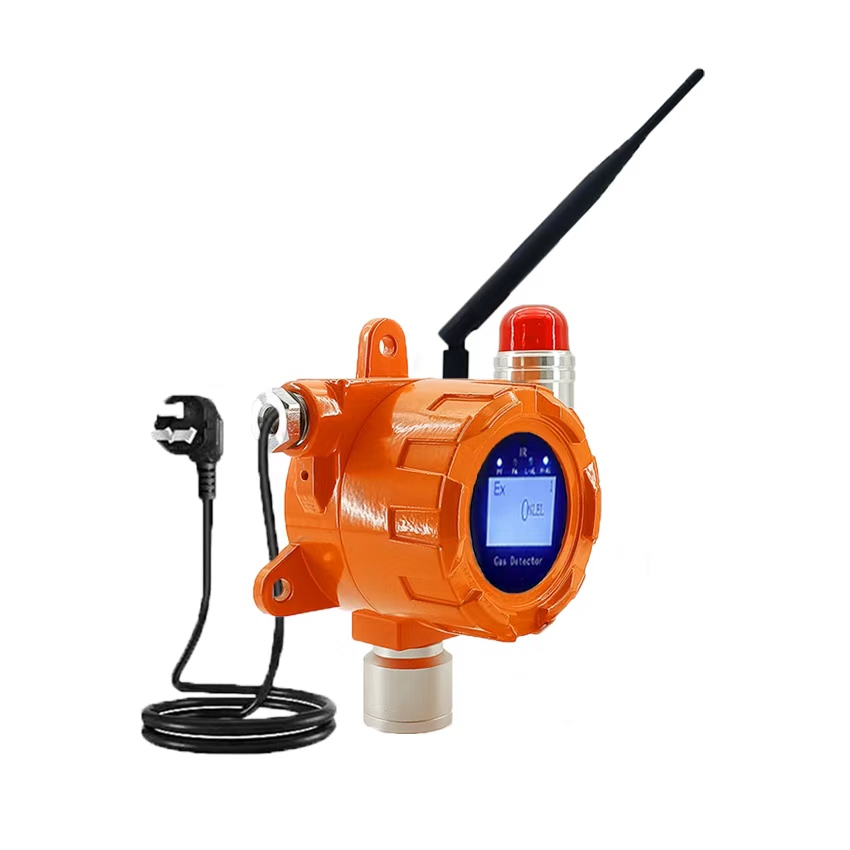
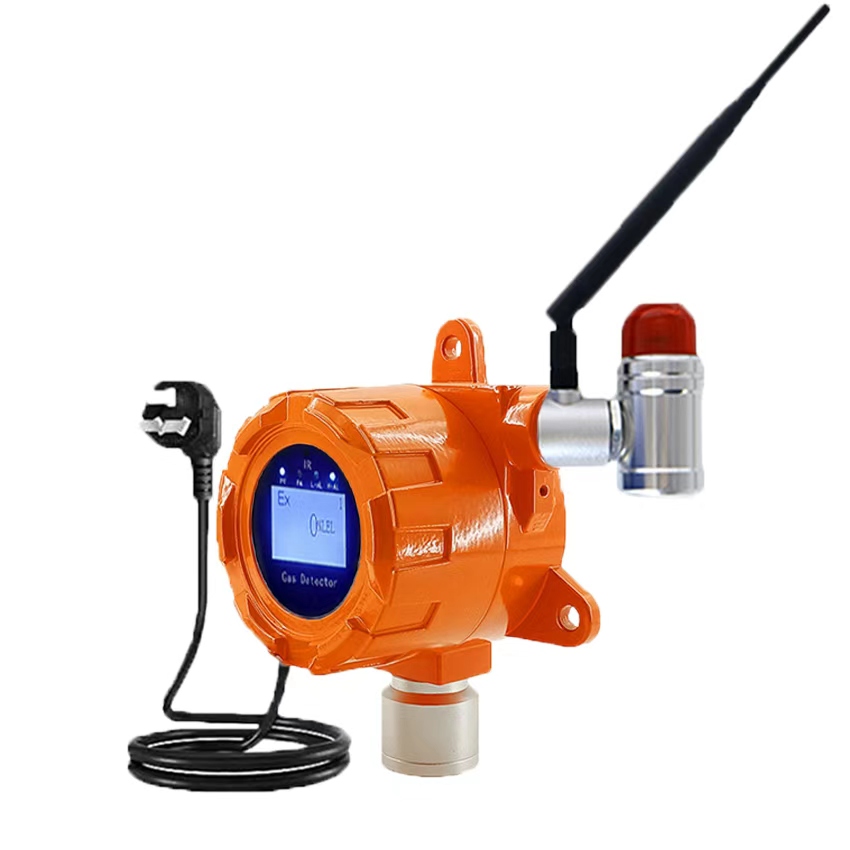
Lora Wireless Gas Detector HRP-T1000-E
Industrial-grade gas monitoring equipment equipped with a dedicated LoRa spread spectrum communication module is designed for large factory areas, concentrated multi-point locations, and complex obstruction scenarios, enabling long-distance, low-power, and low-cost centralized monitoring via wireless networking.


-
High precision
-
Global Shipping
-
Customized
-
24*7 support
-
OEM/ODM
- Features
- Parameters
- Accessories
- Gases and Ranges
Hrp T1000-E industrial-grade gas monitoring equipment equipped with a dedicated LoRa spread spectrum communication module is designed for large factory areas, concentrated multi-point locations, and complex obstruction scenarios, enabling long-distance, low-power, and low-cost centralized monitoring via wireless networking.
The following is a list of five other advantages of the fixed gas detector with socket (modular):
1.Non-invasive debugging to ensure operation safety
With the magnetic bar or infrared remote control function, workers can complete debugging or replace modules in dangerous areas without opening the equipment shell. This eliminates the risk of electric spark that may be caused by opening the cover, and also prevents non-professionals from touching the internal circuit by mistake, which greatly improves the maintenance safety in flammable and explosive environments.
2.High-speed digital bus, more stable transmission
Modern socket module usually uses digital bus technology (such as I2C and UART) to communicate, which has stronger anti-interference ability and faster and more accurate data transmission rate compared with traditional analog connection. This effectively avoids signal drift caused by line aging or electromagnetic interference, and ensures the authenticity and real-time performance of monitoring data.
3.Reduce the whole life cycle cost
This design has great economic benefits: when electronic components fail, only the electronic warehouse module needs to be replaced, and the whole machine does not need to be scrapped; The extremely fast replacement speed reduces the monitoring interruption time and reduces the risk of production stoppage; And the same host can adapt to a variety of sensors, significantly reducing the types of spare parts and the occupation of inventory funds.
4.Physical fool-proof design to prevent installation errors.
Socket modules are usually designed with physical foolproof interfaces or electronic identification pins to ensure that sensor modules can only be inserted in the right direction. This effectively prevents equipment burning or sensor damage caused by manual wiring errors (such as reverse connection of positive and negative electrodes), so that non-professional electricians can safely complete the replacement work.
5.Support offline calibration to improve management efficiency.
Some high-end modules support off-line calibration, allowing sensor modules to be removed and sent to better laboratories or clean areas for calibration and testing. This avoids disassembling the bulky whole machine or transporting the standard gas cylinder to the harsh site, which greatly improves the accuracy and work efficiency of calibration.

LoRa wireless gas detector
Industrial wireless gas monitoring solution based on LoRa technology
LoRa wireless gas detector is an industrial-grade intelligent gas monitoring equipment, which combines gas sensing technology and LoRa (long-distance low-power wireless communication) technology for real-time monitoring of combustible gas, toxic gas and oxygen concentration in industrial environment.
The equipment realizes long-distance wireless data transmission through low-power wide area network (LPWAN), which is very suitable for large industrial sites, distributed monitoring points and areas with difficult wiring or high cost.
What is LoRa wireless gas detector?
LoRa wireless gas detector is a kind of safety monitoring equipment that transmits gas concentration data through LoRa wireless communication mode, replacing the traditional 4-20mA or RS485 wired transmission mode.
It can connect multiple detection nodes to the same gateway to form a wireless gas monitoring network and realize centralized management.
This method greatly reduces the wiring cost and construction complexity, and at the same time has stronger system expansion ability.
principle of operation
LoRa wireless gas detector realizes monitoring function through continuous detection and wireless transmission;
- The built-in gas sensor continuously collects the gas concentration in the air.
- Gas molecules interact with sensors (electrochemistry, catalytic combustion or infrared).
- The sensor converts the change of gas concentration into an electrical signal.
- The internal microprocessor processes the signal to generate digital concentration data.
- Data is transmitted to the gateway device through the LoRa wireless module.
- The gateway uploads the data to the cloud platform or industrial monitoring system.
- When the gas concentration exceeds the preset threshold, the device triggers an acousto-optic alarm locally and sends a remote alarm signal.
Realize real-time security monitoring of local and remote synchronization.
Product features and advantages
Long-distance wireless communication (LoRa technology)
It supports long-distance transmission with low power consumption and is suitable for large-scale industrial scenes such as factories, pipelines and storage tanks.
Installation without wiring
There is no need for complicated wiring construction, which greatly reduces the installation cost and deployment time.
Real-time remote monitoring
Centralized monitoring can be realized through the gateway and cloud platform, and the gas data status can be viewed at any time.
Multi-gas detection capability
Can be configured to detect a variety of industrial gases, including:
- Combustible gas (LEL)
- Methane (CH₄)
- Hydrogen (H₂)
- Carbon monoxide (CO)
- Hydrogen sulfide (H₂S)
- Oxygen (O₂)
- Other industrial gases
Double alarm system
Support local acousto-optic alarm and remote alarm synchronous transmission.
Low power design
LoRa technology has the characteristics of ultra-low power consumption and is suitable for long-term stable operation.
High industrial reliability
Suitable for the following complex environments:
- hot environment
- High humidity environment
- Dust environment
- Strong electromagnetic interference environment
Flexible extended system
Multiple detection nodes can access the same LoRa gateway, which is convenient for system expansion.
Application industry
Oil and gas industry
Used for pipeline leakage monitoring, storage tank area, LNG station and offshore platform.
Petrochemical industry
Suitable for refineries, chemical storage areas and production process areas.
Industrial manufacturing industry
Used in welding workshop, spraying workshop and production environment with gas risk.
Environmental protection and waste treatment industry
Used in landfill, sewage treatment plant and biogas monitoring system.
Mining industry
Suitable for underground mines and ventilation monitoring areas.
Wisdom industrial park
It is suitable for large-scale distributed gas monitoring and centralized management system.
Why choose LoRa wireless gas detector?
Compared with the traditional wired gas detection system, the LoRa wireless solution has the following advantages:
- No wiring, faster deployment.
- Lower installation and maintenance costs
- Flexible network expansion
- Support remote real-time monitoring
- Suitable for complex industrial environment
- Greater system scalability and mobility
It is especially suitable for modern smart factories and industrial Internet of Things gas safety systems.
System value
LoRa wireless gas detector provides a new generation of industrial gas safety monitoring scheme by combining highly reliable gas sensing technology with wireless communication technology.
It not only realizes real-time detection and alarm, but also supports centralized data management, which helps enterprises to improve safety management efficiency, reduce accident risks and build an intelligent industrial monitoring system.
Single Gas Detec
- Detected Gases: Combustible gas, toxic gas
- Sample method: Diffuse naturally
- Detection Range:PPM, %LEL, %VOL, mg/m3
- Response Time: LEL<30S (T90), Toxic < 60 S
- Setting Method:Button OR Remote Control
- Power:AC 110V220V3W
- Output Signal: Lora
- Transmission Distance:<1000M
- Operating Temperature:-20C~+55C
- Relative Humidity: 95% (NON-CONDENSING)
- Explosin-Proof Rating: II 2G Ex db lIC T6 Gb
- Ingress protection: IP66
- Enclosure Material: Die-cast aluminum
- Dimersions: 195x 185 x 95 m
- Product Weight:<1000g
- Connection Thread:M20x 1.5 or G1/2

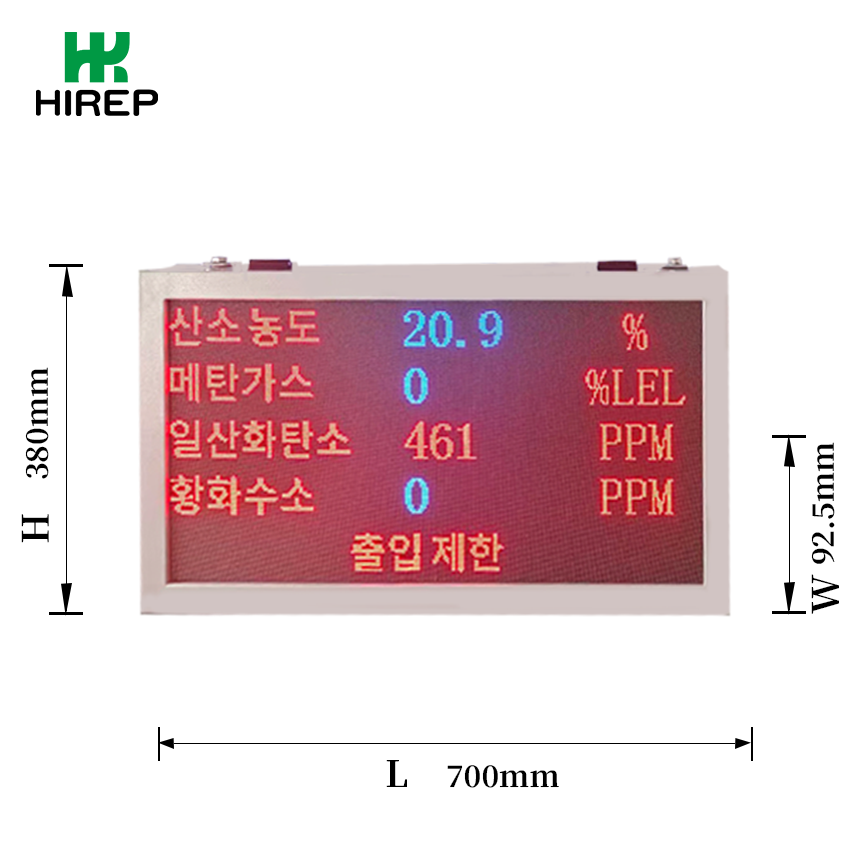
LED Display Screen(Optional, not required):
This gas concentration monitoring display screen features a dual-color display and connects to the host computer via RS485 protocol. It is primarily used to display real-time concentration data for various gases. The font colors differ between alarm and normal states. Normal state text is blue, while alarm state text is red.
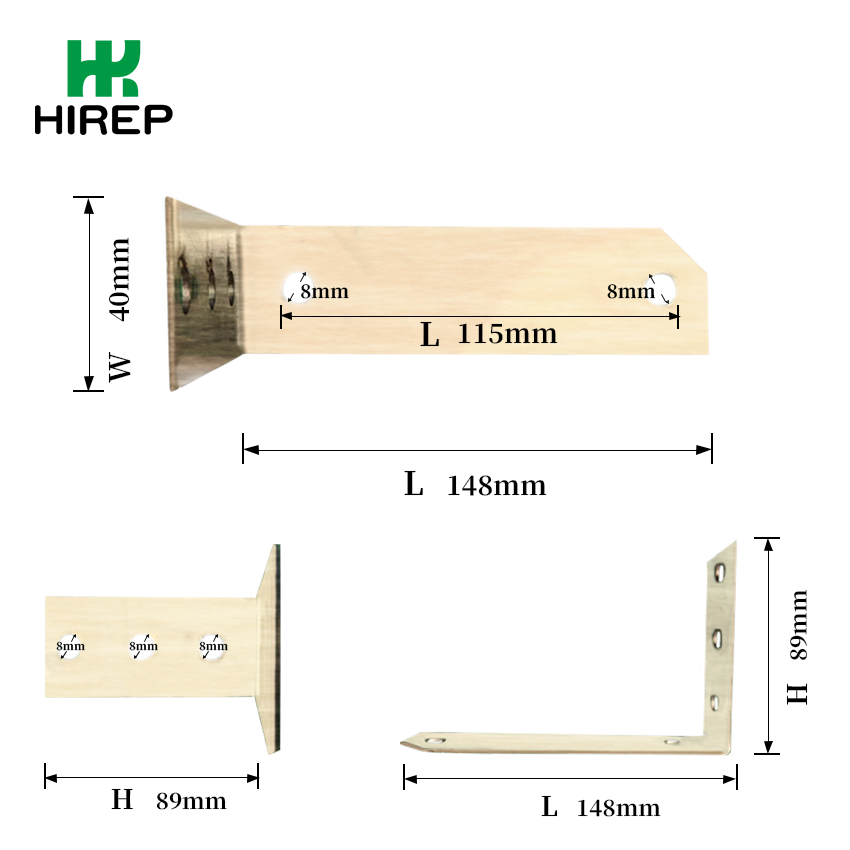
Mounting Bracket(Optional selection):
High-strength metal mounting brackets are specifically designed for mounting gas monitors and actuators, and are typically used for wall-mounted installations.
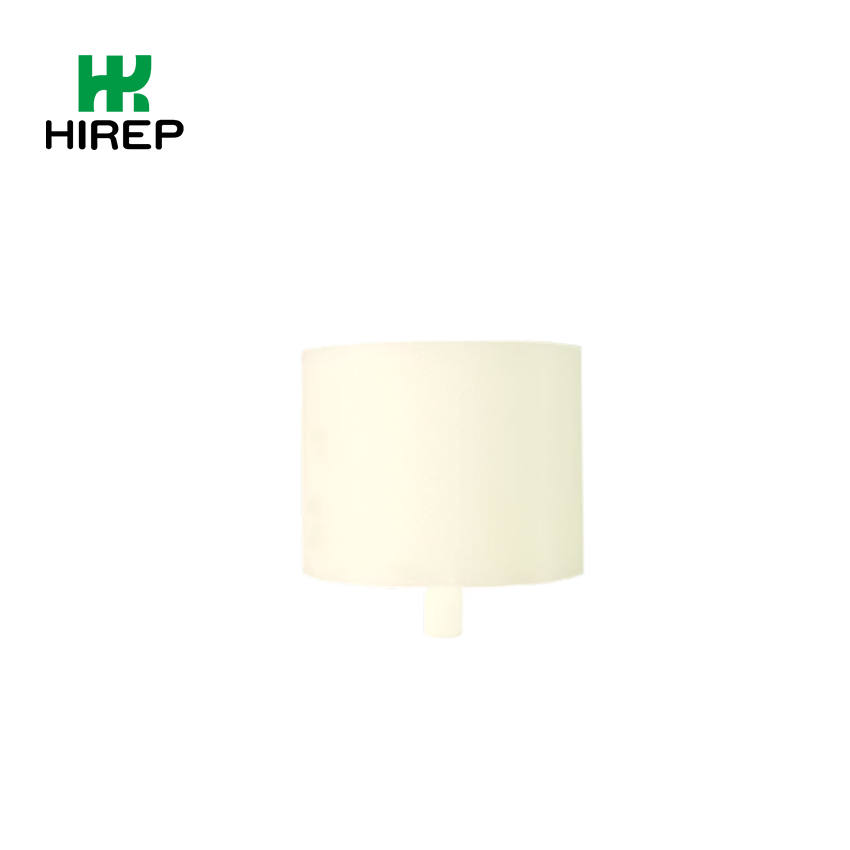
Calibration Hood(Optional selection):
This is a standard calibration cover specially designed for HIREP series fixed gas detectors, which is used for fast and accurate gas concentration calibration and sensor testing on the equipment site. It has simple structure and good sealing performance, which ensures that the gas can evenly cover the sensor probe during calibration and avoid external interference.
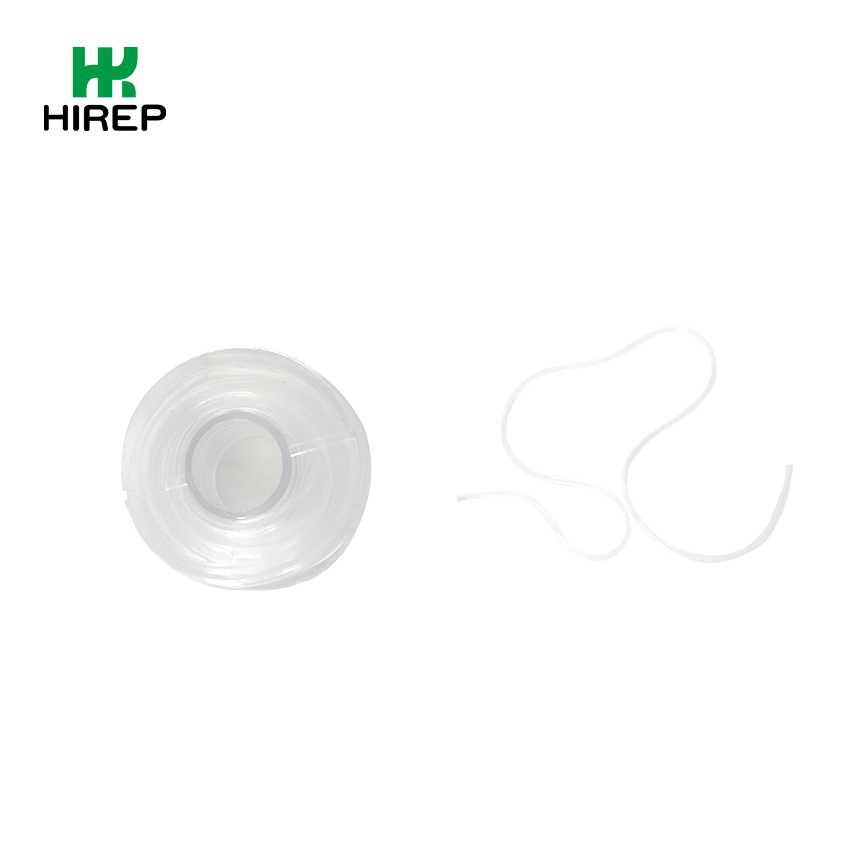
Sampling Tube(Optional):
The sampling tube is made of polytetrafluoroethylene (PTFE), which is resistant to high temperatures and corrosion. It is usually used in conjunction with an external pump to safely and stably deliver the gas to be tested in the environment to the sensor analysis unit. It is suitable for remote sampling, detection in confined spaces, or gas monitoring under complex working conditions.
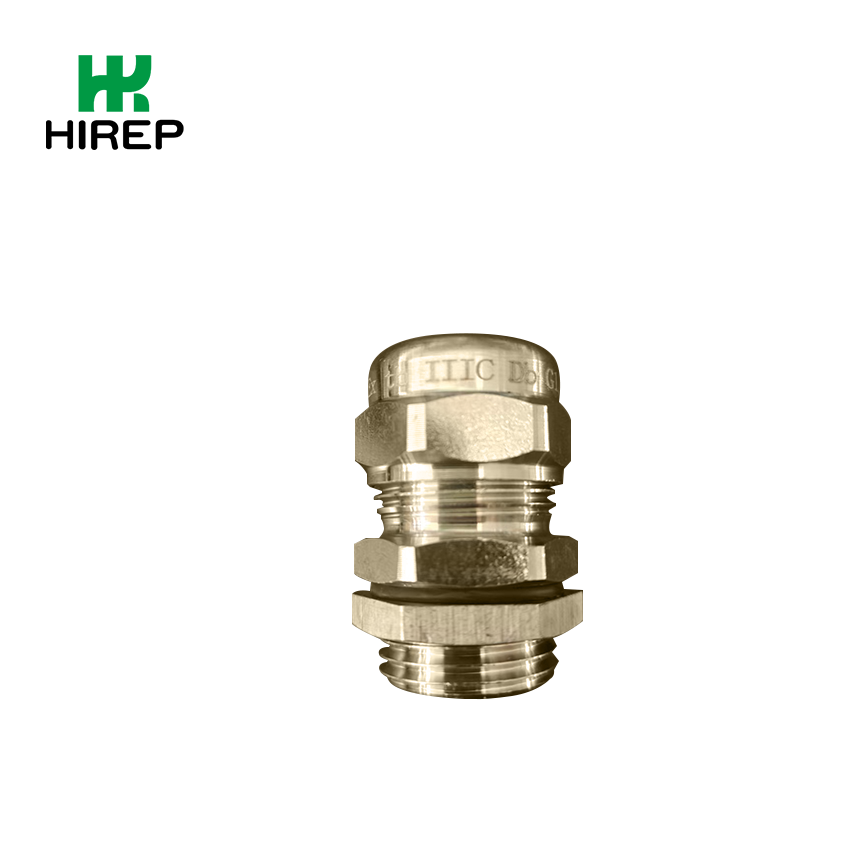
Explosion-Proof Cable Gland(Optional):
Used for the safe wiring connection of fixed gas detector, alarm host or electrical equipment in explosive environment. Its structure conforms to international explosion-proof standards, ensuring reliable sealing and electrical isolation in flammable and explosive gas environment and preventing accidents caused by sparks or high temperature.
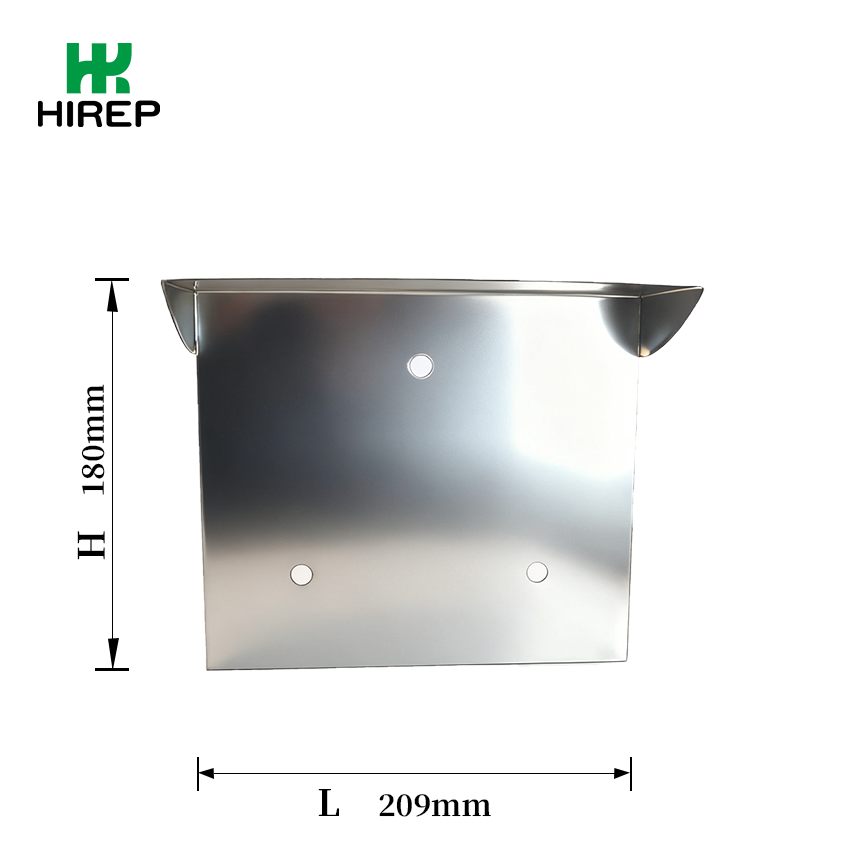
Rain cover(Optional):
Prevents rainwater, dew, and spray water from entering the detector housing, circuitry, and sensor cavity, preventing short circuits due to moisture on the circuit board, reducing rainwater corrosion, and minimizing aging damage to the detector housing and probe caused by ultraviolet radiation. Significantly improves equipment durability, especially suitable for outdoor, open-air, and factory outdoor installation scenarios.
| Name | Chemical Formula | Lower Explosive Limit(Volume Fraction)in Air%VOL|Lower Limit | Serial No | Name | Chemical Formula | Lower Explosive Limit(Volume Fraction)in Air%VOL|Lower Limit | |
| 1 | Ethane | C₂H₆ | 3.0 | 49 | Cyclohexane | CH₂ (CH₂)₄CH₂ | 1.2 |
| 2 | Ethanol | C₂H₅OH | 3.4 | 50 | Cyclohexanol | CH₂ (CH₂)₃CHOHCH₂ | 1.2 |
| 3 | Ethylene | C₂H₄ | 2.8 | 51 | Cyclohexanone | CH₂ (CH₂)₃COCH₂ | 2.8 |
| 4 | Hydrogen | H₂ | 4.0 | 52 | Cyclopropane | CH₂CH₂CH₂ | 2.4 |
| 5 | Methane | CH₄ | 5.0 | 53 | Decane | C₁₀H₁8 | 0.7 |
| 6 | Methanol | CH₃OH | 5.5 | 54 | Cyclohexene | CH₂ (CH₂)₃CHCHCH₂ | 1.2 |
| 7 | Acetylene | C₂H₂ | 2.5 | 55 | Diacetone Alcohol | (CH₃)₂COHCH₂COCH₃ | 1.8 |
| 8 | Propanol | C₃H₇OH | 2.5 | 56 | Di-n-butyl Ether | C₄H₉OC₄H₉ | 0.9 |
| 9 | Propane | C₃H₈ | 2.2 | 57 | Dichlorobenzene | (C₆H₄)Cl₂ | 2.2 |
| 10 | Propylene | C₃H₆ | 2.4 | 58 | Diethylamine | (C₂H₅)₂NH | 1.7 |
| 11 | Toluene | C₆H₅CH₃ | 1.2 | 59 | Dimethylamine | (CH₃)₂NH | 2.8 |
| 12 | Xylene | C₆H₄ (CH₃)₂ | 1.0 | 60 | Dimethylaniline | (CH₃)₂C₆H₃NH₂ | 1.2 |
| 13 | Dichloromethane | C₂H₄Cl₂ | 5.6 | 61 | Dicyclohexylamine | (CH₂)₄O₂ | 1.9 |
| 14 | Dichloroethylene | C₂H₂Cl₂ | 6.5 | 62 | Ethylene Oxide | OCH₂CH₂CH₂ | 1.9 |
| 15 | Dichloropropane | C₃H₆Cl₂ | 3.4 | 63 | Diethyl Ether | C₂H₅OC₂H₅ | 1.8 |
| 16 | Diethyl Ether | C₂H₅OC₂H₅ | 1.7 | 64 | Ethyl Acetate | CH₃COOC₂H₅ | 2.1 |
| 17 | Dimethyl Ether | CH₃OCH₃ | 3.0 | 65 | Ethyl Acrylate | CH₂CHCO₂C₂H₅ | 1.7 |
| 18 | Formaldehyde | CH₂OCH | 4.0 | 66 | Styrene | C₆H₅C₂H₃ | 1.0 |
| 19 | Acetic Acid | CH₃COOH | 4.0 | 67 | Ethylene Oxide | CH₂CH₂O | 2.6 |
| 20 | Acetone | CH₃COCH₃ | 2.3 | 68 | Ethanethiol | C₂H₅SH | 2.3 |
| 21 | Acetyl Chloride | (CH₃CO)₂CH₂ | 1.7 | 69 | Ethyl Mercaptan | C₂H₅SCH₃ | 2.0 |
| 22 | Chloroform | CH₃COCl | 5.0 | 70 | Methyl Ethyl Ketone | C₃H₇COCH₃ | 1.8 |
| 23 | Acrylonitrile | CH₂CHCN | 2.8 | 71 | Ethylamine | C₂H₅NH₂ | 3.5 |
| 24 | Allyl Chloride | CH₂CHCH₂Cl | 3.2 | 72 | Gasoline | — | 0.9 |
| 25 | Methylacetylene | CH₃CCH | 1.7 | 73 | Kerosene | — | 0.7 |
| 26 | Amyl Acetate | CH₃CO₂C₅H₁1 | 1.0 | 74 | Turpentine | — | 1.8 |
| 27 | Aniline | C₆H₅NH₂ | 1.2 | 75 | Nitrobenzene | C₆H₅NO₂ | 1.8 |
| 28 | Benzene | C₆H₆ | 1.2 | 76 | Nitromethane | CH₃NO₂ | 7.1 |
| 29 | Benzaldehyde | C₆H₅CHO | 1.4 | 77 | Phenol | C₆H₅OH | 1.3 |
| 30 | Benzyl Chloride | C₆H₅CH₂Cl | 1.1 | 78 | Phenylacetylene | C₆H₅C₂H | 1.1 |
| 31 | Bromobenzene | C₆H₅CH₂Br | 2.5 | 79 | Ethylbenzene | C₆H₄C₂H₅ | 1.0 |
| 32 | Bromoethane | CH₃CH₂Br | 6.7 | 80 | Methyl Formate | HCOOC₂H₅ | 2.7 |
| 33 | Butadiene | CH₂CHCHCH₂ | 2.0 | 81 | p-Dioxane | C₄H₈O₂ | 2.0 |
| 34 | Butane | C₄H₁0 | 1.9 | 82 | Isobutane | i-C₄H₁0 | 1.8 |
| 35 | Butanol | C₄H₉OH | 1.8 | 83 | Naphthalene | C₁₀H₈ | 1.9 |
| 36 | Butylene | C₄H₈ | 1.6 | 84 | Nonane | CH₃ (CH₂)₇CH₃ | 0.7 |
| 37 | Butyraldehyde | C₃H₇CHO | 1.4 | 85 | Nonanol | CH₃ (CH₂)₇CH₂OH | 0.8 |
| 38 | Butyl Butyrate | C₃H₇COOC₄H₉ | 1.2 | 86 | Valeraldehyde | C₆H₁₀0 | 1.2 |
| 39 | Butyl Methyl Ketone | C₄H₉COCH₃ | 1.2 | 87 | Pentane | C₅H₁2 | 1.4 |
| 40 | Carbon Disulfide | CS₂ | 1.0 | 88 | Pentanol | C₅H₁₁OH | 1.2 |
| 41 | Chlorobenzene | C₆H₅Cl | 1.3 | 89 | Propylamine | C₃H₇NH₂ | 2.0 |
| 42 | Chlorobutane | C₄H₉CH₂Cl | 1.8 | 90 | Propyl Methyl Ketone | C₄H₉COCH₃ | 1.5 |
| 43 | Chloroethane | CH₃CH₂Cl | 3.8 | 91 | Pyridine | C₅H₅N | 1.7 |
| 44 | Chloroethylene | CH₂CHCl | 3.8 | 92 | Tetrahydrofuran | C₄H₈O | 2.0 |
| 45 | Chloromethane | CH₃Cl | 8.1 | 93 | Tetrahydrofurfuryl | C₅H₁₀O₂ | 1.5 |
| 46 | 2-Chloropropane | CH₃CHCICH₃ | 2.6 | 94 | Triethylamine | (C₂H₅)₃N | 1.2 |
| 47 | Cresol | C₆H₄OH | 1.1 | 95 | Trimethylamine | (CH₃)₃N | 2.0 |
| 48 | Cyclobutane | CH₂CH₂CH₂CH₂ | 1.8 | 96 | Trioxane | (CH₂O)₃ | 3.0 |
Send Message
Just drop us a line, call, or fill out the form. Our team will provide you with transparent pricing, detailed technical data sheets,very feasible solution, and genuine after-sales support—no hidden costs, no empty promises.