
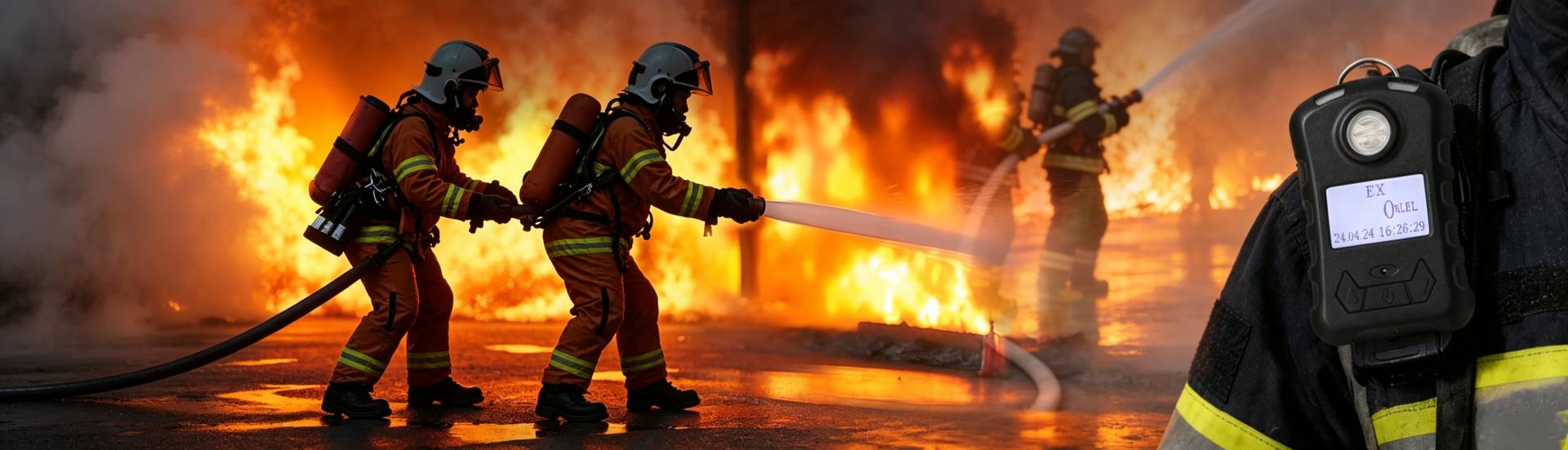
Guide for Gas Calibration Setting of Portable Four-in-One Gas Detector
Portable four-in-one gas detector is an important personal safety detection equipment, which can be used to monitor many dangerous gases at the same time. It is widely used in limited space, oil and gas, chemical plants, mines, sewage treatment, industrial production and other environments where gas hazards may exist.
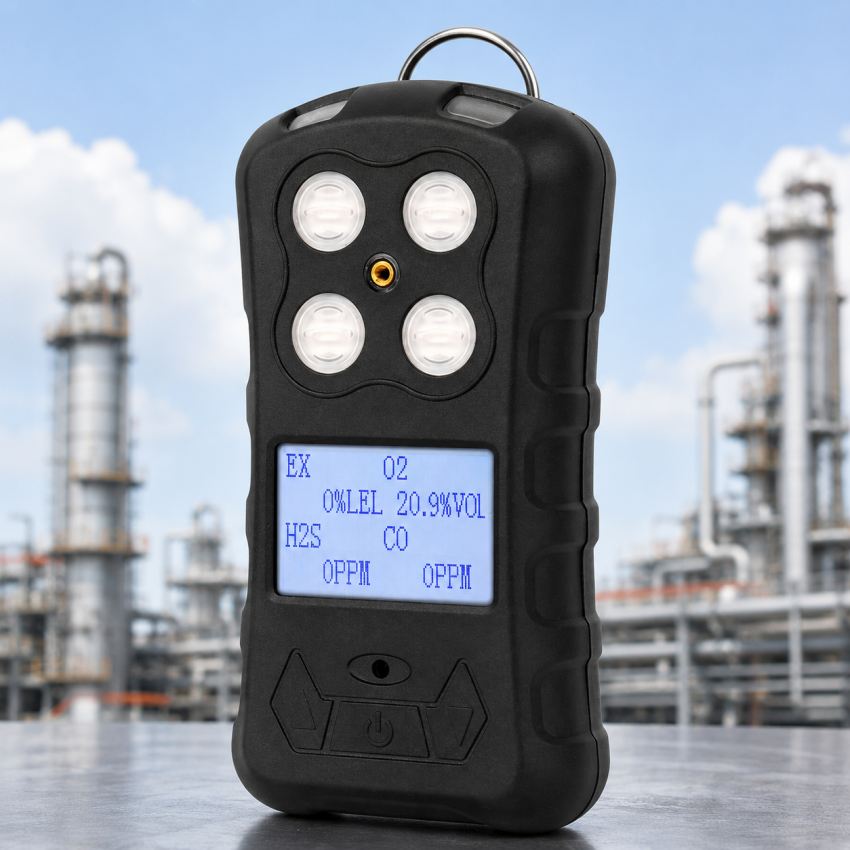
A typical four-in-one gas detector can detect LEL combustible gas, O oxygen, CO carbon monoxide and HS hydrogen sulfide. In order to ensure the accuracy and reliability of test data and the normal alarm function, gas calibration on a regular basis is an important link in the maintenance of the detector.
Why is gas calibration important?
The sensitivity of gas sensors may drift during long-term use. Factors such as temperature, humidity, dust, chemical exposure, sensor aging and high concentration gas impact may affect the detection performance of the sensor.
Gas calibration can help to adjust the detector to keep its reading consistent with the known standard gas concentration.
Periodic calibration can help:
- Maintain accurate gas detection data.
- Reduce the measurement error of the sensor
- Check the sensor sensitivity.
- Improve alarm reliability
- Support safe operation in dangerous environment.
For professional gas detection equipment, always follow the calibration procedure specified by the manufacturer.
What should I prepare before calibration?
Before starting calibration, it is necessary to prepare appropriate calibration equipment, including:
- Standard calibration gas
- Gas cylinder pressure reducing valve
- Calibration hose
- Calibration cap or calibration adapter
- Prepare flowmeter according to equipment requirements.
The concentration of calibration gas must meet the calibration requirements specified by the detector.
For example, according to different detector models, common reference concentrations may include combustible gas in %LEL, oxygen in %VOL, and CO and HS in ppm.
It should be noted that the actual use must be set according to the standard gas concentration specified by the specific detector manufacturer, and different types of detectors cannot directly use the same calibration parameters.
Step 1: Zero calibration
Zero calibration is mainly used to establish the reference reading of the sensor.
Before zero calibration, the detector should be placed in a clean air environment that is confirmed to contain no target gas. Turn on the detector and wait for the equipment to complete the startup and preheating process.
Enter the calibration menu of the tester and select Zero Calibration.
According to the design of the detector, a single sensor can be calibrated at zero point, and multiple channels can also be calibrated.
In the normal clean air environment, the readings of LEL, CO and HS should be close to zero, while the oxygen sensor should display the values that meet the normal fresh air conditions.
If the surrounding environment may contain dangerous gases, it should not be regarded as a zero calibration environment.
Step 2: Calibration of standard gas.
Span Calibration uses a standard gas with known concentration to check and adjust the sensitivity of the sensor.
First, connect the standard gas cylinder to the detector through the appropriate pressure reducing valve, hose and calibration adapter.
Then enter the Span Calibration or Gas Calibration menu, and select the gas channel to be calibrated.
According to the actual gas concentration on the standard gas cylinder and the requirements of the detector manufacturer, set the corresponding calibration concentration.
Open the gas cylinder and let the standard gas enter the detector. Wait for the sensor detection value to gradually stabilize.
When the tester prompts for confirmation, complete the calibration and save the results.
If the detector supports individual channel calibration, LEL, O, CO and HS channels can be calibrated separately as required.
Important points for attention in gas calibration
Many factors may affect the gas calibration results.
1. Use the correct standard gas
The standard gas concentration set in the detector must be consistent with the actual standard gas concentration. Wrong parameter setting may lead to inaccurate calibration results.
2. Maintain a stable gas flow.
The standard gas shall be supplied at the flow rate specified by the detector manufacturer. If the flow rate is too large, too small or unstable, it may cause the sensor to fail to obtain stable gas concentration.
3. Check the sensor status
If the sensor is seriously aged, polluted, damaged or the response speed is obviously slow, calibration failure may occur.
In this case, repeated calibration may not solve the problem, and the sensor should be inspected or replaced according to the manufacturer’s maintenance requirements.
4. Check whether the connection is normal.
Check the hose, pressure reducing valve, calibration cap and detector air inlet before calibration. Loose connection or gas leakage may affect the actual gas concentration entering the sensor.
What should I check after calibration?
After the calibration is completed, it should be confirmed that the detector shows that the calibration is successful, and check whether all gas channels are displayed normally.
Check at the same time:
- Is there a sensor fault?
- Is there a calibration failure prompt?
- Check whether the reading is abnormal.
- Is the sensor response normal?
- Is the sound alarm normal?
- Is the lighting alarm normal?
- Is the vibration alarm normal?
For important industrial applications, Bump Test can also be carried out according to the requirements of on-site safety management to confirm that the sensor and alarm system can respond to the target gas normally.
How often does the gas detector need to be calibrated?
There is no uniform calibration period applicable to all gas detectors. The specific cycle depends on the manufacturer’s requirements, sensor type, working environment, frequency of use and site safety management system.
If the detector is used frequently or works in harsh industrial environment for a long time, it may be necessary to check and calibrate it more frequently.
If the detector has been exposed to abnormally high concentration gas, polluted, mechanically damaged or other conditions that may affect the performance of the sensor, it should also be inspected in time.
HIREP portable four-in-one gas detector
HIREP portable four-in-one gas detector is specially designed for multi-gas monitoring applications, which can simultaneously monitor LEL, O, CO and HS with a compact device.
The product is suitable for:
- Limited space operation
- Industrial safety inspection
- Oil and gas industry
- chemical plant
- mine
- sewage disposal
- Industrial gas safety monitoring
Correct zero calibration, span calibration, function test and regular maintenance can help portable four-in-one gas detector maintain good detection performance and provide reliable gas safety monitoring for workers in dangerous environment.


 WhatsApp: 8619339980364
 E-mail: contact@hirepsafety.com