
How to set the high and low alarm values of portable four-in-one gas detector
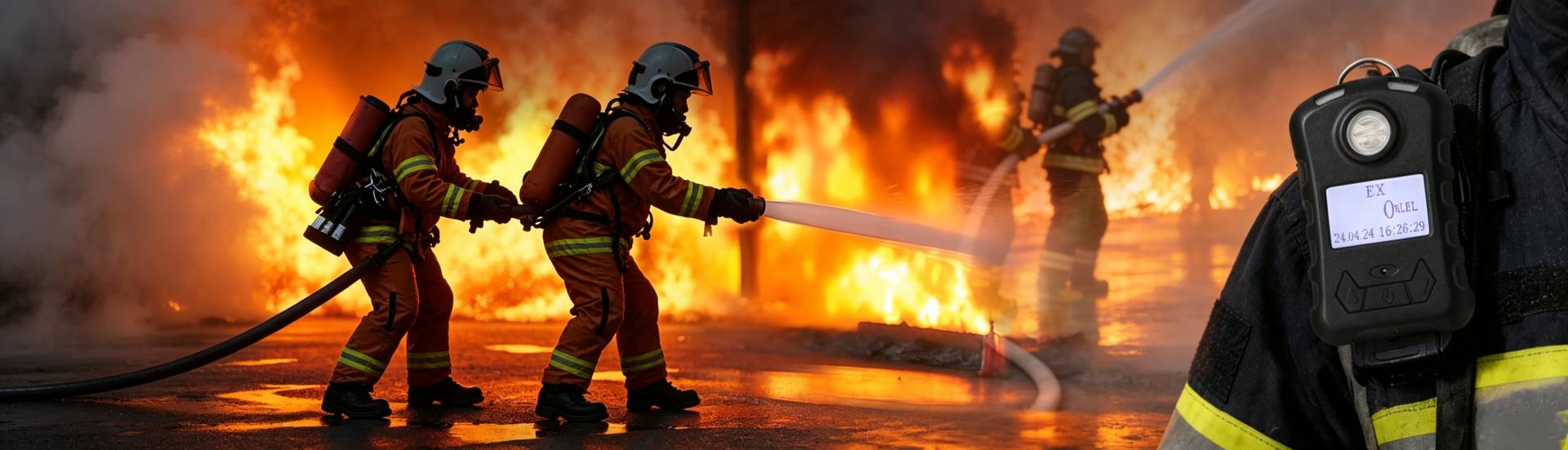
Portable four-in-one gas detector is widely used in industrial production, limited space operation and other places where gas safety monitoring is needed. By detecting LEL, O, CO and HS at the same time, the instrument can monitor a variety of potentially dangerous gases in the environment in real time and provide timely safety warning for workers.
Among them, high alarm and low alarm settings are very important functions of portable gas detector. Setting the alarm threshold correctly can help the staff to take safety measures in time before the gas concentration reaches the dangerous level.
What are high alarm and low alarm?
Low Alarm is the first alarm threshold. When the detected gas concentration reaches or exceeds the preset low alarm value, the gas detector usually gives an alarm by means of sound, light or vibration.
- High alarm * * is a more serious secondary alarm. When the detected concentration reaches the high alarm value, the detector will send out a stronger alarm signal to remind the staff to take safety measures in time.
The alarm values of different gases need to be set according to gas characteristics, actual application environment, local regulations and workplace safety requirements. Specific parameters shall be subject to the instruction manual of the detector and relevant safety standards.
What gases can the four-in-one gas detector detect?
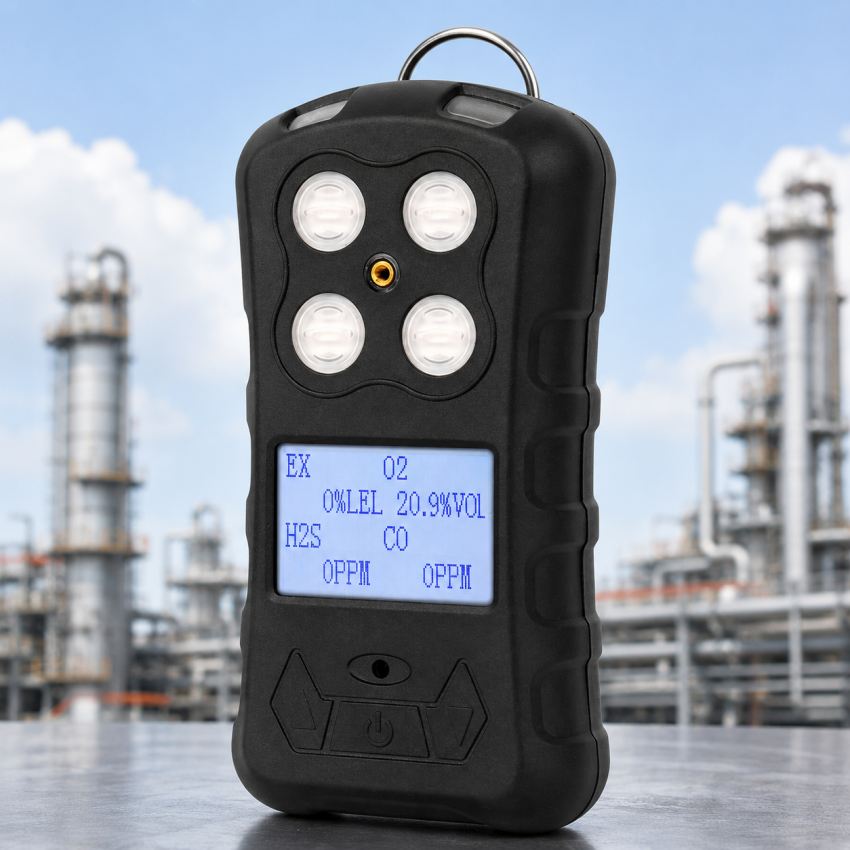
A typical portable four-in-one gas detector can simultaneously detect:
Lel–combustible gas, expressed as a percentage of the Lower Explosive Limit.
O–oxygen concentration
Co–carbon monoxide
Hs–hydrogen sulfide
Different gases have different hazard characteristics, so the alarm setting methods are also different. For example, combustible gas monitoring is mainly used to prevent gas concentration from approaching the explosion danger range, while oxygen detection is mainly used to monitor oxygen-deficient or oxygen-enriched environments.
How to set the alarm value of gas detector?
Before modifying the alarm parameters, ensure that the detector operates normally and the sensor reading is stable.
1. Enter the Settings menu.
Open the portable four-in-one gas detector and enter the instrument setting menu or parameter setting interface according to the product manual.
2. Select the gas to be set.
Select the gas channel whose alarm parameters need to be adjusted. According to different instrument models, the screen usually displays detection channels such as LEL, O, CO and HS respectively.
3. Set the low alarm value
Enter the low alarm parameter setting interface, enter the required low alarm threshold, and then confirm to save.
4. Set high alarm value
Enter the high alarm parameter setting interface and set the corresponding high alarm threshold. Usually, a high alarm value represents a more serious danger level than a low alarm value.
5. Save the settings
After setting the high and low alarm parameters, save the new parameters and return to the main interface of gas detection.
6. Check the alarm parameters
After returning to the main interface, check whether the new alarm parameters are displayed correctly. If conditions permit, the corresponding function test or alarm test can be carried out according to the product manual to confirm that the detector can work normally.
Why is it important to set the alarm value correctly?
Wrong alarm setting may reduce the safety early warning effect of gas detector.
If the alarm value is set too high, the staff may not be able to detect the increase of dangerous gas concentration in time; If the parameter settings do not meet the actual application requirements, there may be too many false alarms.
Therefore, when setting alarm parameters, we should comprehensively consider:
Detecting the dangerous characteristics of gas
working environment
Job type
Local safety regulations
Enterprise safety management requirements
Technical requirements of gas detector manufacturers
Reasonable alarm settings can help workers find potential gas hazards more timely.
Application Scenario of Portable Four-in-One Gas Detector
Portable multi-gas detector is widely used in:
Limited space operation
Oil and gas industry
petrochemical works
Chemical production enterprises
Sewage treatment plant
mine
Industrial equipment maintenance
Natural gas pipelines and utilities
Emergency rescue
Industrial safety inspection
Because of its small size and portability, the staff can use it with them during inspection, equipment maintenance, limited space entry and safety inspection.
HIREP portable four-in-one gas detector
HIREP provides portable and fixed gas detection solutions. Portable four-in-one gas detector can integrate four gas detection functions of LEL, O, CO and HS into a compact device, which can help workers monitor a variety of potential atmospheric environmental hazards at the same time.
In order to ensure the long-term stable operation of the detector, the user should regularly check the equipment and maintain the sensor according to the requirements of the manufacturer, and carry out calibration and alarm function test when necessary.
If you are looking for a portable four-in-one gas detector suitable for industrial safety, gas detection in limited space or OEM/ODM projects, you can contact HIREP for product specifications and gas detection solutions.


 WhatsApp: 8619339980364
 E-mail: contact@hirepsafety.com