
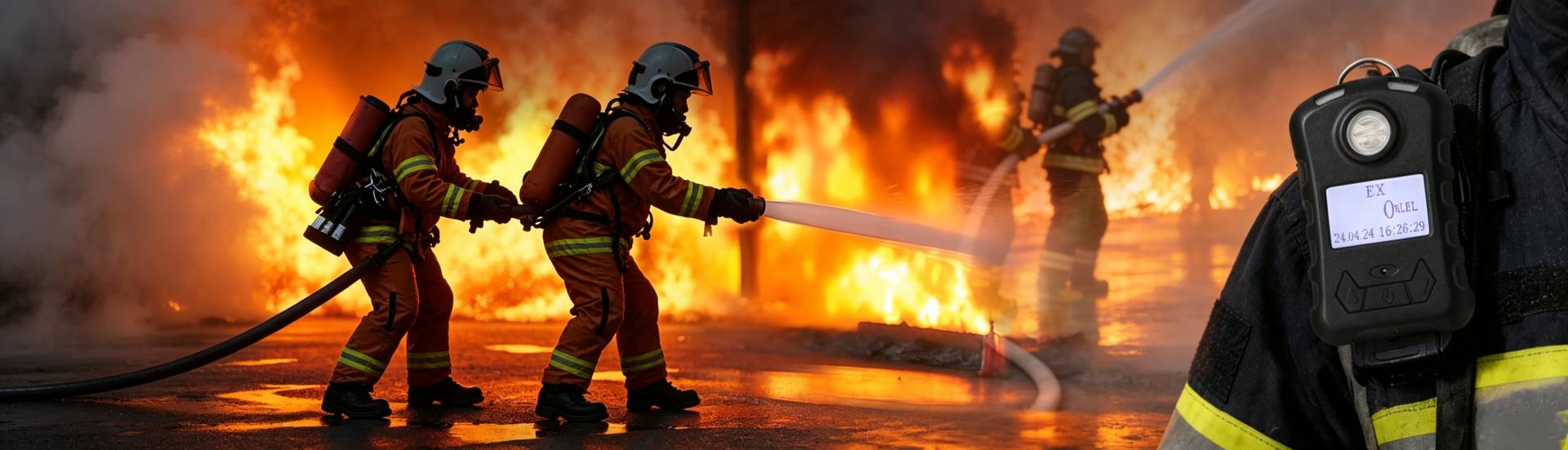
Smoke and Gas Detector Installation Guide
Introduction
Smoke and gas detectors are one of the most important safety devices in the home. It can give early warning in case of fire, smoke or dangerous gas leakage, and strive for precious escape and emergency treatment time for family members.
However, no matter how advanced the detector is, it can’t play its due protection role if it is installed in an incorrect position. Unreasonable installation position, wrong fixing method or lack of daily maintenance may reduce detection efficiency and even cause alarm delay.
This paper will introduce the correct installation method, the best installation location, common installation misunderstandings and daily maintenance suggestions of smoke and gas detectors in detail to help you give full play to the protective role of the equipment.
Why is it so important to install correctly?
Because of the high temperature, smoke will naturally diffuse upwards, while different types of gases are distributed in the air in different ways.
For example:
- Natural gas (methane) is lighter than air and will gather above the room.
- Carbon monoxide is close to the density of air and will be evenly distributed in indoor air.
- Liquefied petroleum gas (LPG, including propane and butane) is heavier than air and easy to deposit near the ground.
Therefore, the installation position of the detector must be reasonably selected according to the different monitoring objects.
Correct installation can not only improve the detection speed, but also effectively reduce the occurrence of false alarms.
How to choose a suitable installation location?
Smoke Detector
It is recommended to install smoke detectors in the following locations:
- Every floor should be installed.
- In every bedroom.
- The corridor outside the bedroom.
- Main passage of family.
- Near the stairs.
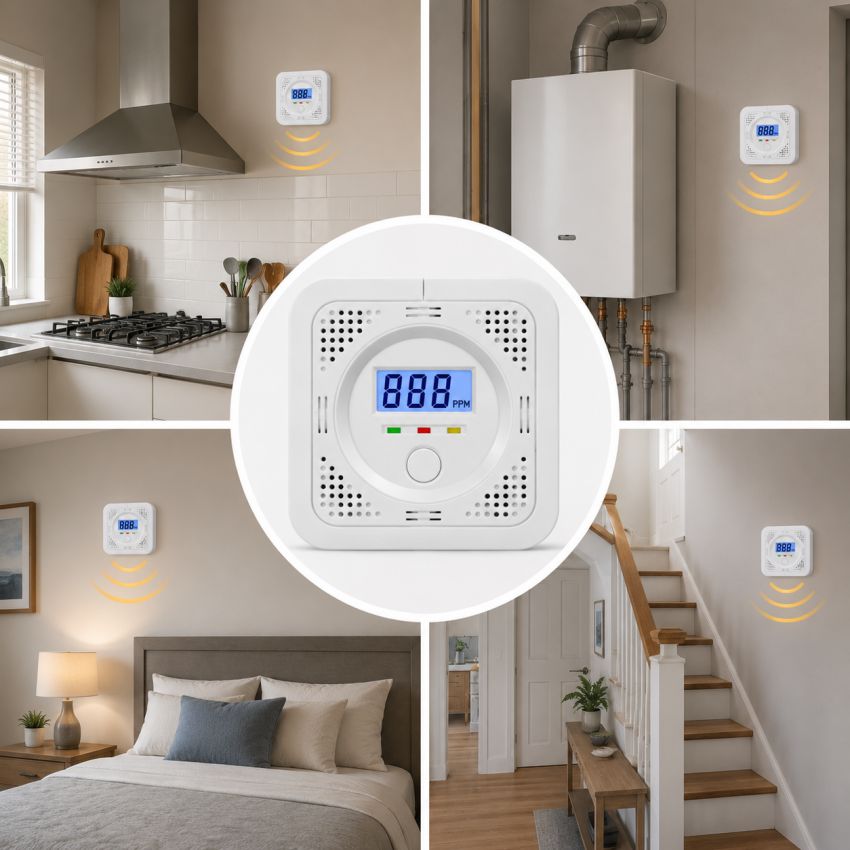
It is usually recommended to install in the center of the ceiling, because smoke will rise and gather at the top first.
If it can only be installed on the wall, it should be about 10 ~ 30 cm (4 ~ 12 inches) away from the ceiling.
Gas Detector
The installation position of gas detector needs to be determined according to the type of gas to be detected.
Detection of Natural Gas (Methane)
Recommended installation:
- Near the ceiling.
- In the same room as the gas equipment.
- It is about 1 ~ 3 m away from the gas leakage source.
Common installation areas include:
- Kitchen
- Boiler room
- Gas equipment room
Detection of Liquefied Petroleum Gas (LPG)
Because LPG is heavier than air, it should be installed in:
- About 30 cm from the ground.
- Close to gas cylinders or gas equipment.
- Avoid doors and windows and places with strong air circulation.
Detection of Carbon Monoxide (CO)
The carbon monoxide detector is recommended to be installed in:
- Outside the bedroom area.
- Residential buildings on each floor.
- Close to combustion equipment.
- Near the breathing height, or installed according to the requirements of the product manual.
Avoid installing directly next to the fireplace or cooker.
Which locations are not suitable for installation?
The wrong installation position is one of the important reasons for false alarm and missed alarm.
Installation should be avoided in the following locations:
- Right above the stove.
- In the bathroom.
- Near doors and windows.
- Next to the air outlet of air conditioner.
- Near the ceiling fan.
- A dusty area.
- An environment with excessive humidity.
- In a cabinet or confined space.
Excessive air flow will affect the smoke or gas entering the sensor, thus reducing the detection effect.
Installation Step
Step 1: Read the Product Manual
Before installation, carefully read the installation instructions provided by the manufacturer.
Different types of sensors may have different requirements for installation height and environment.
Step 2: Determine the Installation Location
Choose a dry, stable and unobstructed location.
Mark the position of the fixing hole with the mounting bracket.
Step 3: Fix the Mounting Bracket
Use the screw and expansion tube supporting the product to fix the bracket.
Ensure that the installation is firm and there will be no looseness.
Step 4: Install the Detector
Install the detector on the bracket.
For battery-powered products, make sure that the battery is installed correctly.
For wired power supply products, the power supply should be turned off before installation.
Step 5: Conduct Functional Testing
After installation, press the test button.
Confirm that the following functions are normal:
- Sound alarm is normal.
- The LED indicator is working normally.
- The LCD display (if any) is normal.
Do not assume that the equipment can work normally just because it is powered on.
Daily Maintenance
Installation is only the first step, and regular maintenance is equally important.
It is recommended to do the following maintenance work:
- Test the equipment function at least once a month.
- Use a soft brush or vacuum cleaner to clean the dust at the sensor air inlet every few months.
- Replace the battery in time when the low battery prompt appears.
- Keep the detector away from oil, insects and sundries.
- Replace the new equipment in time after reaching the service life specified by the manufacturer.
It should be noted that even if the equipment can still be turned on normally, the detection accuracy of its sensor may be significantly reduced after the design life is exceeded.
Common Installation Errors
Many false alarms or missed alarms are caused by improper installation.
Common mistakes include:
- Only one detector is installed in the whole house.
- The installation location is too close to the kitchen.
- Cover the sensor air inlet with ornaments.
- Ignore low battery reminder.
- Long time without functional test.
- Install the detector behind curtains or furniture.
- Installed in a location with poor air circulation.
The reliability of the detection system can be effectively improved by strictly following the installation recommendations of the manufacturer.
Frequently Asked Questions
Can a Device Detect Smoke and Gas at the Same Time?
At present, there are multifunctional combined detectors on the market, which can simultaneously detect smoke, combustible gas or carbon monoxide. However, you should carefully confirm the testing functions supported by the product before purchasing.
How Many Detectors Does a Family Need to Install?
It is generally recommended to install at least one smoke detector on each floor of the house, and install alarm equipment outside the bedroom.
If natural gas, liquefied gas or other gas equipment is used at home, corresponding gas detectors should be added near the kitchen, boiler room and gas equipment.
Do You Need Professional Installation?
For battery-powered household detectors, most users can install them themselves according to the instructions.
For wired networking systems or large residential buildings, it is recommended that they be installed by professionals to ensure compliance with local fire and electrical safety codes.
Conclusion
Proper installation of smoke and gas detectors is an important basis for ensuring family safety.
Choosing a suitable installation location, following the installation requirements of the manufacturer, and insisting on daily maintenance can improve the detection efficiency of equipment and provide more timely and reliable early warning in case of fire or gas leakage.
Whether it is to prevent fire, combustible gas leakage or carbon monoxide poisoning risk, well-installed and well-maintained detectors can build an important security line for families and provide continuous protection for life and property safety.


 WhatsApp: 8619339980364
 E-mail: contact@hirepsafety.com