
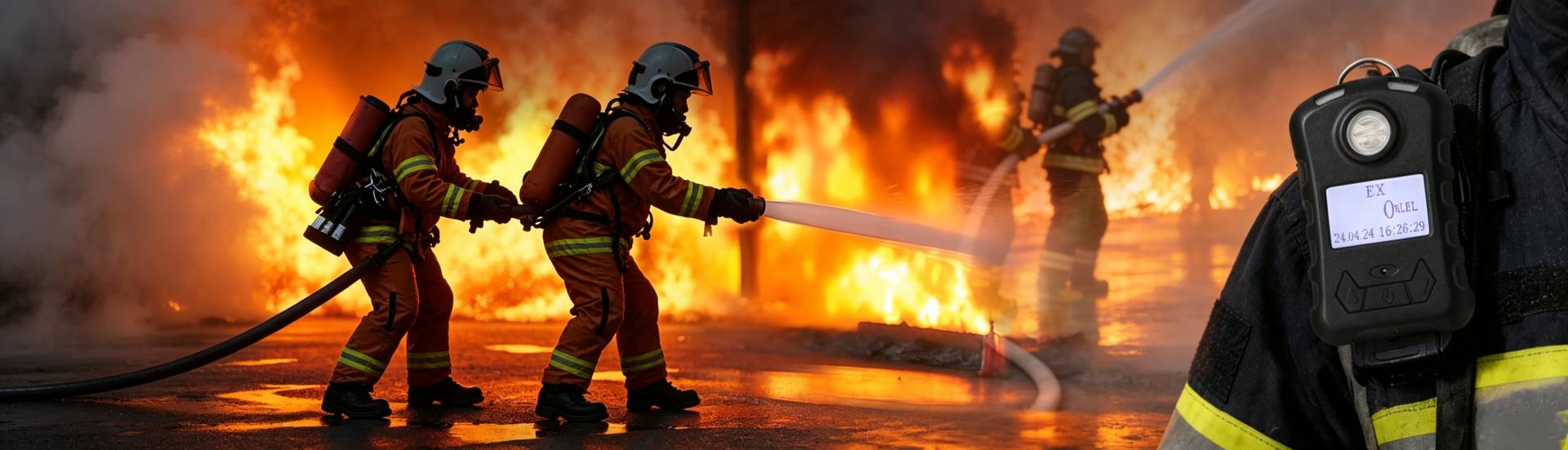
How Does a Battery Operated Gas Detector Work?
A battery-powered gas detector is a portable safety detection device, which detects the presence of specific gas in the surrounding environment through built-in sensors and measures the gas concentration in real time.
According to different application requirements, this kind of equipment can detect:
- Combustible gas, such as methane (CH₄), propane, etc.
- Toxic gases, such as carbon monoxide (CO), hydrogen sulfide (H₂S), etc.
- Oxygen concentration (O₂)
- Multi-gas combination detection (composite gas detection)
The biggest advantage of a battery-powered gas detector is portability. Workers can take the equipment into different areas for testing without connecting a fixed power supply or permanently installing it.
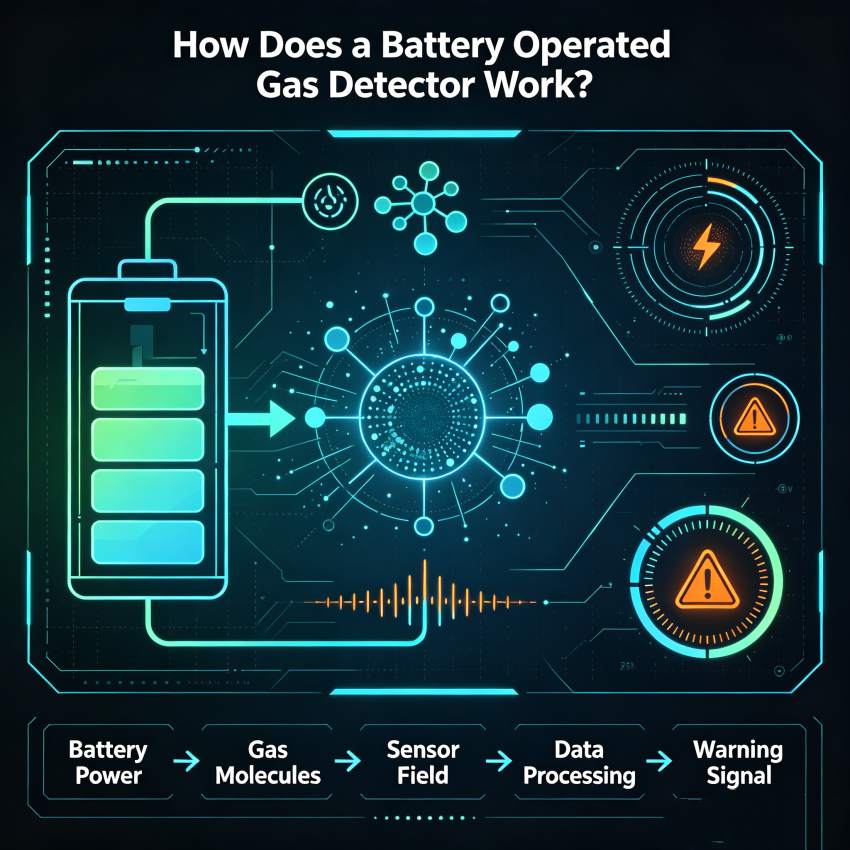
How Does the Battery-Powered Gas Detector Work?
The battery-powered gas detector mainly realizes the real-time monitoring of dangerous gas through the cooperation of gas sensor, electronic processing circuit, data analysis system, and alarm system.
The whole detection process usually includes the following four main steps:
1. Gas Sampling and Sensor Detection
When the detector is started, the ambient air will enter the sensor area by natural diffusion, and some devices are also equipped with built-in sampling pumps, which can actively take air samples for detection.
The gas sensor will analyze the target gas molecules in the air and generate corresponding signals according to the gas concentration.
Different types of gases require different sensor technologies.
Catalytic Combustion Sensor
Catalytic combustion sensor is mainly used to detect combustible gas.
When combustible gas contacts the sensor element, oxidation reaction will occur and heat will be generated. The sensor will convert it into gas concentration data by detecting the change of resistance.
Common applications:
- Methane detection
- Detection of liquefied petroleum gas (LPG)
- Fuel gas monitoring
Electrochemical Sensor
Electrochemical sensors are mainly used to detect the concentration of toxic gases and oxygen.
It generates a current signal through the chemical reaction between the target gas and the internal electrode of the sensor, and the signal size is related to the gas concentration.
Common applications:
- Carbon monoxide detection
- Hydrogen sulfide detection
- Monitoring of anoxic environment
Infrared Sensor
The infrared sensor judges the gas concentration by detecting the absorption change of infrared light by specific gas molecules.
This technology has the characteristics of high stability and long service life and is suitable for industrial environments with high reliability requirements.
Common applications:
- Carbon dioxide detection
- Hydrocarbon gas monitoring
2. Signal Processing and Concentration Calculation
When the sensor detects the gas, it will generate an electrical signal and transmit the signal to the electronic processing system inside the detector.
The internal microprocessor will analyze and calculate the signal and convert it into gas concentration data that users can read.
The display usually shows:
- Detecting gas type
- Real-time gas concentration
- Concentration unit (e.g. %LEL, ppm, %VOL)
- Battery status
- Sensor status
Modern battery-powered gas detectors usually adopt intelligent algorithms to improve the detection accuracy and reduce the false alarm caused by environmental changes.
3. Start the Alarm After Reaching the Dangerous Concentration
When the detected gas concentration reaches the preset alarm value, the detector will immediately start the alarm function.
Common alarm methods include:
Acousto-Optic Alarm
The high-volume buzzer reminds nearby workers and provides visual warning by flashing LED lights.
Vibration Alarm
Portable gas detectors are usually equipped with vibration reminding function, which can detect the alarm in time even if the workers are in noisy environment or wearing protective equipment.
Through the combination of sound, light and vibration, the safety in dangerous environment can be effectively improved.
4. Battery Power Supply and Power Management
Battery system is an important part of portable gas detector.
High-quality battery-powered gas detector needs to ensure long-term operation and keep the sensor working stably.
Common battery types include:
- Rechargeable lithium battery
- Replaceable alkaline battery
- High capacity industrial battery
The intelligent battery management system can monitor:
- Battery remaining power
- State of charge
- Low battery reminder
This can ensure the reliable operation of the equipment during long-term inspection and field operation.
Why Is the Battery-Powered Gas Detector Very Important?
Compared with the traditional fixed gas detection system, the battery-powered gas detector has the following advantages:
1. Provide Mobile Security Protection
Workers can carry the detector into different dangerous areas, such as:
- Confined space
- Underground installation
- Inside storage tank
- Pipeline area
- Chemical production area
Therefore, it is especially suitable for personal safety protection.
2. Real-Time Monitoring of Gas Changes
Compared with manual detection, the portable gas detector can continuously monitor the gas concentration and remind the staff in time before the danger occurs.
It can effectively reduce:
- Fire and explosion risk
- Toxic gas exposure risk
- Risk of anoxic accident
3. Simple Installation and Flexible Use
Because there is no need for wiring and fixed installation, the battery-powered detector can be quickly deployed in:
- Temporary operation area
- Equipment maintenance site
- Emergency inspection task
- Rescue working environment
Common Application Fields of Battery-Powered Gas Detector
Oil and Gas Industry
There are a lot of flammable and toxic gases in the oil and gas industry.
Portable detectors are widely used in:
- Refinery
- Drilling platform
- Fuel storage area
Chemical Manufacturing Industry
Many kinds of dangerous gases may be involved in the chemical production process, so reliable gas monitoring equipment is needed to ensure the safety of personnel.
Confined Space Operation
Before entering storage tanks, underground pipelines, sewage wells, tunnels and other spaces, workers usually need to use gas detectors to detect:
- Oxygen concentration
- Toxic gas
- Combustible gas concentration
Fire Fighting and Emergency Rescue
Rescuers rely on portable gas detectors to quickly judge the dangerous environment and provide security for rescue operations.
How to Choose a Suitable Battery-Powered Gas Detector?
When selecting equipment, the following key factors need to be considered:
1. Detecting the Target Gas Type
Select the corresponding equipment according to the actual working environment.
For example:
- Methane → combustible gas detector
- Carbon monoxide → toxic gas detector
- Hydrogen sulfide → industrial safety inspection
- Multiple risk gases → Four-in-one or multi-gas detector
2. Sensor Type
Different sensors are suitable for different environments:
- Catalytic combustion sensor → combustible gas detection
- Electrochemical sensor → toxic gas and oxygen detection
- Infrared sensor → High reliability industrial application
3. Battery Life
For the field operation environment, longer battery life can reduce downtime and charging, and improve work efficiency.
4. Explosion-Proof Certification Requirements
Industrial hazardous areas usually need to meet relevant safety standards, such as:
- ATEX certification
- IECEx certification
- Underwriter Laboratories Inc.
- Local safety regulations require
Certified equipment can provide more reliable protection for dangerous areas.
Maintenance Suggestions of Battery-Powered Gas Detector
Regular maintenance can ensure that the testing equipment maintains accurate performance for a long time.
Suggestions:
- Perform calibration regularly.
- Carry out a Bump Test before use.
- Check the battery status.
- Keep the sensor clean.
- Replace the sensor according to the manufacturer’s suggestion.
Properly maintained gas detector can provide more stable and reliable safety protection and reduce detection error.


 WhatsApp: 8619339980364
 E-mail: contact@hirepsafety.com