
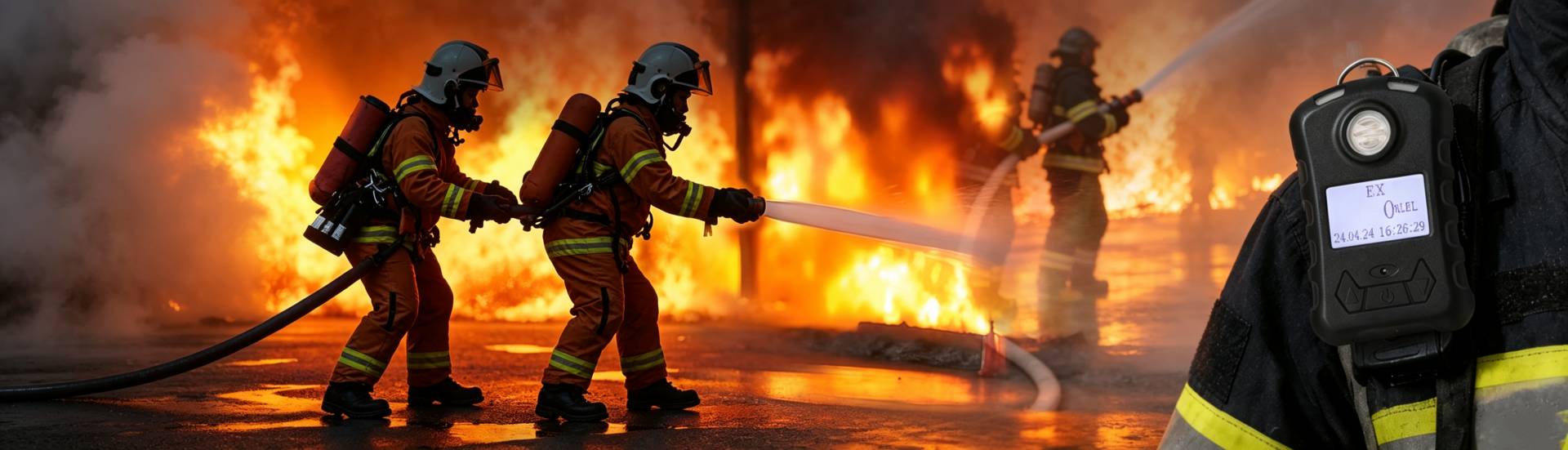
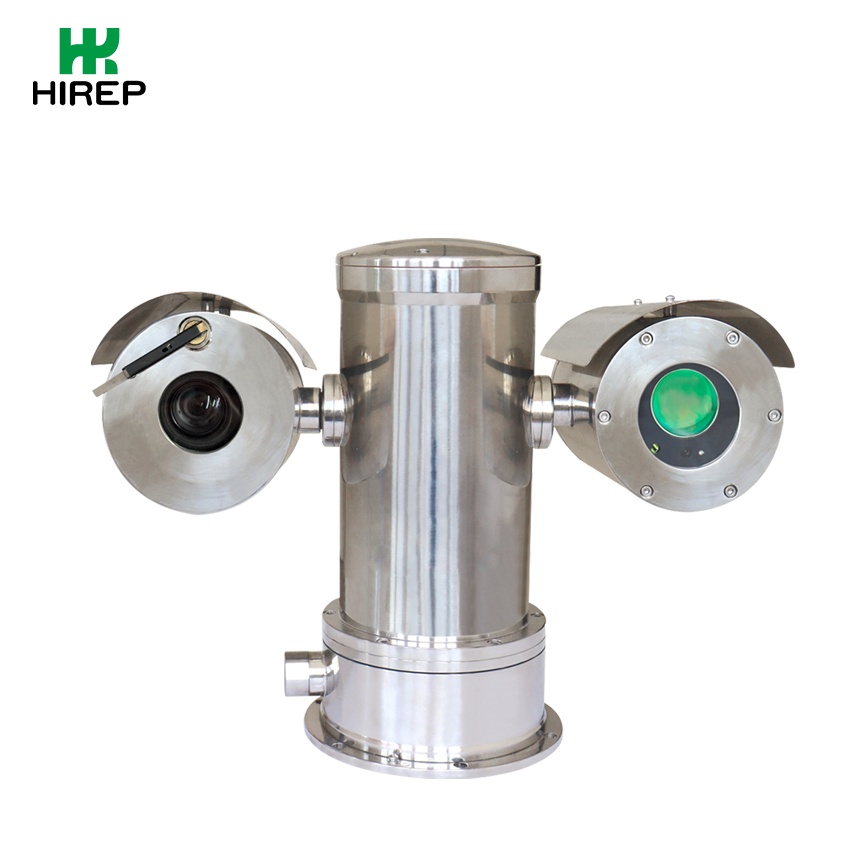
PTZ Scanning Laser Methane Detector: Used for Remote Gas Leak Monitoring
Methane leakage has always been a safety issue that requires special attention in natural gas pipelines, storage facilities, natural gas processing plants, and other oil and gas workplaces. Pipelines, valves, flanges, and gas storage equipment may all experience leaks during long-term operation due to aging seals, loose connections, or equipment damage. For industrial sites with a large distribution range of equipment, it is not easy to detect these leaks in a timely manner.
In some large industrial facilities, daily inspections require staff to move between different monitoring points, and some equipment is located high or difficult to access, which increases the difficulty of on-site inspections. The PTZ scanning laser methane detector provides a remote monitoring method that can monitor methane leaks in designated areas without direct contact with the detection target.
Working Principle of PTZ Laser Methane Detector
The PTZ scanning laser methane detector uses laser technology to detect methane gas in the optical path. Unlike contact detectors that require gas collection at the location of the sensor, remote laser detection can inspect selected areas without being close to potential leakage points.
The PTZ gimbal structure can control the horizontal and vertical directions of the detector, allowing the equipment to adjust the scanning angle according to on-site monitoring needs. By setting the scanning range reasonably, one device can perform polling detection on multiple designated monitoring areas.
The BRP-550 uses tunable diode laser absorption spectroscopy (TDLAS) technology for methane detection. This technology utilizes the absorption characteristics of methane towards specific wavelength lasers, and determines methane concentration by analyzing changes in laser signals. It is suitable for remote methane monitoring in industrial sites.
What Scenarios Is the Scanning Laser Methane Detector Suitable For?
Large industrial facilities typically have multiple potential methane leakage points, such as pipelines, valves, compressors, and gas storage equipment. Scanning detectors can be used for remote monitoring of these key areas.
In natural gas transmission facilities, partial pipeline areas and related equipment can be inspected to reduce the need for personnel to approach each monitoring point one by one.
At natural gas storage and refueling stations, scanning and monitoring of the surrounding areas of gas storage equipment and gas processing systems can be carried out according to the site layout. Remote monitoring solutions can also be configured according to actual needs in chemical plants, oil and gas fields, and other industrial sites that require attention to methane leaks.
It should be noted that the actual monitoring range may be affected by factors such as installation height, scanning direction, detection distance, on-site obstructions, and environmental conditions. In order to ensure the detection effect, the laser light path should be kept as unobstructed as possible to avoid being blocked by buildings, pipelines, or other equipment.
What Should Be Noted When Installing PTZ Laser Detector?
The installation position of the detector directly affects the monitoring area it can cover. Before installation, the possible locations of methane leakage on site should be identified, and the monitoring range should be planned based on the installation height and scanning angle of the equipment.
Buildings, storage tanks, pipelines, and other industrial facilities may obstruct the laser path. If the installation location is not chosen properly, some key areas may not be effectively covered. Therefore, when designing the scanning range, it is necessary to fully consider the layout of on-site equipment and optical path conditions.
It is also necessary to clarify the difference between remote scanning detection and point based gas detection. The scanning laser detector mainly monitors the specific optical path that the laser passes through, and cannot cover all positions in the entire factory area. For areas outside the scanning range, other fixed or portable gas detection devices may still need to be configured.
Therefore, remote laser methane monitoring is usually a supplementary solution in industrial gas safety systems, rather than a complete replacement for other types of gas detection equipment.
HIREP BRP-550 PTZ Scanning Laser Methane Detector
HIREP BRP-550 is a fixed PTZ scanning laser methane detector designed for remote methane monitoring in industrial sites.
This device adopts TDLAS laser detection technology, with a measurement range of 0-100000 ppm · m, a resolution of 1 ppm · m, and a response time of ≤ 0.05 seconds.
The device supports horizontal 360 ° scanning and vertical ± 90 ° pitch adjustment, with optional monitoring distances including 50 meters, 100 meters, 150 meters, and 300 meters. The communication interface supports RS485 and Ethernet to meet the system connection requirements of different industrial sites. The power supply can be selected as DC24V or AC220V.
BRP-550 is suitable for places that require remote methane leak monitoring, such as natural gas pipelines, oil and gas facilities, gas stations, chemical plants, and gas storage areas.
When choosing a scanning laser methane detector, it is necessary to comprehensively consider factors such as detection distance, installation location, scanning coverage range, and communication interface. Only by selecting based on the actual on-site layout can the equipment better meet the needs of industrial methane monitoring.


 WhatsApp: 8619339980364
 E-mail: contact@hirepsafety.com
