
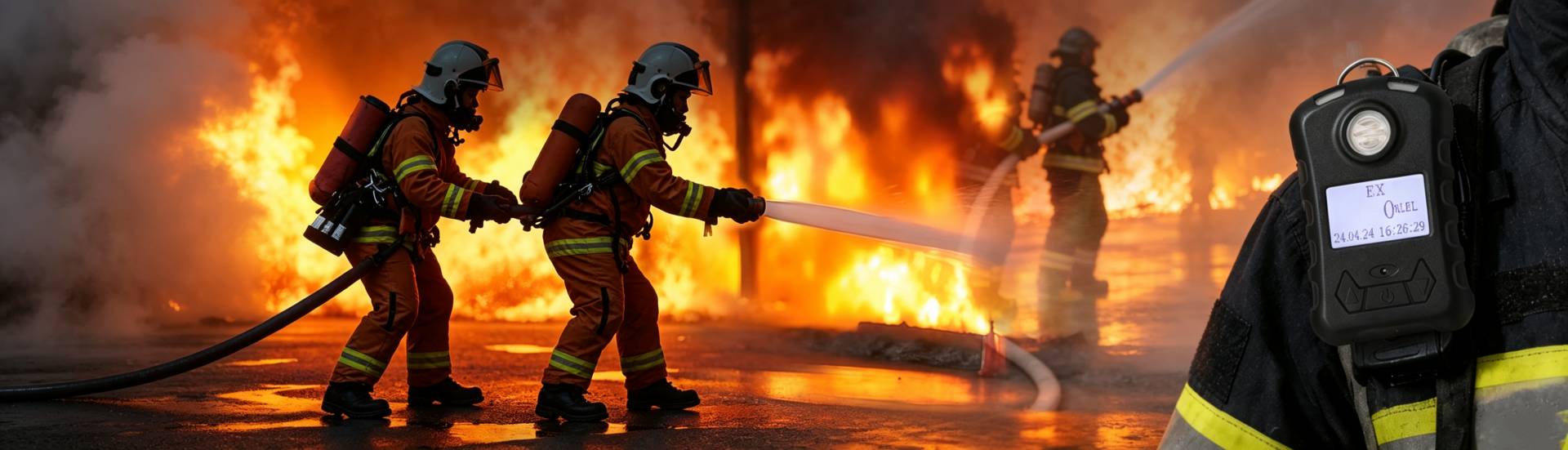
Portable Toxic Gas Detector: Hazardous Gas Detection and Safety Protection in Industrial Sites
Gas leakage is an issue that cannot be ignored in daily safety management in chemical plants, sewage treatment plants, oil and gas facilities, and industrial production workshops. Harmful gases such as hydrogen sulfide, carbon monoxide, ammonia, chlorine, and sulfur dioxide may be generated during production, storage, equipment maintenance, or material handling processes. Once a leak occurs, if the staff fails to detect it in a timely manner, they may face the risk of gas exposure.
The portable toxic gas detector is mainly used for on-site gas inspection and personal safety protection. Staff can carry equipment with them to detect the concentration of gases in the surrounding air before conducting inspections, repairs, or entering specific work areas, in order to promptly understand whether there are any abnormalities in the on-site environment.
Which industrial scenarios require portable toxic gas detectors?
The harmful gases present in different production environments are not the same. For example, wastewater treatment plants and oil and gas facilities need to focus on hydrogen sulfide, industrial refrigeration systems may involve ammonia, and chlorine gas may be used in water treatment and disinfection processes.
The leakage locations of these gases are usually related to specific production equipment and may occur at pipeline interfaces, valves, storage tanks, pump sets, and equipment connections. For staff, it is difficult to determine whether the gas concentration in the air is safe solely through manual inspection.
The portable toxic gas detector can perform real-time detection on site. When the detected concentration reaches the preset alarm value, the equipment will emit sound, light or vibration alarms according to the configuration, reminding the staff to take protective measures in a timely manner.
Common gas detection and application environment
The portable toxic gas detector can be equipped with different sensors according to actual needs and is suitable for various industrial environments.
Common detection gases include:
-
Hydrogen sulfide (H2S): commonly found in sewage treatment, oil fields, natural gas extraction and storage facilities
-
Carbon monoxide (CO): mainly focused on combustion equipment, boiler rooms, and industrial production areas
-
Ammonia (NH3): commonly used in industrial refrigeration, fertilizer production, and chemical industries
-
Chlorine gas (Cl2): commonly used in water treatment, disinfection, and chemical production processes
-
Sulfur dioxide (SO2): may occur in combustion, metallurgy, and chemical production processes
-
Volatile Organic Compounds (VOCs): Commonly found in painting, chemical storage, and solvent use areas
Before selecting a detector, it is necessary to first confirm the types of gases that may occur on site, and then determine the equipment configuration based on the detection range, sensor type, and actual usage environment.
How to choose a suitable testing instrument for on-site use?
When purchasing a portable toxic gas detector, the first consideration should be the detection requirements. A single gas detector is suitable for monitoring a specific gas, while a multi gas detector is suitable for work environments that require simultaneous attention to multiple gas risks.
If staff need to enter storage tanks, pipelines, sewage tanks, or other confined spaces, in addition to toxic gases, they should also pay attention to oxygen concentration and combustible gas risks. According to the on-site inspection requirements, multi gas detection equipment with corresponding detection functions can be selected.
In addition, the battery life, alarm mode, sensor performance, ease of operation, and maintenance cost of the device will also affect the daily user experience.
Daily use and equipment maintenance
Portable gas detectors need to be checked regularly and maintenance should not be carried out after an alarm or malfunction occurs.
Before each use, staff should check the battery level, sensor status, air intake, and alarm function. According to the manufacturer’s requirements for bump testing and regular calibration, it can help confirm whether sensors and alarm systems are working properly.
If the equipment is exposed to high levels of dust, humidity, or corrosive gases for a long time, the inspection frequency should be increased according to actual usage.
HIREP portable toxic gas detector
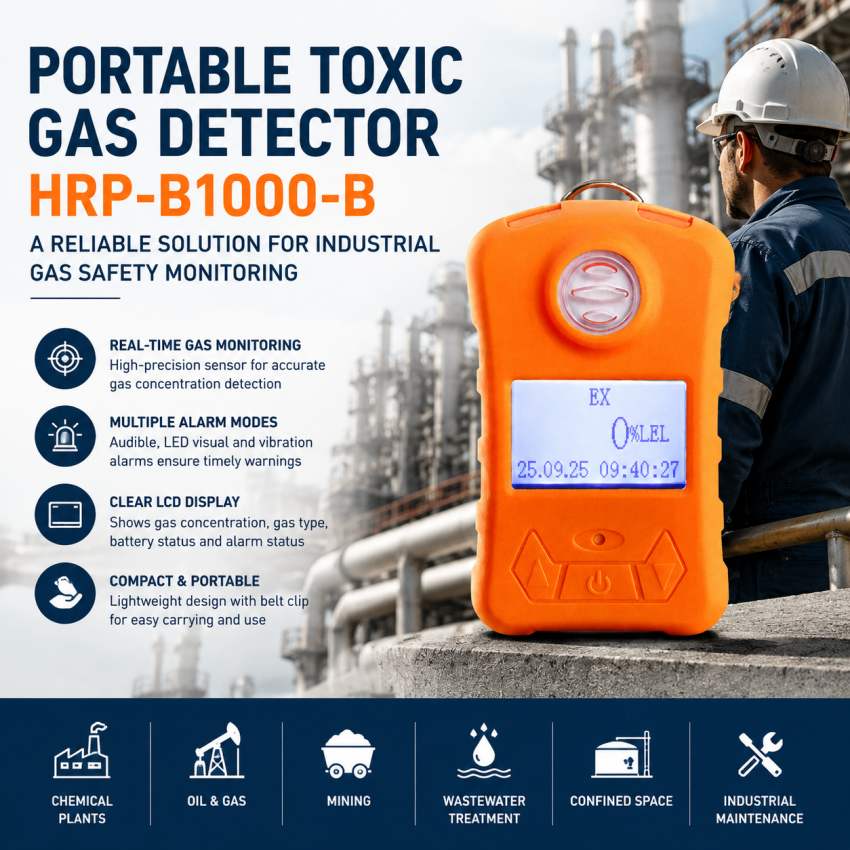
HIREP provides portable gas detection equipment suitable for industrial sites. Among them, the HRP-B1000-B portable toxic gas detector can be configured with different sensors according to the detection needs to monitor hydrogen sulfide, carbon monoxide, ammonia, chlorine, sulfur dioxide, VOCs and other gases.
HIREP supports OEM/ODM customization services for industrial application needs in different countries and regions, and can provide corresponding equipment configuration solutions based on customers’ target gases, detection requirements, and usage scenarios.


 WhatsApp: 8619339980364
 E-mail: contact@hirepsafety.com
