
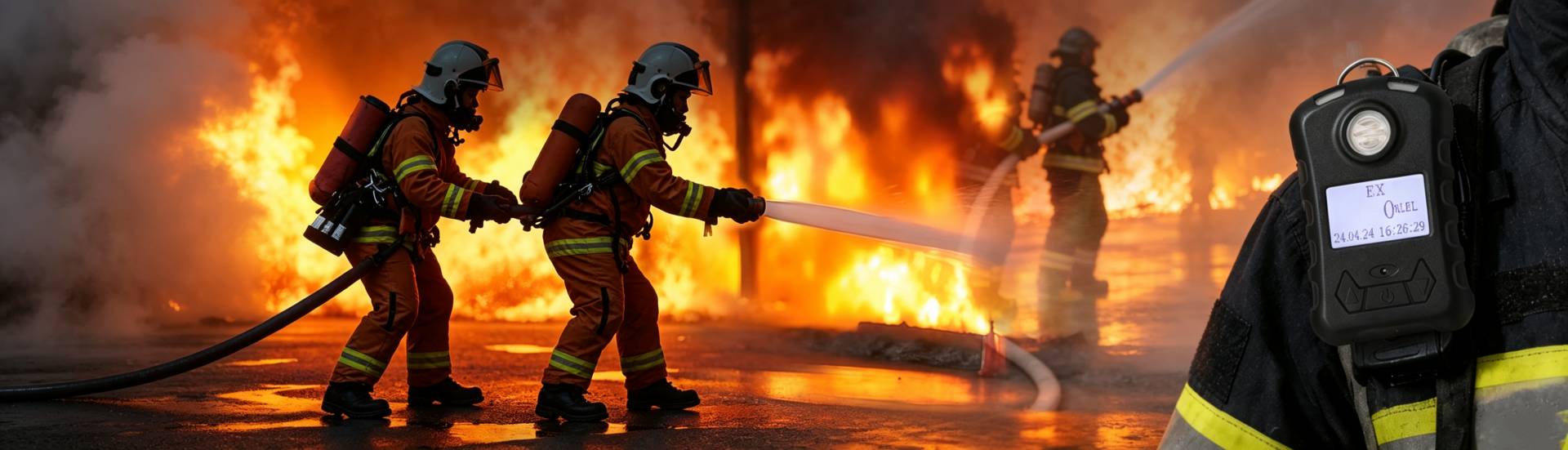
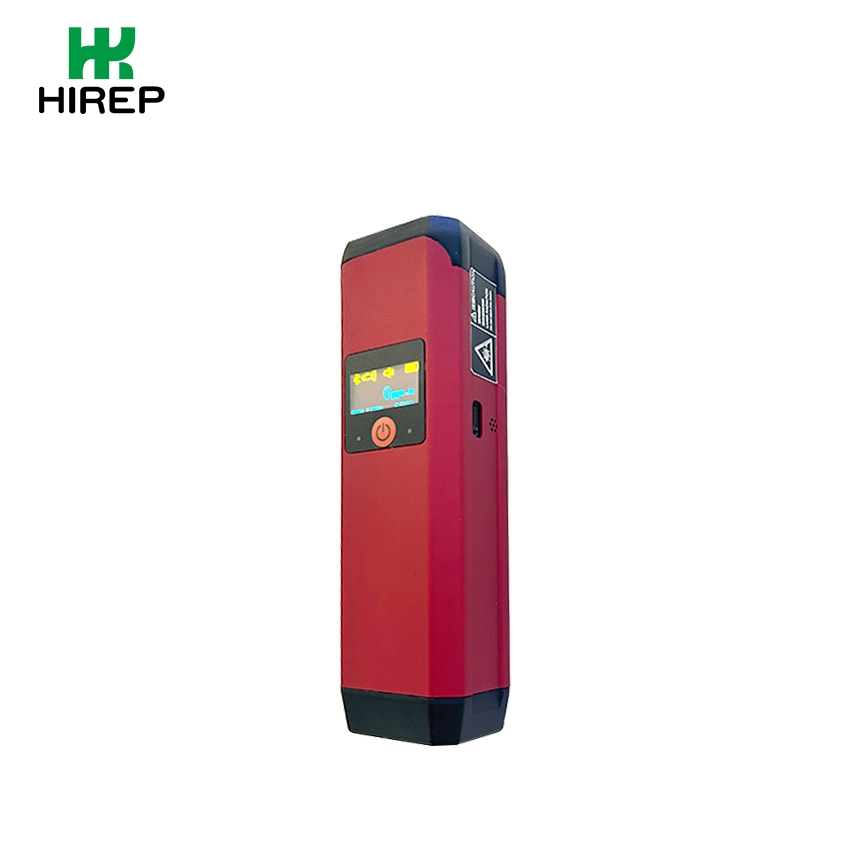
HRP530 Mini Handheld Remote Gas Detector: Used for Laser Methane Leakage Detection in Industrial Field
In the fields of natural gas transportation, oil and gas production, chemical manufacturing and gas storage, methane leakage is a key problem that needs to be paid attention to in daily safety inspection. Long-term operation of pipelines, valves, flanges and equipment joints may cause leakage due to aging seals, loose joints or equipment wear. If not found in time, the leaked gas may accumulate in local areas, increasing the risk of fire and explosion.
For large-scale industrial sites, some pipelines and gas equipment are installed at high positions or distributed in inaccessible areas. If the staff completely rely on the traditional contact detector to check point by point, not only the inspection process is complicated, but sometimes they need to enter the area with potential risks.
Handheld remote laser methane detector can change this detection mode. Workers can detect the target area from a certain distance without placing the instrument directly near the leakage point. HIREP HRP530 mini handheld remote gas detector adopts TDLAS technology, which is mainly used for remote methane detection and daily leakage inspection in industrial sites.
How to Detect Methane by TDLAS Technology?
The full name of TDLAS is tunable semiconductor laser absorption spectroscopy technology. It uses the principle that different gas molecules have different absorption characteristics for specific wavelength laser to realize target gas detection.
When a laser beam passes through an area containing methane, methane molecules will absorb the laser with a specific wavelength. The instrument judges whether there is methane in the optical path by analyzing the change of the received optical signal, and obtains the measurement results according to the corresponding detection principle.
Different from the traditional contact gas detector, TDLAS laser detection does not need to place the sensor directly at the gas leakage position. As long as the detection light path can cover the target area and meet the measurement conditions of the equipment, it can be detected from a certain distance.
This method is more suitable for industrial environments with dense pipelines, large distribution range of equipment, or inconvenient direct access to some detection positions.
Application Scenario of HRP530 Remote Laser Methane Detector
Inspection of Natural Gas Pipelines and Valves
Natural gas pipelines usually need long-term operation, and pipeline interfaces, flanges, valves and connecting parts are all places that need attention in daily inspection. Affected by vibration, temperature change and long-term use, the sealing performance of these parts may decrease or the connection may be loose.
When using HRP530 for remote detection, the staff can scan the suspected leakage position to check whether there is methane in the target area. For places with long pipelines and many detection points, this method can reduce the workload of detecting equipment one by one.
Natural Gas Storage and Transmission and Distribution Station
Natural gas storage stations and transmission and distribution facilities usually contain a large number of pipelines, pressure regulating devices, valves and connecting equipment. Daily inspection needs to cover multiple areas, and the distance between some devices is far, so the traditional inspection method is not always convenient to operate.
Remote laser methane detector can be used to check the designated equipment and pipeline area, and help the patrol personnel to find out the potential leakage location. For outdoor gas facilities, it is also necessary to judge the measurement results in combination with the on-site wind speed, equipment layout and laser light path conditions.
Chemical Plant and Gas Use Area
In some chemical production processes, natural gas or methane will be used as fuel or production raw materials. Gas supply pipeline, combustion equipment and related connection parts may become the focus of leakage investigation.
Through hand-held remote detection equipment, workers can detect the relevant positions in daily equipment inspection, which is especially suitable for some pipelines and equipment that are inconvenient to access directly.
Outdoor High-Altitude Equipment Inspection
Some industrial pipelines and gas equipment are installed on supports, platforms or higher positions, and manual proximity detection may require additional climbing operations.
Under the condition that the detection distance and optical path conditions meet the requirements, remote laser methane detection can help workers to check the target area from the ground or other suitable positions and reduce unnecessary close contact.
What Is the Difference Between Remote Laser Methane Detection and Traditional Detection Methods?
Traditional portable gas detectors usually contact the surrounding air directly through sensors, which is suitable for personal safety protection, local gas concentration detection and close-range leakage investigation.
The remote laser methane detector adopts different working modes. It detects methane in the target area through the laser light path, and does not require the staff to directly place the instrument near the suspected leakage point.
The two devices are not mutually substitutive, but are suitable for different detection tasks.
For example, in the inspection of natural gas pipelines, remote laser detectors can be used to check the positions of pipelines, valves and flanges. If any abnormality is found, other testing equipment shall be used for further confirmation according to the site conditions. For the operation that needs to monitor the gas concentration around personnel in real time, a personal protective gas detector that meets the requirements should still be equipped.
What Should I Pay Attention to When Choosing a Hand-Held Laser Methane Detector?
There are differences in equipment layout and detection requirements in different industrial sites. When purchasing a remote laser methane detector, we should not only pay attention to the detection distance, but also consider the following aspects.
Detection distance and measurement range: Select the appropriate model according to the pipeline layout, equipment height and actual inspection distance, and confirm whether the measurement range of the equipment meets the site requirements.
Detection technology: TDLAS uses methane characteristic absorption spectrum for detection, which is suitable for remote methane leakage investigation. When selecting the type, it should be confirmed whether the equipment is designed for the target gas.
Measurement resolution and response time: These parameters will affect the efficiency of on-site inspection, and should be judged according to the actual inspection requirements and product technical data.
Environmental adaptability: Outdoor detection may be affected by wind speed, temperature, dust and background environment. Before use, you should know the applicable conditions of the equipment and avoid using it in an environment that does not meet the measurement requirements.
Portable equipment: For workers who need to patrol for a long time, the equipment weight, holding mode, operation interface and battery life will all affect the actual use experience.
Maintenance and inspection: The laser inspection equipment needs to be inspected and maintained daily according to the manufacturer’s requirements, including battery status, optical components and instrument operation, to ensure that the equipment is in normal working condition.
HIREP HRP530 Mini Handheld Remote Gas Detector
Hirephrp 530 Mini Handheld Remote Gas Detector is a handheld remote methane detector with TDLAS technology, which is mainly used for natural gas pipelines, gas storage facilities, chemical plants and other industrial places involving methane use.
Different from the traditional portable instruments that need to be exposed to gas for detection, HRP530 can remotely detect the target area through laser light path, which is suitable for methane leakage inspection of pipelines, valves, flanges and other equipment connection positions.
In practical application, the staff can check the suspected leakage positions one by one according to the distribution of field equipment. Remote detection can also provide more operational flexibility for equipment with high installation position or inconvenient direct access.
For natural gas transmission and distribution, industrial gas management and equipment maintenance enterprises, HRP530 can be used as a part of daily methane inspection equipment, together with fixed gas detection systems and personal portable gas detectors to meet the gas detection requirements in different scenarios.


 WhatsApp: 8619339980364
 E-mail: contact@hirepsafety.com
