
Portable Gas Detector vs Fixed Gas Detector
What’s the Difference Between a Portable Gas Detector and a Fixed Gas Detector?
Gas detection systems play an important role in the field of industrial safety. By monitoring the concentration of dangerous gases, they can provide early warnings before dangerous situations occur. Among them, portable gas detectors and fixed gas detectors are the two most common gas monitoring equipment in the industrial field at present.
Although both of them are aimed at detecting dangerous gases, their application methods and functional focuses are different.
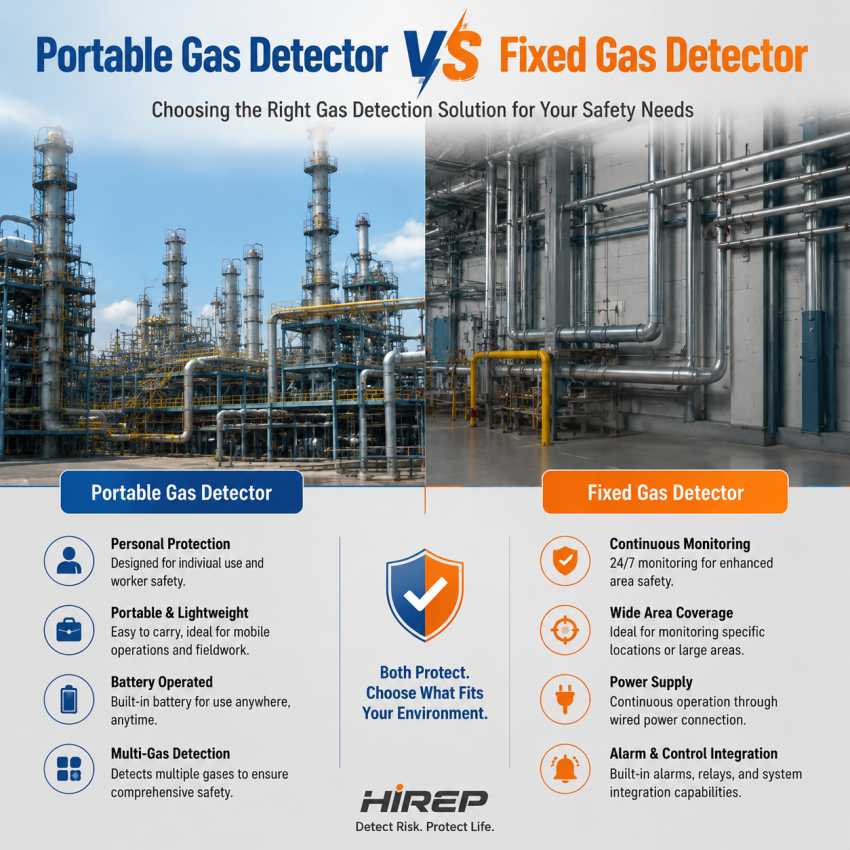
Portable gas detectors are mainly used for personnel safety protection and mobile detection, while fixed gas detectors are used for continuous monitoring and safety protection in fixed areas.
The selection of suitable gas detection equipment needs to be comprehensively considered according to the working environment, gas hazard types, monitoring requirements, and relevant safety standards.
What Is a Portable Gas Detector?
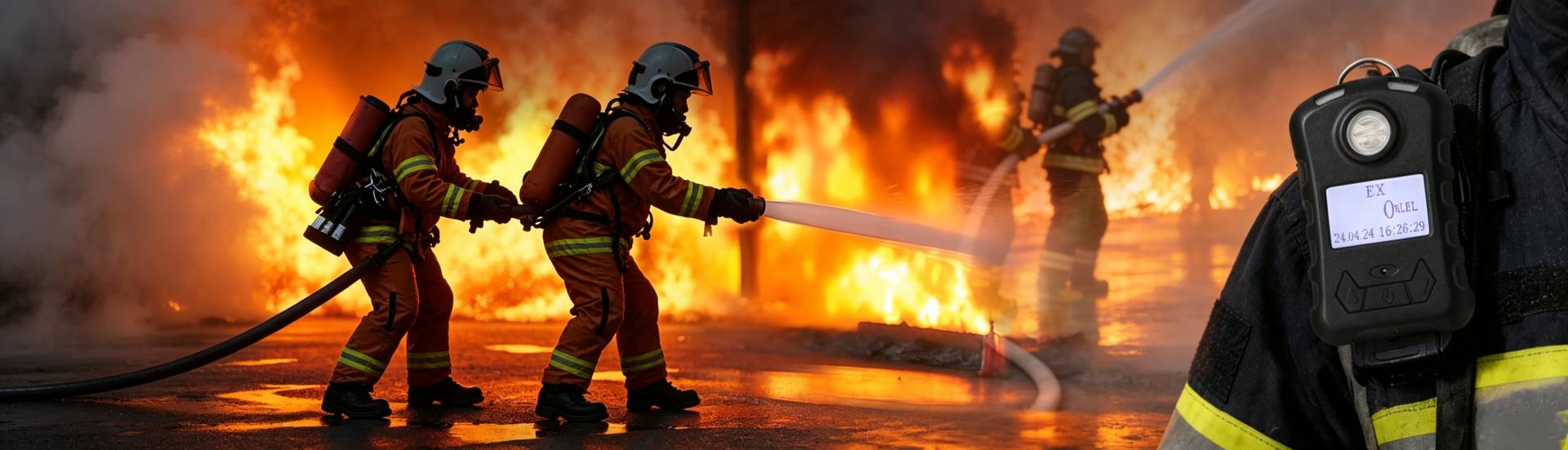
Portable gas detector is a small, portable gas detection device, which is usually powered by batteries and can be carried by workers during inspection, maintenance, operation, or emergency rescue.
Portable gas detectors are often used to detect the following gases:
- Carbon monoxide (CO)
- Hydrogen sulfide (H₂S)
- Oxygen (O₂)
- Combustible gas (LEL)
- Ammonia gas (NH₃)
- Chlorine gas (Cl₂)
- Volatile organic compounds (VOCs)
The equipment will continuously detect the gas concentration in the surrounding environment of the staff. When the gas concentration exceeds the preset alarm value, it will provide warnings through:
- Audible alarm
- Vibration alarm
- LED light alarm
- Screen display alarm
Remind staff to take safety measures in time.
Portable gas detectors are widely used in:
- Oil and gas industry
- Chemical production
- Mine
- Sewage treatment plant
- Fire rescue
- Limited space operation
- Industrial equipment maintenance
Advantages of Portable Gas Detector
1. Protect the Personal Safety of Staff
The biggest advantage of a portable gas detector is that it can directly protect staff.
Because workers may need to move in different areas, fixed-position detection equipment cannot always cover the surrounding environment of workers. Portable detectors can move with workers to monitor their exposure risks in real time.
For example:
When entering storage tanks, pipelines, or underground spaces for maintenance work, workers can carry a portable multi-gas detector to detect in advance:
- Is there insufficient oxygen?
- Are there toxic gases?
- Is there flammable gas leakage?
Thereby reducing accident risks.
2. Flexible Use and Convenient Carrying
The portable gas detector does not require complicated installation. Workers can carry it with them and put it into use quickly.
It is especially suitable for:
- Temporary operation areas
- Daily inspection
- Equipment maintenance
- Emergency detection
- Outdoor work
Compared with fixed equipment, portable detectors have higher mobility flexibility.
3. Suitable for Limited Space Detection
Many industrial accidents occur in limited space environments, such as:
- Storage tanks
- Sewer systems
- Manholes
- Pipelines
- Underground installations
These areas may have:
- Toxic gas accumulation
- Lack of oxygen
- Combustible gas leakage
Portable gas detectors can detect air conditions before entering a limited space and continuously monitor environmental changes during operation.
What Is a Fixed Gas Detector?
Fixed gas detector is an industrial safety device installed in a fixed position for long-term continuous monitoring of gas concentration in a specific area.
Fixed gas detection systems usually include:
- Gas sensor
- Gas detection transmitter
- Control host
- Sound and light alarm device
- Communication interface
Equipment is usually installed at locations where gas leakage may occur, such as:
- Machine shops
- Chemical plant areas
- Near storage tanks
- Pipeline areas
- Compressor rooms
- Gas equipment areas
When the gas concentration reaches the alarm setting value, the system can automatically start:
- Sound and light alarm
- Ventilation system
- Emergency shutdown system
- Control center alarm notification
Advantages of Fixed Gas Detector
1. All-Weather Continuous Monitoring
The biggest advantage of fixed gas detectors is that they can provide continuous 24-hour monitoring.
Different from portable equipment that workers need to carry, fixed systems can continuously monitor dangerous areas. Even if the site is unattended, gas leakage can be detected in time.
For industrial enterprises with continuous production, fixed gas detection systems can provide more stable security.
2. Suitable for Safety Protection in Large Industrial Areas
There are usually many potential leakage points in industrial production environments, such as:
- Gas pipelines
- Storage vessels
- Chemical reaction equipment
- Fuel systems
- Production equipment
By reasonably arranging fixed gas detectors, leakage can be found at an early stage and measures can be taken in time.
3. Can Be Connected to Industrial Safety Systems
Many fixed gas detection systems support connection with the following systems:
- PLC control systems
- SCADA monitoring systems
- Building automation systems
Realize automatic safety control, such as:
- Automatically start exhaust systems
- Shut down equipment
- Send alarm information to the control center
Comparison Between Portable Gas Detector and Fixed Gas Detector
| Comparison Project | Portable Gas Detector | Fixed Gas Detector |
|---|---|---|
| Installation mode | No installation required | Fixed installation required |
| Main purpose | Personal protection | Area monitoring |
| Mobility | Can be carried around | Used in a fixed position |
| Power supply mode | Battery power supply | Industrial power supply |
| Detection range | Around the staff | Designated area |
| Alarm mode | Sound, light, vibration, display alarm | Sound and light alarm and system alarm |
| Suitable scenes | Inspection, limited space, maintenance | Factories, workshops, production areas |
| Continuous monitoring | Limited by battery time | 24-hour continuous operation |
| Maintenance methods | Charging, calibration, sensor replacement | System maintenance and sensor calibration |
How to Choose Portable or Fixed Gas Detector?
The choice of gas detection equipment needs to be decided according to actual safety requirements.
Selection of Portable Gas Detector
Portable detectors are suitable for:
- Workers need to move frequently
- The source of dangerous gas is uncertain
- Need to enter a limited space
- Temporary detection requirements
- Focus on personal protection of personnel
For example:
Workers in the oil and gas industry need to carry portable multi-gas detectors when inspecting pipelines and simultaneously detect:
- Hydrogen sulfide (H₂S)
- Oxygen (O₂)
- Combustible gas (LEL)
Ensure safety during inspection.
Selection of Fixed Gas Detector
Fixed detection systems are more suitable for:
- Gas leakage risk concentration areas
- Places that need continuous monitoring
- Factories that run continuously for a long time
- Environments requiring automatic alarm linkage
- Large industrial areas
For example:
Chemical plants usually install fixed toxic and combustible gas detectors near storage tanks and production equipment to monitor dangerous areas in real time.
Can Portable and Fixed Gas Detectors Be Used at the Same Time?
Yes.
In many industrial applications, portable and fixed gas detectors are usually used together to form a complete gas safety protection system.
The fixed gas detection system provides:
- Continuous regional monitoring
- Automatic alarm
- Factory-level safety protection
Portable gas detectors provide:
- Personal safety protection
- Mobile operation monitoring
- Extra protection for special operations
The combination of the two can form multi-level safety protection and improve the overall industrial safety level.
Important Factors to Consider When Selecting a Gas Detector
1. Detection of Gas Type
Different gases need to match different types of sensors.
Common sensors include:
- Electrochemical sensor: Used to detect toxic gases.
- Catalytic combustion sensor: Used to detect combustible gases.
- Infrared sensor: Used to detect hydrocarbons.
- PID sensor: Used to detect VOC volatile organic compounds.
Before selecting equipment, the types of dangerous gases that may exist in the working environment should be identified first.
2. Detection Range and Alarm Settings
The detection range of the gas detector should meet the requirements of the site environment.
Combustible gas usually uses:
%LEL (percentage of Lower Explosive Limit)
As a unit of measurement.
Toxic gases usually use:
ppm (parts per million)
As a unit of measurement.
3. Working Environment Conditions
When selecting equipment, you need to consider:
- Temperature range
- Humidity
- Dust environment
- Explosion-proof requirements
- Indoor or outdoor installation
For industrial environments, it may be necessary to choose products with:
- Explosion-proof certification
- Ingress protection rating
4. Calibration and Maintenance
To ensure detection accuracy, gas detectors need regular maintenance.
Maintenance contents include:
- Sensor calibration
- Alarm test
- Battery inspection
- Sensor replacement
A complete maintenance plan can ensure that the equipment works normally in dangerous situations.
Conclusion
Portable gas detectors and fixed gas detectors are both important equipment in the field of industrial gas safety, but they undertake different safety tasks.
Portable gas detectors are mainly used for personal protection and mobile detection, suitable for inspection, maintenance, and limited space operations.
Fixed gas detectors are mainly used for continuous area monitoring and industrial facility protection, suitable for high-risk environments such as chemical plants, oil and gas facilities, and production workshops.
For many industrial enterprises, the best safety solution is not to choose one over the other, but to combine both devices to establish a more complete gas monitoring system.
Choosing the appropriate gas detection equipment requires comprehensive consideration of:
- Gas hazard type
- Working environment
- Detection target
- Safety standards
Reasonable configuration of a gas detection system can effectively reduce accident risks, protect staff safety, and improve the overall safety management level of enterprises.


 WhatsApp: 8619339980364
 E-mail: contact@hirepsafety.com