
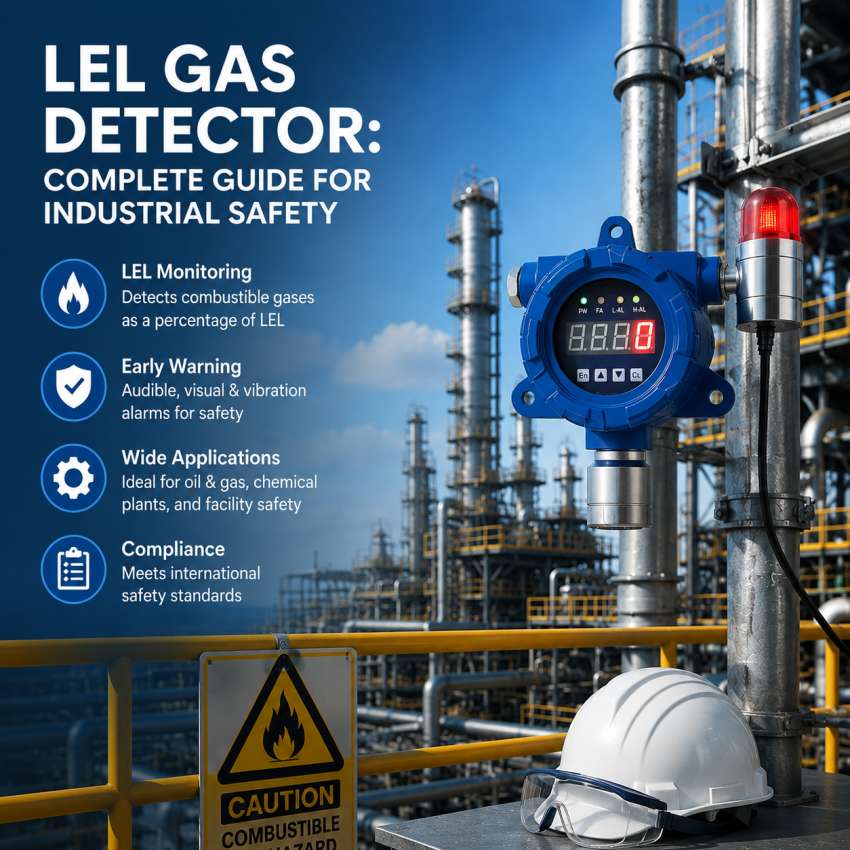
LEL Gas Detector: Complete Guide for Industrial Safety
What is a LEL Gas Detector?
LEL gas detector is a kind of safety equipment used to monitor the concentration of combustible gas in the air, which can provide early warning before the gas concentration reaches the dangerous explosion range.
LEL is the abbreviation of Lower Explosive Limit, which refers to the lowest concentration of combustible gas mixed with air that can burn or explode when it meets an ignition source.
In industrial environment, methane, hydrogen, propane and other hydrocarbon combustible gases may leak during production, storage, transportation or equipment maintenance. If not found in time, these gases may accumulate continuously, eventually forming a serious fire and explosion risk.
The LEL gas detector continuously monitors the concentration of combustible gas in the environment, and displays the test results in the form of %LEL (percentage of lower explosive limit), which helps staff to know potential hazards in time and take effective measures to reduce safety risks.
How Does LEL Gas Detector Work?
The LEL gas detector detects the concentration of combustible gas in the surrounding environment through an internally installed gas sensor.
When the combustible gas enters the sensor, the equipment will convert the gas concentration into an electrical signal and display the real-time detection data after processing.
When the gas concentration reaches the preset alarm value, the detector will start the alarm function to remind the field personnel to deal with it in time.
Common alarm methods include:
- Audible alarm
- LED lighting alarm
- Vibration alarm
- Remote alarm notification
According to the site conditions, the staff can take the following measures:
- Close the leakage source
- Increase ventilation
- Evacuate the dangerous area
- Eliminate possible ignition sources
Finding gas leakage in advance is one of the most effective ways to prevent flammable gas accidents.
How to Understand the LEL Reading?
Most LEL gas detectors use %LEL to indicate the concentration of combustible gas.
For example, the lower explosive limit of methane in air is about 5% (volume concentration).
LEL values can be understood as follows:
- 0% LEL: No combustible gas was detected.
- 10% LEL: The gas concentration reaches 10% of the lower explosion limit.
- 50% LEL: The gas concentration is obviously increased, which needs attention.
- 100% LEL: The gas concentration reaches the minimum combustion and explosion concentration.
In industrial applications, the alarm value is usually set below 100% LEL, which provides enough time for workers to take emergency measures to avoid the environment entering a dangerous state.
Types of LEL Gas Detector
LEL gas detection equipment is mainly divided into two categories:
- Portable LEL gas detector
- Fixed LEL gas detection system
Portable LEL Gas Detector
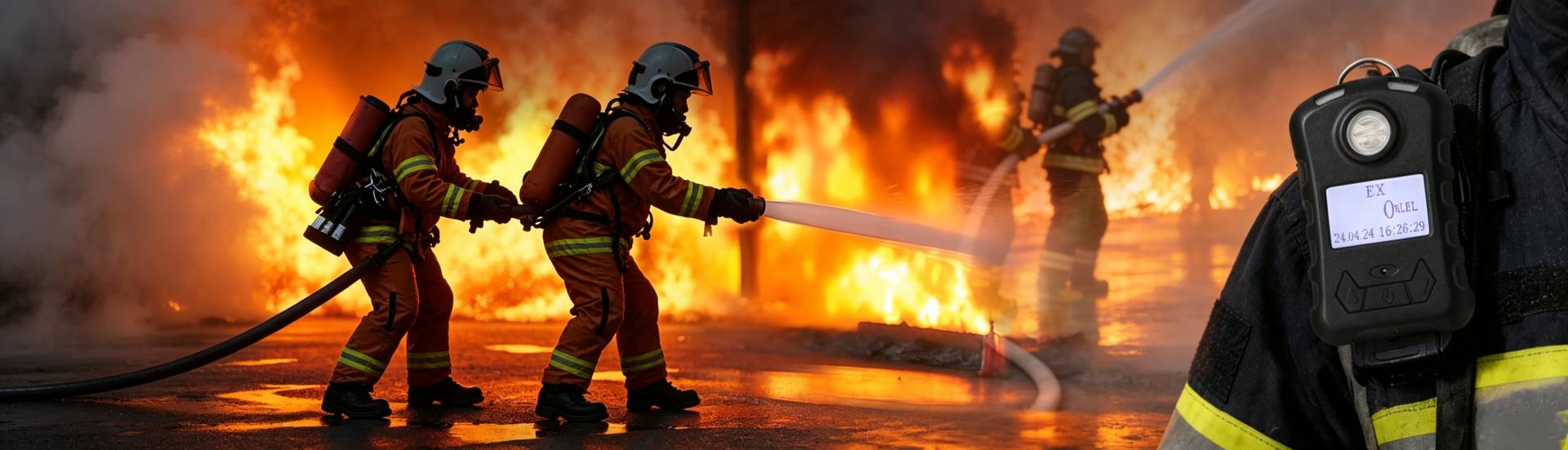
Portable LEL gas detector is mainly used for personal safety protection and mobile gas detection.
Because the equipment is small in size, light in weight and powered by batteries, the staff can carry it with them in various scenarios, such as:
- Equipment inspection
- Maintenance operation
- Restricted space entry
- Emergency rescue
Common features include:
- Portable design
- Real-time gas concentration display
- Battery powered
- Acousto-optic alarm
- Vibration reminder
- Multi-gas detection function
Portable detector can provide continuous protection for workers entering dangerous areas and help them find potential gas risks in time.
Fixed LEL Gas Detection System
The fixed LEL gas detection system is a kind of continuous monitoring equipment installed in the dangerous area of industrial site for a long time.
A complete fixed system usually includes:
- Gas sensor
- Control host
- Acousto-optic alarm device
- Communication module
Different from the portable detector, the fixed system can provide 24-hour continuous monitoring and can be connected with the industrial safety management system.
Common installation areas include:
- Natural gas pipeline area
- Tank area
- Compressor room
- Chemical production area
- Fuel storage area
Stationary gas detection systems are widely used in industrial environments that need long-term safety monitoring, which can effectively protect personnel, equipment and production facilities.
Main Application Fields of LEL Gas Detector
Oil and Gas Industry
Oil and gas industry is one of the most widely used fields of LEL detection technology.
During drilling, refining, storage and transportation, combustible gas may leak from the following equipment:
- Pipeline
- Valve
- Pumping unit
- Storage tank
- Process unit
LEL gas detector can detect gas leakage in time and reduce the possibility of fire and explosion accidents.
Chemical Industry
Chemical production usually involves a large number of flammable gases, solvents and volatile organic compounds.
Reliable LEL monitoring system can help enterprises:
- Detecting flammable vapor accumulation
- Reduce fire risk
- Improve the level of production safety
- Protect production equipment
Due to the complex chemical production environment, continuous gas monitoring has become an important part of industrial safety management.
Ship and Marine Industry
Ships, oil tankers and offshore platforms usually contain fuel systems and confined spaces, which are prone to combustible gas accumulation.
LEL detection equipment is usually used in:
- Engine compartment
- Hold
- Pump room
- Fuel storage area
For the shipbuilding industry, due to the limited ventilation conditions in the space, accurate gas detection is particularly important to prevent the accumulation of dangerous gases.
Confined Space Operation
Confined spaces such as storage tanks, pipelines, underground spaces and the interior of containers usually have poor air circulation, which is more likely to cause flammable gas accumulation.
Before workers enter these areas, they usually need to use portable LEL gas detector to confirm the environmental safety.
Gas monitoring can help to find:
- Combustible gas accumulation
- Hypoxia risk
- Toxic gas exposure
Why Is LEL Gas Detection So Important?
1. Find Gas Leakage in Advance
Many combustible gases cannot be reliably detected by human senses.
Small-scale leakage may gradually lead to an increase in gas concentration, eventually forming an explosive environment.
LEL gas detector can provide early warning, so that enterprises can take measures before accidents happen.
2. Protect the Safety of Staff
Industrial workers may come into contact with combustible gas in daily operation, equipment inspection and maintenance.
Continuous LEL monitoring can help staff to judge whether the current environment is safe and reduce the risk of entering dangerous areas.
3. Prevent Fire and Explosion Accidents
The core purpose of LEL detection is to prevent combustible gas from reaching dangerous concentration.
By finding gas accumulation in advance, enterprises can take timely control measures to reduce the probability of serious accidents and improve the overall production safety level.
How to Choose a Suitable LEL Gas Detector?
When selecting LEL gas detection equipment, the following important factors need to be considered:
1. Detection of Gas Type
Different types of combustible gases need to match different sensors and calibration parameters.
Common detection gases include:
- Methane
- Hydrogen
- Propane
- Natural gas
- Hydrocarbon gas
Choosing the right sensor can ensure that the detection results are more accurate and reliable.
2. Use Environment
When selecting equipment, you need to consider the field working conditions, such as:
- Indoor or outdoor installation
- Temperature range
- Humidity environment
- Dust situation
- Explosion-proof requirements
For dangerous industrial areas, explosion-proof certification and equipment protection level are very important selection factors.
3. Sensor Technology
At present, common sensor technologies include:
Catalytic Combustion Sensor
Catalytic combustion sensors are widely used in the detection of common combustible gases.
Advantages:
- Fast response speed
- Wide detection range
- Lower cost
- Suitable for most industrial environments
Infrared Sensor
Infrared sensor uses infrared absorption principle to detect gas concentration.
Advantages:
- Long service life
- High stability
- Strong anti-sensor poisoning ability
- Suitable for harsh industrial environment
4. Alarm and Communication Functions
Modern LEL gas detectors usually support a variety of communication functions, such as:
- Relay output
- RS485 communication
- Wireless transmission
- Remote monitoring
These functions can help equipment access industrial control system and improve safety management efficiency.
Maintenance Suggestion of LEL Gas Detector
In order to ensure the accuracy of detection and the reliable operation of equipment, regular maintenance is needed.
Recommendations include:
- Regularly calibrate the equipment.
- Check whether the alarm function is normal.
- Check the sensor status.
- Keep the sensor clean.
- Replace the sensor in time according to the service life.
Properly maintained LEL gas detector can provide stable and reliable safety protection for a long time.


 WhatsApp: 8619339980364
 E-mail: contact@hirepsafety.com