
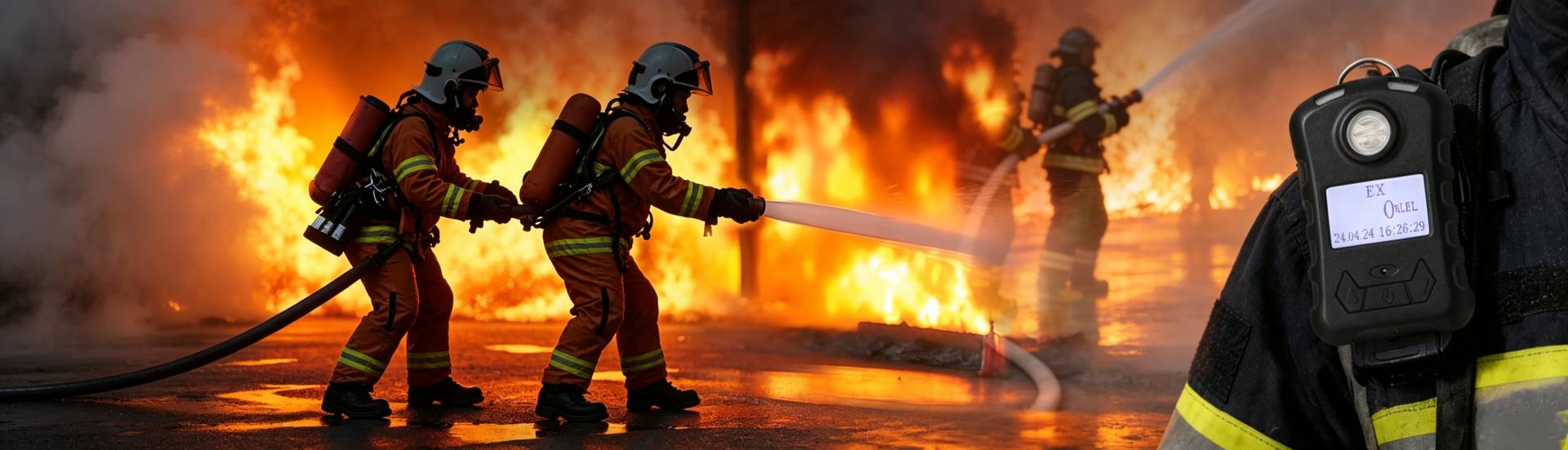
fixed gas detection system supplier
Stationary Gas Detection System Suppliers: How to Choose Reliable Industrial Gas Detection Partners
Choosing a suitable supplier of fixed gas detection system is an important decision in industrial safety management. The fixed gas detection system is not only a device for measuring gas concentration, but also a comprehensive safety system for continuously monitoring dangerous gases, providing early warning and supporting emergency response.
For industries such as oil and gas, petrochemical industry, chemical manufacturing, sewage treatment, mining and energy production, choosing an experienced supplier will directly affect the reliability, installation quality, maintenance efficiency and long-term operating cost of the system.
This paper will introduce the factors that need to be considered when selecting a reliable fixed gas detection system supplier, and how to evaluate the technical ability of a gas detection manufacturer.
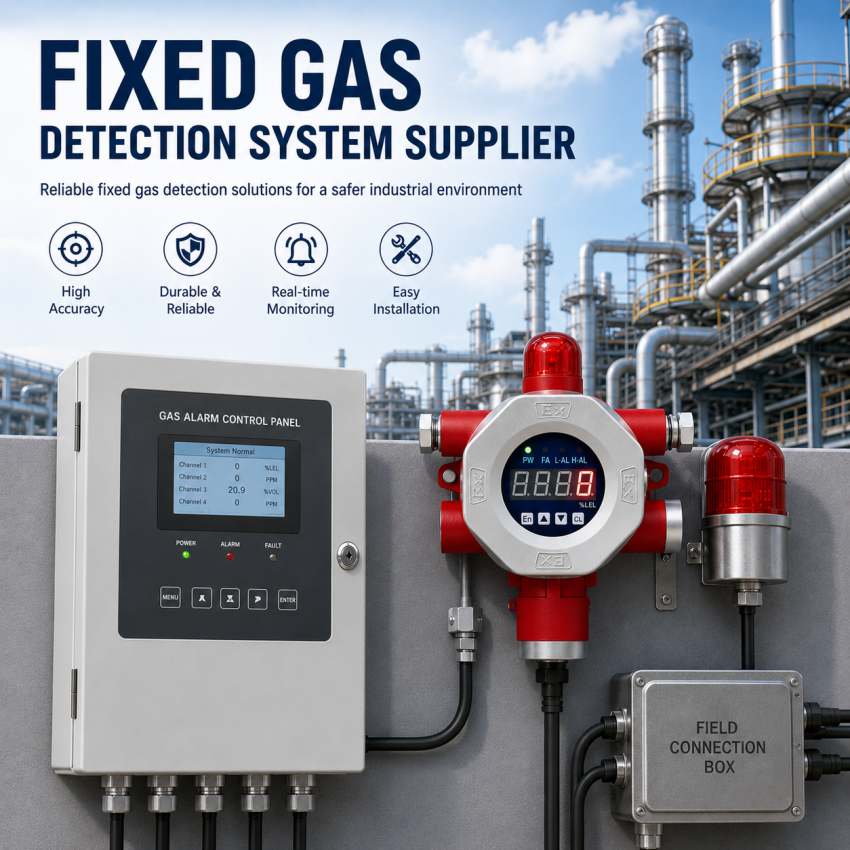
What is a fixed gas detection system?
Fixed gas detection system is a permanently installed gas monitoring solution, which is used to continuously detect specific gases in industrial or commercial environment.
A typical system may include:
- Fixed gas detector
- Gas sensor
- Gas alarm controller
- Sound and light alarm
- Industrial communication interface
- Central monitoring system
- Integration of PLC or DCS system
- Remote monitoring equipment
Different from the portable gas detector, the fixed gas detection system is installed in a predetermined position, which can continuously monitor without the need for staff to carry equipment.
According to different industrial application requirements, the system can be configured to detect different types of dangerous gases, including:
- Flammable gas
- Toxic gas
- Insufficient oxygen or high oxygen concentration
- Volatile organic compounds (VOCs)
- Gases to be detected for other specific industrial applications
The selection of gas detector and sensor technology should be based on the target gas, application environment, required detection range and safety requirements.
Why is it important to choose the right supplier of fixed gas detection system?
Gas detection system is an important solution related to safety. The performance of the final system depends not only on the detector itself, but also on product design, sensor selection, installation quality, calibration, communication and after-sales support.
A reliable supplier should be able to provide more than just a catalogue.
The supplier should understand:
- Characteristics of target gas
- Potential gas leakage source
- Industrial environmental conditions
- Required detection mode
- Alarm value setting
- System communication requirements
- Installation and maintenance requirements
For example, stationary combustible gas detectors used in oil and gas facilities may require different detection technologies from toxic gas detectors used in sewage treatment plants.
Therefore, professional suppliers should be able to provide appropriate technical advice according to actual applications, rather than simply recommending the same detector in all applications.
What products should professional stationary gas detection system suppliers provide?
Qualified suppliers should have product series that can meet different gas detection needs.
1. Fixed combustible gas detector
Stationary combustible gas detector is used to monitor combustible gas that may cause fire or explosion risk.
Common detection gases include:
- Methane
- Natural gas
- Propane
- Butane
- Hydrogen
- Other combustible gases
According to the specific application, different detection technologies can be used, including catalytic combustion detection and infrared detection.
For example, infrared combustible gas detector is suitable for some continuous monitoring applications that need long-term stable detection performance.
2. Fixed toxic gas detector
Fixed toxic gas detector is used to monitor gases that may cause harm to human health.
Common toxic gases include:
- Hydrogen sulfide (H₂S)
- Carbon monoxide (CO)
- Ammonia gas (NH₃)
- Chlorine gas (Cl₂)
- Sulfur dioxide (SO₂)
- Nitrogen dioxide (NO₂)
Different gases need to use different sensor technologies and detection ranges. Professional stationary gas detection system suppliers should be able to recommend suitable sensors according to the target gas and application conditions.
3. Fixed oxygen detector
Oxygen monitoring is very important in closed space and industrial environment where oxygen shortage or oxygen concentration is too high.
Oxygen monitoring can help identify the potentially dangerous atmospheric environment and avoid the risks faced by workers when they enter or continue to work.
Oxygen detection may be applied to:
- Confined space
- Chemical facilities
- Storage tank
- Sewage treatment facilities
- Laboratory
- Industrial production area
4. Gas detection controller
The gas detection controller can receive the data transmitted by the connected gas detector and manage the alarm and monitoring functions.
Depending on the system design, the controller may support:
- Multiple detector inputs
- Gas concentration display
- Alarm state monitoring
- Acousto-optic alarm control
- Relay output
- RS485 communication
- Modbus communication
- Integration of PLC or DCS system
For large industrial facilities, the controller is an important part of the centralized gas monitoring system.
How to choose a reliable supplier of fixed gas detection system?
1. Assess technical experience
The first thing to consider is the technical experience of suppliers.
Reliable suppliers should understand the complete gas detection process, including:
- Gas identification
- Sensor selection
- Detection range selection
- Detector installation
- Alarm setting
- System integration
- Calibration
- Maintenance
Suppliers with different industrial application experiences are usually more capable of providing practical and professional technical solutions.
However, the experience of suppliers should not be judged only by the age of the enterprise. It is also necessary to evaluate the supplier’s technical team, product research and development capabilities, project experience and ability to provide application support.
2. Check the product quality and manufacturing capacity.
The quality of fixed gas detector is affected by many factors, including:
- Sensor quality
- Electronic components
- Shell design
- Manufacturing process
- Calibration process
- Quality control program
Reliable suppliers should establish a clear quality control process, covering product design, production, testing and final inspection.
When evaluating suppliers, the purchaser can understand:
- Product testing process
- Factory quality control
- Sensor calibration method
- Production capacity
- Product traceability
- Quality management system
This information can help the purchaser to know whether the supplier has the manufacturing ability to meet the long-term industrial application needs.
3. Confirm the gas detection technology
Different gas detection technologies have different advantages and application requirements.
Common detection techniques include:
Electrochemical sensor
Usually used for the detection of toxic gases and oxygen.
Its advantages may include:
- High sensitivity
- Suitable for low concentration gas detection
- The sensor has compact structure
Catalytic combustion sensor
Usually used for combustible gas detection.
This technology is widely used in monitoring the concentration of combustible gas in industrial environment.
Infrared sensor
Infrared gas detection technology can be used for some combustible gases and other gas detection applications.
The appropriate detection technology depends on the gas type, use environment, required detection range and system design.
Professional suppliers should explain the reasons for recommending a certain sensor, rather than simply recommending the product with the highest price.
Why is the certification of fixed gas detection equipment important?
Certification and compliance documents can help prove that products have been evaluated according to specific technical requirements.
Depending on the target market and application scenarios, the purchaser may need to consider:
- Explosion-proof requirements
- Electrical safety
- Electromagnetic compatibility
- Environmental protection grade
- Local regulatory requirements
- Industry-specific standards
Specific certification requirements depend on the country, installation location, hazardous area classification and practical application.
The supplier of reliable fixed gas detection system shall provide accurate and verifiable product documents.
The purchaser shall also confirm whether the certification is applicable to the specific product model and configuration actually purchased.
How can suppliers support the design of fixed gas detection system?
The installation position of gas detector is an important part of system design.
The number and installation location of fixed gas detectors may depend on:
- Potential leakage source
- Gas density
- Atmospheric conditions
- Equipment layout
- Indoor or outdoor installation environment
- Staff activity area
- The size of the monitored area
For example, gas with a density less than air may gather in a higher position, while gas with a density greater than air may gather in an area near the ground.
Therefore, the installation position of the detector should not be determined only according to the average distribution.
Experienced suppliers should be able to provide customers with the following support:
- Gas detection point planning
- Detector selection
- Installation suggestion
- Alarm system design
- Communication system planning
For complex industrial projects, technical consultation before purchasing is helpful to reduce installation problems and unnecessary costs.
What communication functions should the fixed gas detection system support?
Modern industrial gas detection system usually needs to communicate with other safety systems and automation systems.
According to the project requirements, the fixed gas detector may support:
- RS485
- Modbus
- Relay output
- 4-20 mA output
- PLC connection
- DCS system integration
- Centralized monitoring
Communication requirements should be confirmed before purchasing.
The supplier shall clearly state:
- Available communication interfaces
- Communication protocol
- Wiring requirements
- Maximum communication distance
- System compatibility
- Controller requirements
This is especially important when the gas detection system needs to be integrated into the existing industrial control system.
What after-sales support should the fixed gas detection system supplier provide?
After-sales service is an important factor that is often overlooked when choosing suppliers.
Reliable suppliers should be able to provide technical support in the following aspects:
- Product installation
- System debug
- Sensor replacement
- Gas calibration
- Troubleshooting
- Spares provisioning
- Product maintenance
Gas sensors are consumable parts and may need to be replaced after a period of use.
Before purchasing, the buyer should know:
- Service life of sensor
- Calibration requirements
- Recommended maintenance interval
- Spare parts supply
- Technical support process
Suppliers with good after-sales support can help reduce system downtime and improve the long-term operation reliability of gas detection systems.
Common mistakes in selecting suppliers of fixed gas detection systems
Choose only according to the price
The lowest price does not necessarily represent the lowest total cost.
Low-cost systems may bring additional costs, such as:
- Frequent sensor replacement
- Calibration difficulty
- Insufficient technical support
- Communication problem
- High maintenance requirements
When comparing suppliers, the total cost of ownership of products should be considered.
Select the supplier before confirming the target gas
Different gases need to use different sensors and detection technologies.
Before selecting the detector, the purchaser shall make it clear that:
- What gases need to be detected?
- Is the gas flammable or toxic?
- What is the expected gas concentration range?
- Where can the gas leak?
- What is the use environment?
Choosing the wrong sensor may lead to inaccurate detection results or unsuitable equipment.
Ignore the installation environment
The industrial environment may include:
- High-temperature
- High humidity
- Dust
- Corrosive gas
- Vibration
- Hazardous area
The gas detector should be suitable for the actual installation conditions.
Reliable suppliers should give full consideration to site environmental factors when recommending products.
Why did you choose Hirep as the supplier of fixed gas detection system?
As a professional gas detection equipment supplier, Hirep focuses on gas detection solutions in the field of industrial safety.
The product range includes:
- Fixed gas detector
- Portable gas detector
- Combustible gas detector
- Toxic gas detector
- Multi-gas detector
- Dust detector
- Gas monitoring system
Hirep can provide customers with different gas detection solutions according to gas type, application environment, detection requirements and system configuration.
For customers who are looking for a fixed gas detection system supplier, choosing a supplier with product research and development ability, manufacturing experience, technical support ability and long-term service ability will help improve the reliability of the whole gas detection project.


 WhatsApp: 8619339980364
 E-mail: contact@hirepsafety.com