
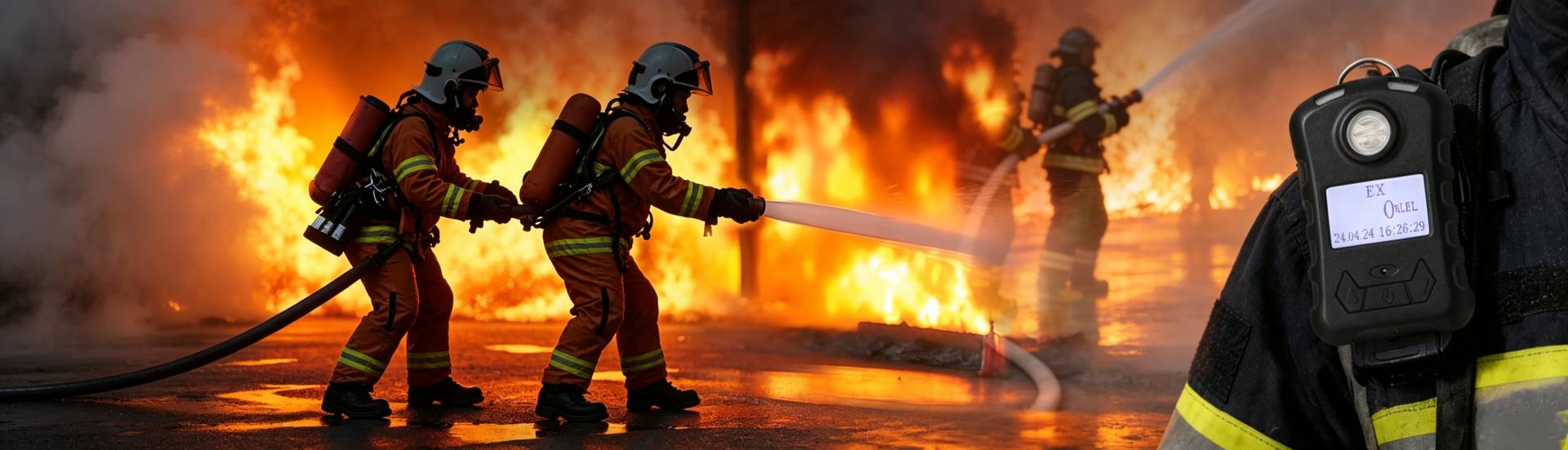
Portable Gas Detector for Field Operation: A Complete Guide to Safe Gas Monitoring in Remote Environment
Introduction
Field operations usually occur in an environment where gas hazards are difficult to predict. Workers in oil and gas, chemical manufacturing, mining, construction, sewage treatment and confined space operations may face safety risks brought by toxic gases, combustible gases and anoxic environment.
Different from the fixed gas monitoring system installed in a fixed position, the portable gas detector for field work can provide mobile safety protection for workers, so that they can continuously monitor the gas concentration in the surrounding environment in any work area.
Reliable portable gas detection equipment can give an alarm in time before the concentration of dangerous gas reaches the dangerous level, thus gaining valuable time for workers to take protective measures and avoid accidents.
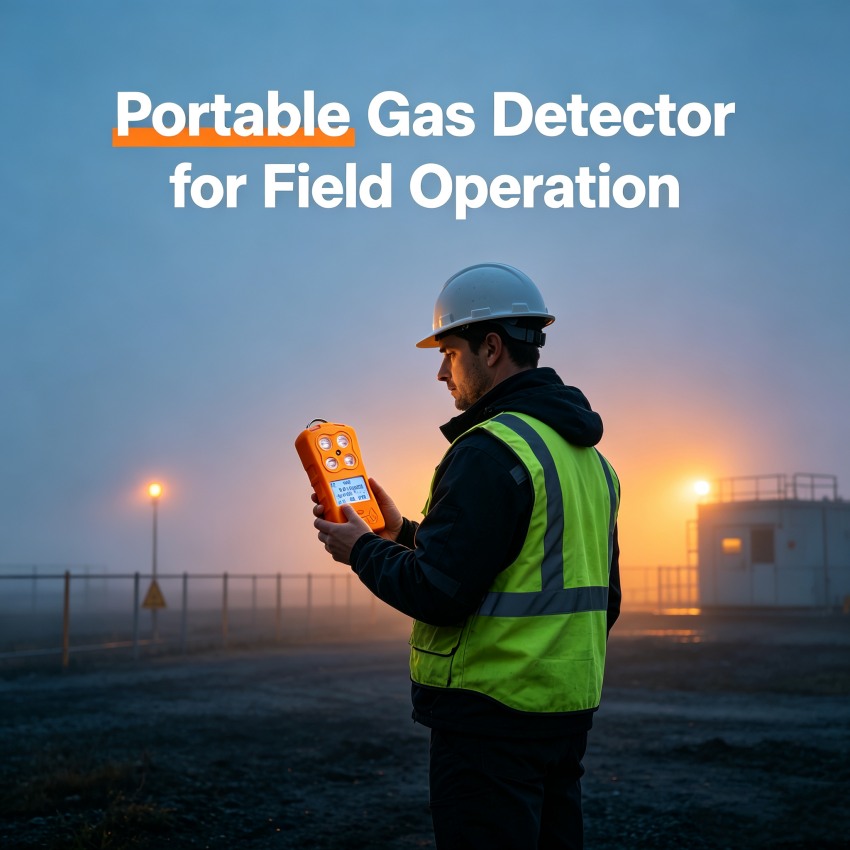
Why Do Field Operations Need Portable Gas Detection?
Many dangerous gases cannot be reliably identified by human senses. Some gases are colorless and odorless, while others may have a serious impact on human health even at a low concentration.
During field operation, gas hazards may suddenly appear due to the following reasons:
- Equipment leakage
- Pipeline damage
- Chemical reaction produces gas
- Insufficient ventilation conditions
- Gas accumulation in underground space
- Working in confined space
Portable gas detector can monitor the environment in real time and remind workers at the early stage of danger, thus reducing the risk of injury caused by gas leakage.
For enterprises that manage high-risk working environment, portable gas detection is not only a safety protection measure, but also an important part of occupational health and safety management system.
What Gases Can the Portable Gas Detector Detect?
Different field application environments require different gas detection capabilities. Most industrial portable gas detectors can detect a single gas or multiple gases at the same time.
Common detection gases include:
1. Detection of Combustible Gas
The combustible gas sensor is used to detect the concentration of combustible gas in the environment and prevent it from reaching the explosion danger range.
Common gases include:
- Methane (CH₄)
- Hydrogen (H₂)
- Propane (C₃H₈)
The concentration of combustible gas is usually displayed in %LEL (percentage of lower explosive limit).
When the gas concentration is close to the dangerous range, the detector will immediately give an alarm to remind the staff to take measures.
2. Toxic Gas Detection
There are risks of toxic gases in many industrial environments, which may have a serious impact on human health.
Common toxic gases include:
- Hydrogen sulfide (H₂S)
- Carbon monoxide (CO)
- Sulfur dioxide (SO₂)
- Ammonia gas (NH₃)
By continuously monitoring the concentration of toxic gas, the exposure risk of workers can be effectively reduced.
3. Oxygen Concentration Detection
Oxygen detection is particularly important for confined space operations.
Insufficient oxygen may be caused by the following reasons:
- Other gases replace oxygen
- Chemical reactions consume oxygen
- Biodecomposition process
Portable gas detector can remind workers whether the oxygen concentration is in a safe range in time.
Important Functions of Portable Gas Detector for Field Operation
When selecting a portable gas detector for field use, you need to pay attention to the following key performance:
Lightweight and Compact Design
Field workers usually need to carry a variety of tools and protective equipment, so the detector should have a lightweight design.
An excellent portable detector can usually:
- Fix on safety helmet or work clothes
- Installed on a belt or safety belt
- Wear it for a long time
And that normal movement and operation of staff can not be affect.
Long Battery Life
Many field working environments are far away from power facilities, so the equipment needs to have long battery life.
Long battery life design can guarantee:
- Covering full working shifts
- Reduce frequent charging
- Improve on-site work efficiency
Fast Response and Accurate Detection
Gas hazards often develop rapidly, so detection equipment must have rapid response ability.
High-quality sensors can provide:
- Faster alarm speed
- Higher detection accuracy
- Lower false alarm rate
Help the staff find the danger in time.
Acousto-Optic Vibration Multiple Alarm
There may be noise and insufficient light in the site environment, and a single alarm mode may not remind the staff in time.
Industrial portable gas detector usually adopts:
- Audible alarm
- LED flash alarm
- Vibration alarm
Ensure that the staff can notice the danger warning at the first time.
Protection Ability to Adapt to Harsh Environment
The field operation environment may exist:
- Dust
- Moist
- Vibrate
- High or low temperature change
Industrial portable gas detector usually adopts:
- Solid shell
- Dustproof and waterproof design
- Impact-resistant structure
So as to ensure the stable operation of the equipment in a complex environment.
Main Application Fields of Portable Gas Detector
Oil and Gas Industry
Drilling, pipeline inspection, equipment maintenance and other work in the oil and gas industry may be exposed to dangerous gases.
Portable gas detector can help staff to monitor:
- Hydrocarbon leakage
- Hydrogen sulfide exposure risk
- Oxygen deficiency
And that safety of field operation is improve.
Confined Space Operation
There may be dangerous gas accumulation in storage tanks, pipelines, underground wells, sewage pools and other spaces.
Before entering the confined space and during the operation, the staff usually need to detect:
- Oxygen concentration
- Toxic gas concentration
- Combustible gas concentration
Ensure that the working environment meets the safety requirements.
Mining Industry
There may be dangerous gases such as methane in the mine environment.
Portable gas detection equipment can help miners to know the environmental safety situation in real time during underground operation and reduce the risk of explosion and poisoning accidents.
Sewage Treatment Industry
Sewage treatment facilities are prone to produce toxic gases such as hydrogen sulfide.
When maintenance personnel enter pumping stations, underground pipelines and other areas, portable gas detectors can help find the accumulation of dangerous gases.
Difference Between Portable Gas Detector and Fixed Gas Detection System
Portable and fixed gas detection systems belong to industrial safety monitoring equipment, but their application scenarios are different.
| Portable Gas Detector | Fixed Gas Detection System |
|---|---|
| Carried by staff | Installed in a fixed area for a long time |
| Suitable for mobile operation | Suitable for continuous area monitoring |
| Can be used for patrol inspection and maintenance | Suitable for fixed places such as factories and workshops |
| Protect personal safety | Protect the whole area |
In many industrial places, the two systems are usually combined to establish a more perfect gas safety monitoring system.
How to Choose a Portable Gas Detector Suitable for Field Operation?
Enterprises should consider the following factors when purchasing portable gas detectors:
1. Determine the Type of Gas to Be Detected
First of all, it is necessary to analyze the dangerous gases that may exist in the working environment.
For example:
- The petroleum industry focuses on methane and hydrogen sulfide.
- The chemical industry is concerned about a variety of toxic and combustible gases.
- Limited space pays attention to the risk of insufficient oxygen.
2. Working Environment Conditions
Need to consider:
- Indoor or outdoor environment
- Temperature range
- Dust and moisture effects
- Is explosion-proof certification required?
- Is it used in confined space?
3. Detection Accuracy
It is very important to choose equipment with reliable sensors and perfect calibration support.
Accurate detection data is the basis of ensuring personnel safety.
4. Meet Safety Standards
Industrial gas detection equipment shall meet the requirements of relevant industry safety standards and regulations.
Enterprises should choose testing products that meet the requirements according to the application environment.
Maintenance Suggestion of Portable Gas Detector
In order to ensure the long-term reliable operation of testing equipment, regular maintenance is needed.
Suggestion:
- Carry out Bump Test regularly.
- Perform sensor calibration as required.
- Check the battery status.
- Clean the sensor inlet.
- Check the alarm function regularly.
If the equipment maintenance is not in place, it may lead to inaccurate detection data and even failure to give an alarm in time when danger occurs.
Conclusion
Portable gas detector for field work is an indispensable safety equipment in high-risk industries.
By monitoring the concentration of combustible gas, toxic gas and oxygen in real time, portable gas detection equipment can help workers find the danger in time and improve the safety level of field operation.
For oil and gas, mining, chemical production, sewage treatment and confined space operation enterprises, choosing a reliable portable gas detector can not only protect the life safety of employees, but also help enterprises to establish a more perfect risk management system.


 WhatsApp: 8619339980364
 E-mail: contact@hirepsafety.com