
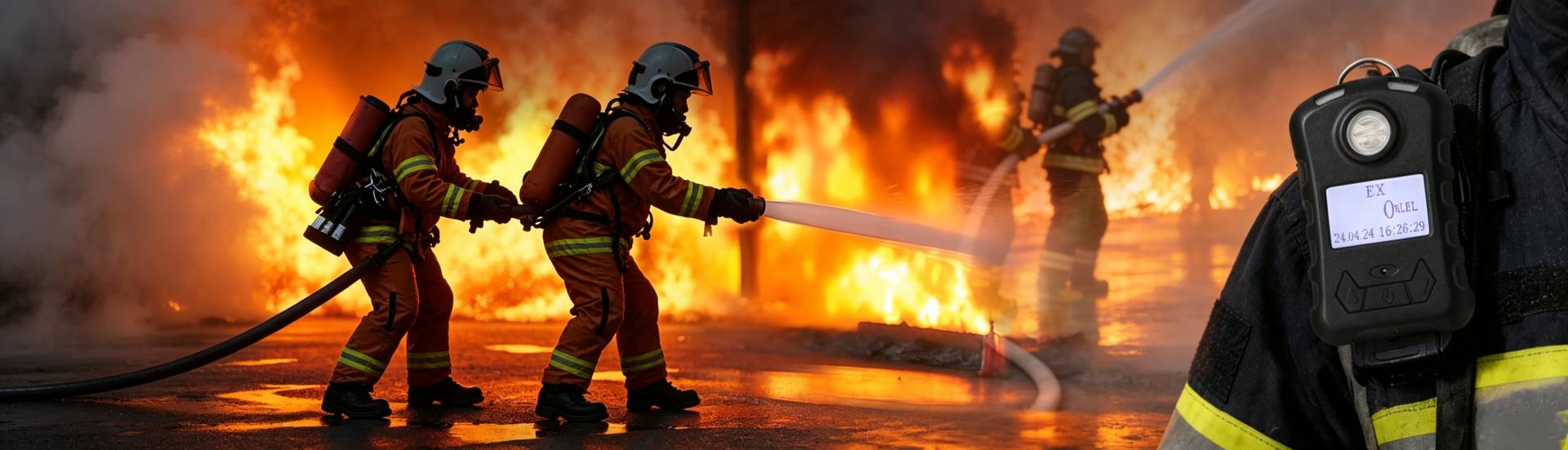
Portable 4-in-1 Gas Detector for Industrial Safety and Confined Space Monitoring
In the industrial production environment, gas hazards may occur at any time, especially in places where flammable or toxic gases may accumulate. There may be multiple gas safety risks in oil and gas facilities, chemical plants, mines, sewage treatment plants, storage tanks, pipelines and limited spaces. Therefore, reliable gas monitoring is an important part of industrial safety management.
The portable four-in-one gas detector can monitor a variety of key gases at the same time through a handheld device, providing more convenient on-site gas detection scheme for workers.
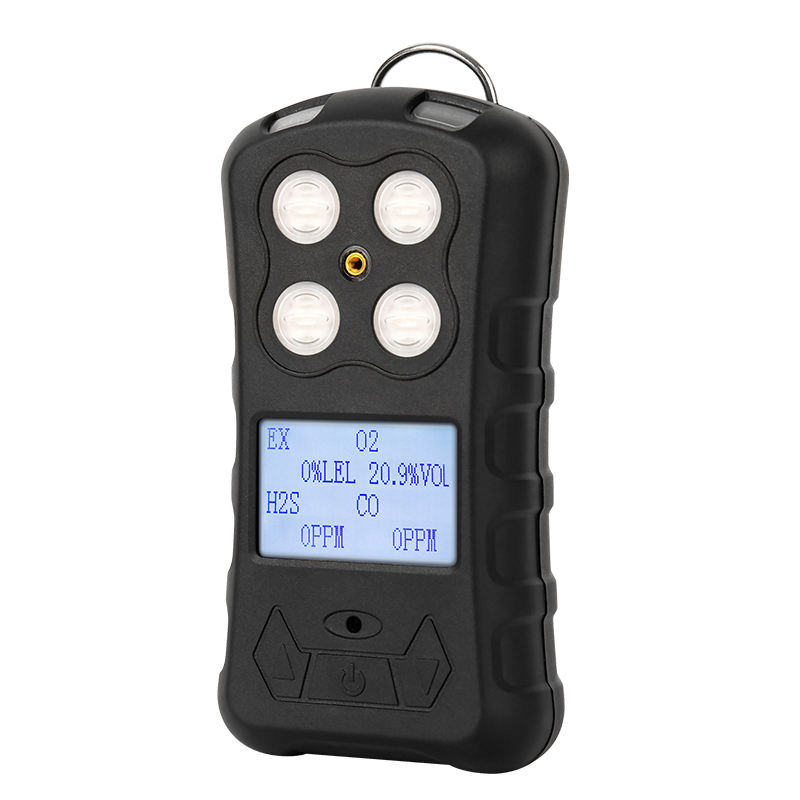
What is a four-in-one gas detector?
The four-in-one gas detector is a portable gas monitoring device, which is used to detect four common atmospheric environmental risk factors at the same time. A typical four-in-one gas detector usually includes the detection of combustible gas, oxygen (O), carbon monoxide (CO) and hydrogen sulfide (HS).
These four types of gases have different safety risks. Flammable gas may cause fire or explosion danger after reaching a certain concentration; Too low or too high oxygen concentration may affect personnel safety; Carbon monoxide and hydrogen sulfide are toxic gases, which may appear in industrial environment and limited space.
By integrating multiple gas sensors into one device, workers can master the concentration changes of multiple gases at the same time without carrying multiple single gas detectors.
Why do you need multi-gas monitoring?
The gas conditions in the industrial environment may change rapidly. An area that seems to be safe at the time of initial inspection may cause gas danger later due to gas leakage, chemical reaction, change of ventilation conditions, equipment failure or other production factors.
For example, before workers enter a limited space, they usually need to confirm that there is enough oxygen in the environment and there is no flammable gas or toxic gas with dangerous concentration. In the process of operation, environmental conditions may also change, so continuous monitoring can help staff to know the changes of air quality in time.
Portable multi-gas detector can be used for:
- Gas detection before entering a limited space
- Personal gas monitoring during operation
- Daily industrial safety inspection
- Equipment maintenance and overhaul
- Inspection of pipelines and storage tanks
- Emergency rescue
- Limited space operation
- Gas leakage investigation
HRP-B1000-C portable four-in-one gas detector
HRP-B1000-C four-in-one gas detector is a portable device for gas monitoring in industrial field. According to the product configuration, the equipment can detect four gases: combustible gas (LEL), oxygen, carbon monoxide and hydrogen sulfide.
Compact handheld design is convenient for staff to carry around during inspection and field operation. The equipment is equipped with LCD screen, which can display the gas concentration in real time; When the detected concentration reaches the set alarm condition, the equipment can remind the operator by means of sound, light and vibration.
Detailed product parameters and configuration can be found on the product page of HRP-B1000-C four-in-one gas detector.
How does the portable four-in-one gas detector work?
The gas enters the detection area through the sampling structure of the equipment, and the target gas is detected by the internal sensor. The signal generated by the sensor is converted into corresponding gas concentration data after internal processing of the equipment and displayed on the screen.
Different types of gas sensors can be used according to the detection of gas and the specific application environment. For example, oxygen and some toxic gases usually use electrochemical sensors, while combustible gases can use catalytic combustion or infrared detection technologies according to specific configurations.
When the detected gas concentration reaches the preset alarm value, the detector can start the corresponding alarm function. HRP-B1000-C adopts various alarm modes such as sound, light and vibration to provide timely safety reminders for field operators.
Application scenario of portable multi-gas detector
Oil and gas industry
There may be flammable and toxic gases in pipelines, storage tanks, production equipment and related operation areas in oil and gas facilities. Portable multi-gas detector can be used for routine inspection, equipment maintenance, overhaul and emergency response.
Petrochemical and chemical industry
A variety of dangerous substances may be involved in the chemical production process. In the process of equipment inspection, maintenance and overhaul, gas monitoring can help workers understand the changes of atmospheric environment in the working area.
Limited space operation
Limited space is one of the important application scenarios of portable multi-gas detector. Oxygen shortage or dangerous gas accumulation may occur in the spaces such as storage tanks, underground pipelines, inspection wells, sewage wells and closed containers.
Before entering the limited space, gas detection should be carried out according to the on-site safety management system. After the personnel enter the confined space for operation, continuous gas monitoring can also be carried out according to the site risk assessment and safety procedures.
sewage disposal
Hydrogen sulfide and combustible gas may exist in sewage treatment plants, pumping stations, underground pipe networks and other sewage treatment-related areas. Portable gas detection equipment can be used for routine inspection, equipment maintenance and overhaul.
Mines and tunnels
There may be methane, carbon monoxide, oxygen shortage and other atmospheric environmental risks in the underground working environment. Portable multi-gas detector can be used as a part of the overall gas monitoring scheme for on-site gas detection.
Emergency rescue
In the event of fire rescue, chemical accident or suspected gas leakage, there may be great uncertainty in the gas environment at the scene. Portable gas detection equipment can help rescuers understand the current atmospheric environment before entering the site and during the operation.
What functions should be paid attention to in portable gas detection?
A practical portable gas detector not only needs reliable detection ability, but also needs to adapt to the field use environment. HRP-B1000-C is equipped with LCD screen, and supports the functions of acousto-optic vibration alarm, rechargeable battery, alarm and event data recording. At the same time, the product page indicates that its protection level is IP66.
For dangerous areas where explosive gas may exist, it is also necessary to pay attention to the explosion-proof performance of the equipment. The explosion-proof specification listed on the product page of HRP-B1000-C is II 2G Ex db IIC T6 Gb. In actual use, it should be confirmed whether the detector is suitable for the target area according to the classification of specific dangerous areas, site regulations and equipment certification requirements.
Calibration and maintenance of gas detector
Regular calibration and function check are very important to maintain the detection performance of gas detector. The specific calibration period needs to be determined according to the sensor type, use environment, use frequency and enterprise safety management system.
Before on-site operation, the user shall inspect the equipment according to the manufacturer’s instructions and on-site safety operation procedures. The maintenance plan of the gas detector can also include functional tests to confirm that the detector and alarm system can respond normally.
The product page of HRP-B1000-C also provides calibration related accessories such as calibration cover and portable calibration gas cylinder, which can be used for equipment calibration and maintenance.
How to choose a suitable portable gas detector?
When choosing a portable gas detector, you can focus on the following aspects:
Detection of gas-first determine the dangerous gas that may exist in the working environment.
Detection range-Select the appropriate detection range according to the specific application environment.
Sensor type-Different gases and application environments may require different types of sensors.
Alarm modes-Sound, light, vibration and other alarm modes can provide different safety reminders.
Battery life-For long-term field operation, longer working hours are more practical.
Protection level-Choose the appropriate protection level according to the dust, water vapor and other environmental factors on site.
Explosion-proof requirements-When used in dangerous areas, it should be confirmed that the explosion-proof certification of the equipment meets the requirements of the actual use environment.


 WhatsApp: 8619339980364
 E-mail: contact@hirepsafety.com