
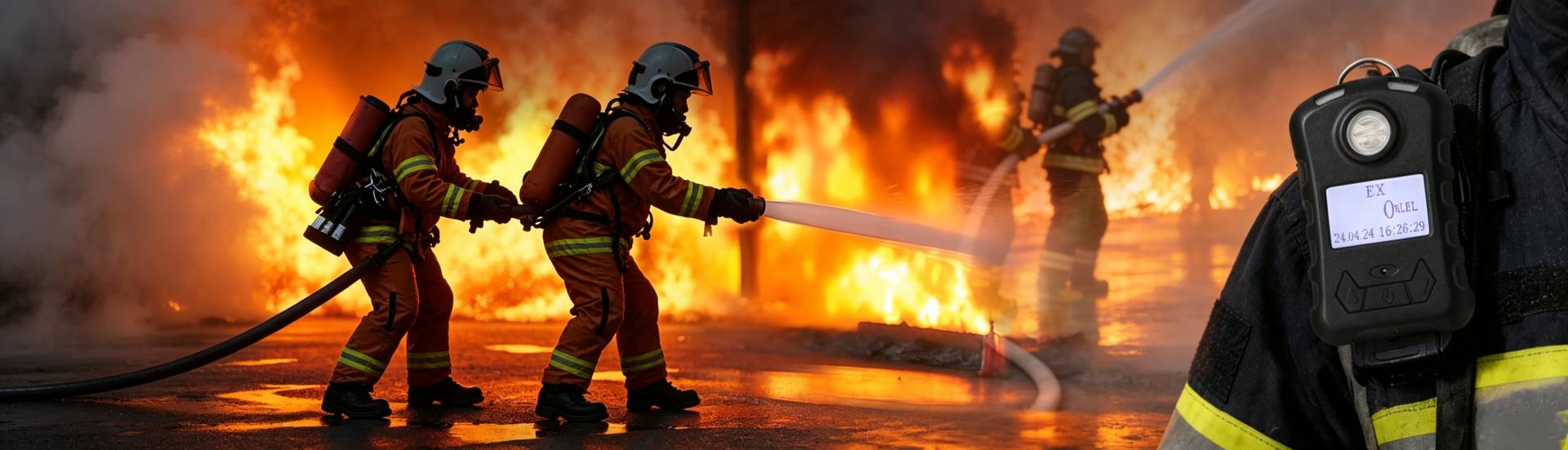
Fixed Four-Gas Detector: A Practical Solution for Continuous Industrial Gas Monitoring
Gas hazard is an important safety issue in industrial places where combustible gas, toxic gas or oxygen-deficient environment may exist. There may be potential gas leakage points around pipelines, valves, storage tanks, pumps and production equipment in oil and gas facilities, chemical plants, production workshops, storage areas, sewage treatment plants and other industrial places.
Different from the portable gas detector which is carried by staff and used for personal monitoring and on-site inspection, the fixed four-in-one gas detector is installed in a designated position, which can continuously monitor the surrounding environment. This makes it suitable for industrial areas that need long-term monitoring of gas hazards.
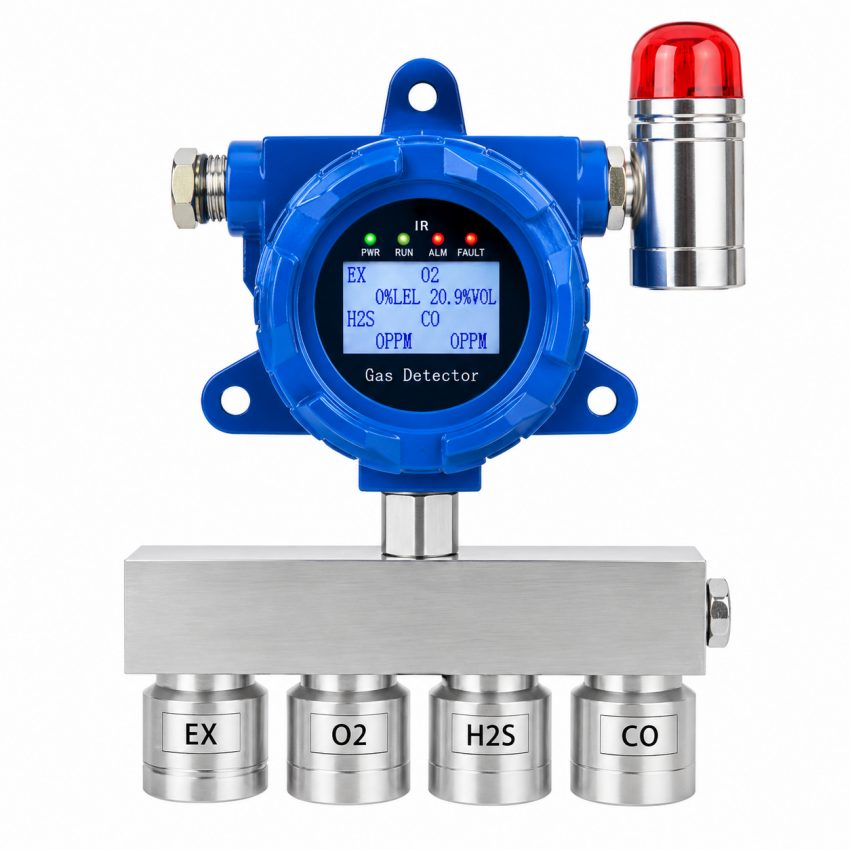
What is a fixed four-in-one gas detector?
The fixed four-in-one gas detector is an online gas monitoring device, which is used to detect multiple gases at the same monitoring point. Common configurations may include combustible gas, oxygen, carbon monoxide and hydrogen sulfide.
The specific sensor combination depends on the type of gas that may exist at the installation site. By integrating multiple sensors into one monitoring device, users can simultaneously monitor multiple potential hazards.
This way can simplify the layout of gas monitoring and reduce the need to install multiple independent gas detection equipment.
Continuous gas monitoring
One of the main advantages of fixed gas detector is its continuous operation. After correct installation, the detector can continuously monitor the change of gas concentration, without the need for staff to carry equipment on-site inspection.
When the gas concentration reaches the set alarm threshold, the detector can start the acousto-optic alarm. According to the system configuration, alarm information can also be transmitted to the centralized monitoring system.
Continuous monitoring can help workers find abnormal gas environment earlier and provide more information for emergency response.
Typical industrial application scenarios
The fixed four-in-one gas detector can be used in many industrial environments where there may be many kinds of gas hazards.
Typical applications include:
- Oil and gas facilities
- chemical plant
- Petrochemical facilities
- Industrial production workshop
- Gas storage area
- Pipeline station
- pump room
- Sewage treatment plant
- public service
- Restricted space monitoring area
The installation position of the equipment shall be determined according to the characteristics of the target gas, potential leakage sources, ventilation conditions and the actual layout of facilities.
How to choose the right sensor?
Correct selection of sensors is an important part of gas detection system design.
For combustible gas, catalytic combustion or infrared detection technology can be selected according to the gas type and application environment. Electrochemical sensors are usually used to detect gases such as carbon monoxide, hydrogen sulfide and oxygen.
Different gases have different physical and chemical characteristics, so the sensor should be selected according to the actual target gas, rather than simply adopting the same standard configuration in all application scenarios.
The required detection range and alarm threshold should also be determined according to the actual application requirements and related safety procedures.
Alarm and system integration
Fixed gas detector can be used as a part of large industrial safety monitoring system.
According to the equipment configuration, gas concentration and alarm information can be transmitted to gas alarm controller, PLC system, DCS platform or other monitoring systems through standard industrial interfaces.
System integration enables operators to monitor gas conditions in a centralized location. When abnormal gas concentration is detected, it can also be linked with ventilation system or other safety equipment according to the system design.
The specific alarm and control logic should be designed according to the site risk assessment results and safety management requirements.
Precautions for installation
The installation location will directly affect the effectiveness of gas monitoring.
Before installation, the density of target gas, potential leakage source, airflow direction, ventilation condition, temperature, humidity and other environmental factors should be considered.
The detector should be installed in a position where potential gas leakage can be effectively detected, and it should also be convenient for later inspection and maintenance.
For areas with dangerous gases, the equipment selection and installation shall conform to the applicable classification of dangerous areas and explosion-proof requirements.
Maintenance and calibration
Regular maintenance is very important for maintaining reliable detection performance. Sensor aging, dust, moisture, pollutants and long-term environmental exposure may affect the performance of the detector over time.
Daily maintenance can include checking the sensor air inlet, equipment casing, line connection, power supply, alarm function and communication status. If the system adopts sampling method, the sampling channel should also be checked.
Equipment calibration shall be carried out in accordance with the manufacturer’s instructions, actual application requirements and related safety procedures. Regular functional testing is also helpful to confirm that the detector and alarm system can respond normally.
Keeping calibration and inspection records can help enterprises to establish a more systematic gas detection equipment management process.
Helping industrial safety management
The fixed four-in-one gas detection system is not only an independent monitoring device. After reasonable selection, correct installation, system integration and standardized maintenance, it can become a part of the overall industrial safety management system of enterprises.
Continuous monitoring can help enterprises find abnormal gas environment, and alarm function and system integration can support timely emergency measures.
For industrial facilities with combustible gas and toxic gas risks, reasonable sensor selection, correct installation, regular calibration and systematic maintenance can help enterprises to establish a more reliable continuous gas risk monitoring scheme.


 WhatsApp: 8619339980364
 E-mail: contact@hirepsafety.com