
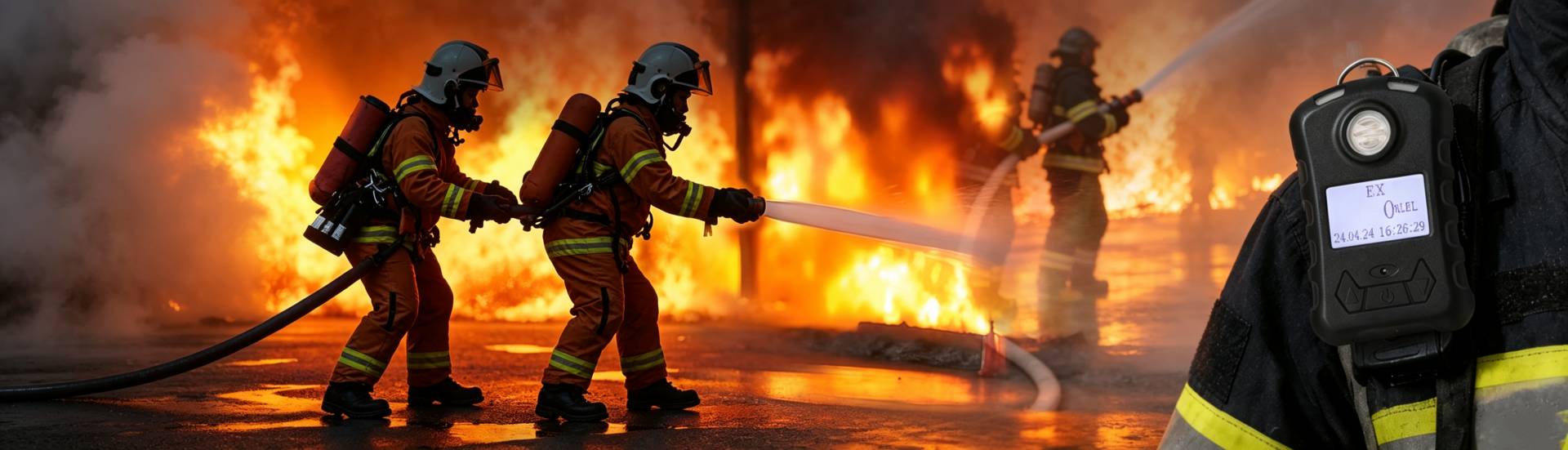
Portable 4-in-1 Gas Detector for Confined Space Safety
In industrial production, cleaning storage tanks, pipeline maintenance, sewage treatment and equipment maintenance often need to enter closed or ventilated spaces. These operations seem routine, but they may face the risk of sudden changes in gas concentration. Insufficient oxygen, toxic gas accumulation and combustible gas leakage may all pose a threat to the life safety of on-site personnel.
Portable 4-in-1 gas detector can help workers to check the ambient gas status before entering the confined space, and continuously monitor the relevant gas concentration during the operation. It integrates a variety of gas sensors into a handheld device, which is convenient for workers to carry out on-site gas detection in complex industrial environment.
Why Do You Need to Detect Four Gases at the Same Time?
There is often more than one gas risk in industrial sites. In a confined space, there may be insufficient oxygen concentration, the accumulation of toxic gases such as hydrogen sulfide, and the danger of combustible gas due to leakage of pipelines, storage tanks or process equipment.
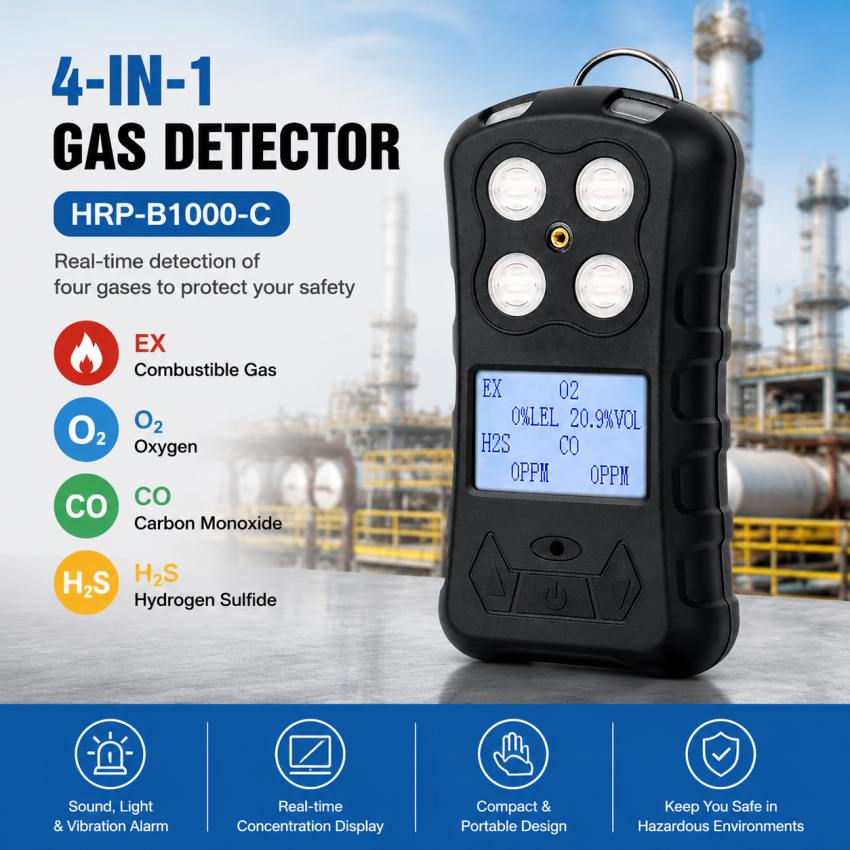
Common four-in-one gas detectors are usually used to monitor the following four indicators:
-
LEL (combustible gas): Used to judge the level of combustible gas concentration relative to the lower explosion limit, and help identify potential fire and explosion risks.
-
Oxygen (O): Used to monitor the environment with insufficient oxygen or high oxygen concentration.
-
Carbon monoxide (CO): Used to detect toxic gases that may be produced by incomplete combustion or some industrial processes.
-
Hydrogen sulfide (HS): It is used to monitor highly toxic gases that may exist in oil and gas operations, sewage treatment and other industrial environments.
Different types of detectors may have different sensor configurations. Before purchasing, it should be combined with the actual risk on site to confirm that the equipment can detect the required gas types.
Provide Support for Confined Space Entry Operation
Before entering the storage tank, inspection well, container or underground space, the staff should evaluate the working environment according to the on-site gas detection procedure. Portable gas detector can help identify the dangerous gas environment that can’t be found by naked eyes and can’t be judged by smell alone.
The gas detection in confined space should follow the field operation procedures. When necessary, it is necessary to detect different heights and positions in the space, because there may be differences in gas concentration. If the gas condition may change during the operation, continuous monitoring should be carried out according to the risk assessment requirements.
It should be noted that portable gas detector can not replace ventilation measures, work permit system, professional training and emergency rescue plan. It is a part of the overall safety management system, which helps staff to understand the environmental changes in time before entering the space and during the operation.
What Equipment Functions Are Worthy of Attention in Daily Industrial Operations?
For workers who need to carry the detector with them for a long time, the practicability of the equipment is as important as the detection performance. A suitable detector should be portable, easy to operate, and can clearly read data under different lighting conditions.
When the gas concentration reaches the preset alarm threshold, acousto-optic alarm and vibration alarm can remind workers to pay attention to environmental changes. In addition, battery life, casing protection, sensor response characteristics and convenience of daily maintenance are also factors to be considered when selecting equipment.
In areas where ventilation conditions are limited and the gas concentration may change rapidly, the staff should know the alarm setting of the detector and the corresponding disposal process before operation. At the same time, the equipment should be inspected and maintained according to the manufacturer’s requirements to ensure that the use state meets the site requirements.
How to Choose a Suitable Portable Four-in-One Gas Detector?
Not all four-in-one gas detectors are suitable for the same working environment. When purchasing, comprehensive judgment should be made in combination with the possible gas types, measuring range, sensor specifications, working environment, battery requirements and alarm function.
For daily industrial gas detection and confined space operation, you can learn about the HIREP HRP-B1000-C Portable Four-in-One Gas Detector. This model is used to monitor combustible gas (LEL), oxygen (O), carbon monoxide (CO) and hydrogen sulfide (HS), and helps workers to check the risks of many common gases through a portable device.
Before the equipment is put into use, it should be confirmed that its configuration meets the requirements of site risk assessment and operation procedures, and the calibration status should be checked, and the necessary functional tests should be completed according to the manufacturer’s regulations. At the same time, the field personnel need to know the alarm meaning of the equipment and the corresponding safety disposal measures.
Keep Portable Gas Detectors Available at All Times
Only when the equipment is in normal working condition can the test results provide effective reference for field operation. Before each use, the staff should check the equipment shell, battery power and sensor air inlet, and confirm the equipment status according to the manufacturer’s operating instructions.
Functional testing and calibration shall be carried out in accordance with the manufacturer’s recommendations, site management system and applicable laws and regulations. If the detector fails to pass the specified test, the reading is abnormal or a fault prompt appears, it should be suspended and put into operation again after the problem is checked and solved.
For industrial teams that need to carry out confined space operations, pipeline maintenance, sewage treatment and equipment maintenance, a portable four-in-one gas detector with reasonable selection and routine maintenance can provide support for on-site gas inspection and help staff identify potential gas hazards in time.


 WhatsApp: 8619339980364
 E-mail: contact@hirepsafety.com
