
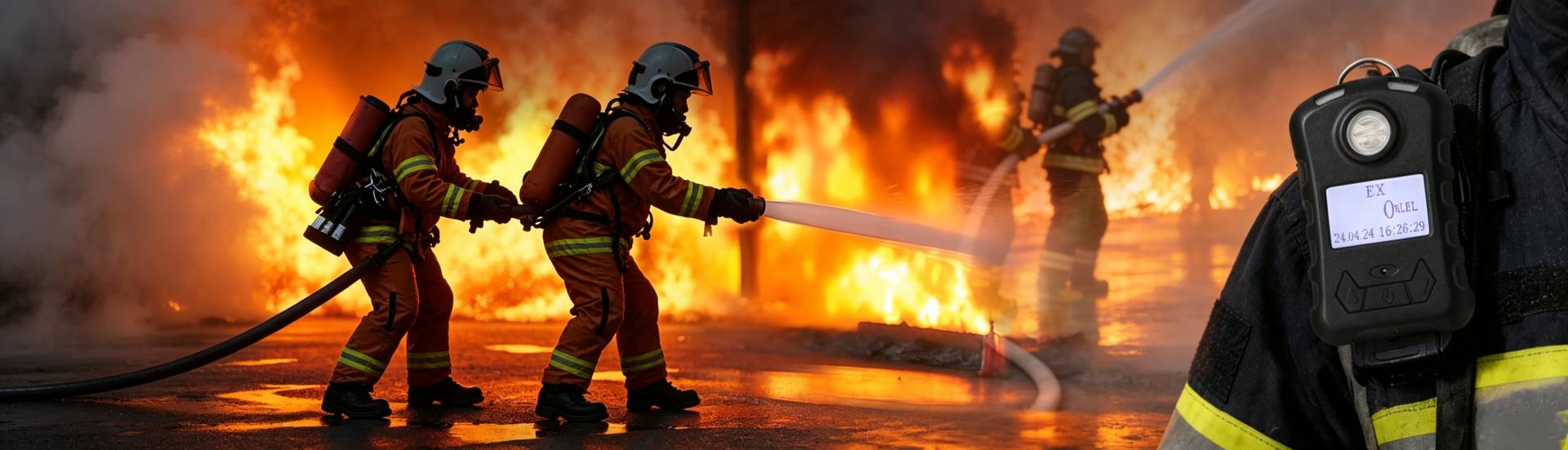
LEL gas detection in industrial safety: how to detect combustible gas leakage
Combustible gas leakage is one of the common safety risks in many industrial environments. When combustible gas continuously accumulates in the air and reaches a certain concentration, it may cause fire or even explosion danger if it encounters a fire source. LEL gas detector can monitor the concentration of combustible gas in the environment in real time and give an alarm in time when it reaches the set alarm value.
LEL gas detection is widely used in oil and gas, chemical industry, manufacturing industry, storage areas, sewage treatment plants and other places where combustible gas may leak.
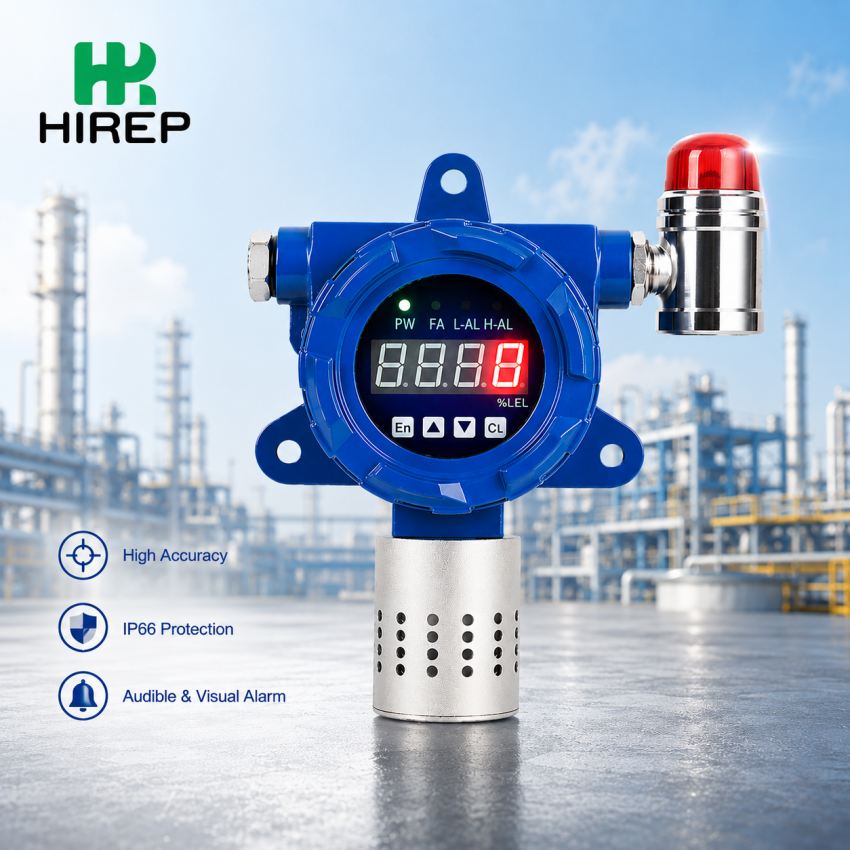
What is LEL gas detection?
LEL is the abbreviation of Lower Explosive Limit, which refers to the minimum gas concentration required when combustible gas and air form a combustible mixture.
LEL gas detector usually does not directly display the volume percentage of gas, but displays the test results in the form of %LEL.
For example:
- 10% LEL: indicates that the current combustible gas concentration reaches 10% of the lower explosion limit of the gas.
- 20% LEL: It means 20% of the lower explosion limit is reached.
- 100% LEL: indicates that the gas concentration has reached the lower explosion limit.
Using %LEL as the detection unit can help the staff to understand the relative danger degree of combustible gas more intuitively.
Why LEL gas detection is very important?
Combustible gas may leak from pipes, valves, storage tanks, pumps, gas cylinders, production equipment or connecting parts. In some cases, gas leakage is not easy to be found by naked eyes, and may not be detected in time.
LEL gas detector can continuously monitor the concentration of combustible gas in the surrounding environment. When the detected concentration reaches the preset alarm threshold, the equipment can give an alarm in time.
Depending on the configuration of the detector and the system, the alarm modes may include:
- Acousto-optic alarm
- LED indicator alarm
- relay output
- 4-20mA signal output
- RS485 communication
- Connected with the gas alarm controller
Through these functions, operators can take corresponding safety measures before the gas concentration increases further.
What gases can LEL gas detector detect?
LEL gas detector can detect different combustible gases according to sensor types and practical application requirements.
Methane (ch)
Methane widely exists in natural gas systems, oil and gas facilities, sewage treatment plants and various industrial production environments, and is a common combustible gas detection object.
Propane (C₃H₈)
Propane is one of the main components of LPG. If leakage occurs and accumulates in a closed or poorly ventilated area, it may pose a fire and explosion risk.
Hydrogen (h)
Hydrogen is highly flammable and widely used in industrial production, energy and other industrial fields, so it is necessary to monitor combustible gas in related places.
Other hydrocarbons
Depending on the type of sensor, some LEL gas detectors can also be used to detect other combustible gases and vapors.
When actually selecting the detector, it should be selected according to the target gas, sensor type, working environment and specific application requirements.
Fixed LEL gas detector and portable detector
Combustible gas detection can mainly adopt fixed gas detector and portable gas detector.
Fixed LEL gas detector
The fixed LEL gas detector is usually installed at a fixed monitoring point, which can monitor continuously for 24 hours, and is connected with a gas alarm controller or an industrial monitoring system.
Stationary detectors are usually installed near pipelines, valves, storage tanks, compressors, gas equipment and other locations where gas leakage may occur.
Portable LEL gas detector
Portable LEL gas detector is carried by staff, which is suitable for daily inspection, equipment maintenance, maintenance work, emergency detection and limited space operation.
For large industrial facilities, fixed and portable gas detectors can be used in combination, so as to realize continuous regional monitoring and personnel movement detection at the same time.
Where should the LEL gas detector be installed?
The correct installation position is very important for the gas detection effect. The installation position of the detector should be determined according to the characteristics of the target gas and the potential leakage source on site.
Generally, the following factors need to be considered:
- Density of gas relative to air
- Potential leakage point
- Site ventilation conditions
- Indoor or outdoor environment
- Air flow direction
- Layout of production equipment
- Where gas may accumulate.
- Ambient temperature and humidity
For example, the density of methane is lower than that of air, so it may spread to a higher position and accumulate after leakage. While the combustible gas with higher density may accumulate at a lower position.
Therefore, the specific installation height and location of LEL gas detector should be determined according to the target gas characteristics, site structure and risk assessment.
LEL gas alarm value setting
Many industrial gas detectors support multiple alarm levels, such as low alarm and high alarm.
Different alarm levels can help workers to take graded response measures according to the change of gas concentration.
It should be noted that the alarm value should not simply copy the settings of other items. The actual alarm parameters should be determined according to the target gas, local laws and regulations, on-site risk assessment, technical parameters of detector and enterprise safety management requirements.
When the LEL alarm occurs, the staff should operate according to the emergency treatment procedures formulated on site, instead of relying solely on the gas detector as the only safety protection measure.
How to choose a suitable LEL gas detector?
Before buying a LEL gas detector, you can focus on the following aspects.
Step 1 detect gas
First, determine the combustible gas to be detected, such as methane, propane, hydrogen or other hydrocarbons.
Different sensors are suitable for different target gases, so it is necessary to confirm the detection object of the sensor before selection.
2. Detection range
Select the appropriate detection range according to the actual application environment to ensure that the detector can meet the requirements of on-site gas monitoring.
3. Sensor technology
Common sensor technologies for LEL detection include catalytic combustion sensor and infrared sensor.
The two technologies have different characteristics and should be selected according to the target gas, working environment, maintenance requirements and specific applications.
4. Communication interface
For the fixed gas detection system, 4-20mA, RS485 and other communication modes can be selected according to the system requirements.
When multiple fixed detectors are connected to the central control system, the correct communication configuration can help the system identify and manage different detection points.
5. Alarm function
Check whether the detector supports high-low alarm, acousto-optic alarm, relay output and connection with gas alarm controller or other monitoring equipment.
6. Protective performance
There may be dust, water vapor, corrosive gas, high temperature, low temperature and other complex environments in the industrial site. Therefore, testing equipment with appropriate protection level and applicable conditions should be selected according to the actual installation environment.
Daily maintenance of LEL gas detector
Regular maintenance is helpful to maintain the reliable operation of LEL gas detection system.
Daily maintenance usually includes:
- observational check
- Sensor status check
- Alarm function test
- Equipment cleaning
- Field function test
- Conduct gas test as required.
- Periodic calibration
The specific maintenance period shall be determined according to the instructions of the equipment manufacturer, the site environment and the safety management requirements of the enterprise.
If the detector displays abnormal data for a long time, gives an abnormal alarm or fails the test, it should be inspected and maintained by qualified personnel, and the equipment should not be put into use directly before it is confirmed to be working normally.


 WhatsApp: 8619339980364
 E-mail: contact@hirepsafety.com