
Fixed Digital Gas Detector Maintenance and Inspection Guide
Fixed digital gas detector is an important part of industrial gas detection system. It is usually installed in the designated monitoring position, and is used to continuously monitor the concentration of specific gases and give an alarm when the detected concentration reaches the preset alarm threshold.
Stationary gas detectors are widely installed in chemical plants, oil and gas facilities, sewage treatment plants, industrial workshops, laboratories, storage areas and other places where gas leakage may occur.
In order to ensure the reliable operation of the equipment, regular inspection and maintenance are very important. Calibration, alarm test, line inspection, display inspection and sensor maintenance are all helpful to keep the gas detection system working normally.
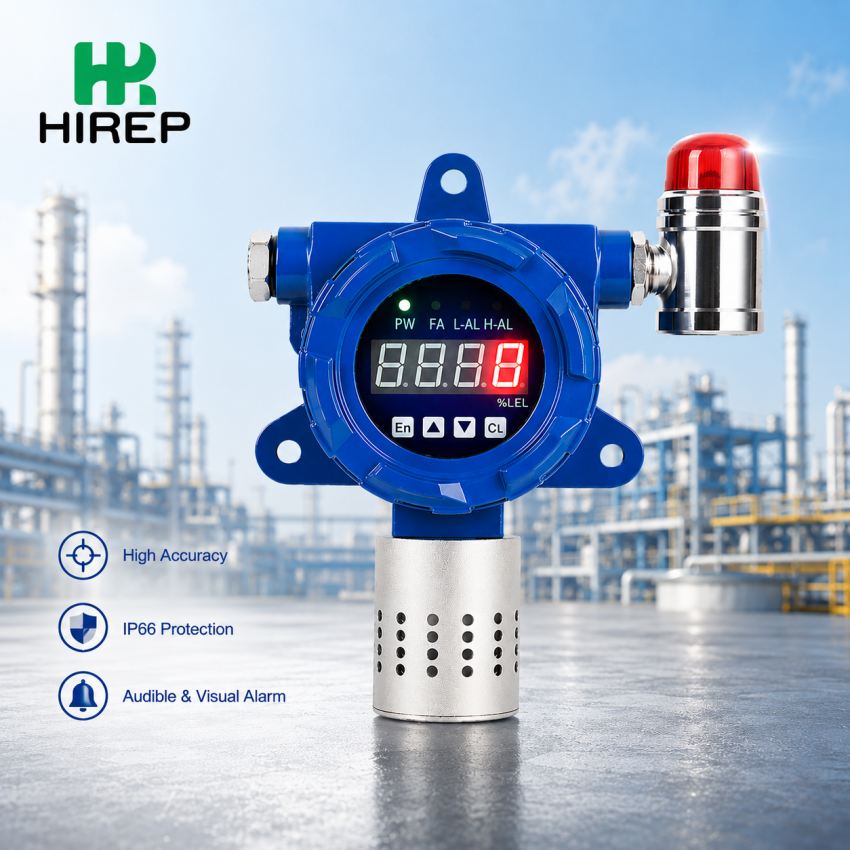
1. Check the detector display.
Digital display screen is one of the important parts of fixed gas detector.
During the daily inspection, it should be confirmed that the gas concentration can be displayed normally, and check whether the gas unit, decimal point, alarm status and other related information are displayed correctly.
If abnormal values, sensor faults, communication faults or other warning messages suddenly appear on the display screen, the detector should be checked before continuing normal use.
Under normal environmental conditions, stable detection readings can also help to judge whether there is potential zero drift or environmental interference in the sensor.
2. Check the sensor and air inlet.
The sensor is responsible for detecting the target gas, so the sensor area and air inlet should be kept clean.
Dust, oil, moisture, chemical pollutants or other foreign bodies may affect the gas entering the sensor.
During daily inspection, it should be confirmed that the air inlet is not blocked, and the detector should be checked for physical damage.
If the detector is installed outdoors or in a dusty industrial environment, it may be necessary to increase the inspection frequency.
Step 3 check the power supply
Stable power supply is very important for fixed gas detection equipment.
Depending on the specific model of the detector, the equipment may use DC power supply or other prescribed power supply methods.
Check the power cord, terminal, connector and power indication status according to the installation requirements.
Unstable power supply may lead to abnormal display, communication failure, abnormal alarm function or unexpected stop of the detector.
All electrical inspections shall be carried out by qualified personnel in accordance with applicable safety operation procedures.
4. Check the alarm settings
Fixed digital gas detector usually supports low alarm and high alarm settings.
The alarm threshold should be set according to the type of gas to be detected, workplace risk assessment, applicable laws and regulations and the actual requirements of the gas detection system.
In the process of daily maintenance, it should be confirmed that the set alarm value has not been modified by mistake.
Some fixed gas detectors can output alarm signals through relays, 4-20mA signals, RS485 communication or other interfaces.
The alarm settings of the detector should also be consistent with the settings of the connected control system.
5. Test the alarm function
Regular alarm tests can help to confirm whether the gas detector and the connected alarm system can work normally.
According to the system design, the test content can include local display alarm, acousto-optic alarm, relay output and communication signal of the detector.
When testing with test gas, the detector should produce corresponding response according to the current setting.
If the detector is connected to the control panel or PLC, check whether the corresponding alarm signal can be transmitted normally.
Before testing the installed gas detection system, it should be operated according to the field test procedure to avoid unnecessary triggering of emergency response measures.
6. Check the 4-20mA output.
Many fixed digital gas detectors use 4-20mA output to transmit gas concentration data to control panel, PLC, DCS or other monitoring equipment.
In a typical 4-20mA gas detection system, the current signal can indicate the gas concentration within the set detection range.
For example, according to the specific configuration of the detector, the system can use 4mA as the zero point and 20mA as the full-scale point.
During routine maintenance, the output signal can be checked with appropriate test equipment.
If the detector displays normally, but the signal received by the control system is incorrect, check the detector output, connection lines, terminals and receiving equipment.
7. Check RS485 communication
Some fixed digital gas detectors support RS485 communication and are used to transmit information such as gas concentration and equipment status to the monitoring system.
When using RS485 communication, the parameters such as communication address, baud rate and communication protocol need to be consistent with the receiving system.
In case of communication failure, check the communication line, communication parameters, equipment address and the connection between the detector and the control system.
When multiple detectors are connected to the same communication network, appropriate communication addresses should be set for different devices to avoid communication address conflict.
8. Conduct gas calibration regularly.
The sensor may be affected by sensor aging, pollution, environmental exposure, temperature, humidity and other factors during long-term use.
Regular calibration helps to check and maintain the measuring performance of the detector.
According to the specific model of the detector, calibration may include zero calibration and range calibration.
Zero calibration is used to establish an appropriate reference value, while range calibration uses a standard gas with known concentration to check the response of the sensor.
The calibration gas used and the calibration operation flow should be matched with the specific sensor and detector.
The user should always follow the calibration instructions provided by the manufacturer.
9. Check the installation of the detector.
The installation position of the detector may affect the gas detection effect.
The detector should be installed in a suitable position according to the characteristics of the target gas and the potential leakage source.
Different gases have different physical characteristics, so the appropriate installation height and location need to be determined according to the type of gas to be detected and the actual situation on site.
At the same time, the detector should be installed in a position convenient for inspection, calibration and maintenance, and can effectively cover the area to be monitored.
10. Make maintenance records.
Regularly recording inspection and maintenance information can help enterprises to better manage the fixed gas detection system.
The recorded contents may include:
- Detector model
- Installation position of detector
- Detecting gas type
- check the date
- Calibration date
- Calibrated gas concentration
- Alarm setting
- 4-20mA test results
- RS485 communication status
- Sensor status
- Maintenance items that have been executed
- Problems found
A complete maintenance record helps to track the running status of the equipment and arrange the follow-up inspection and maintenance work reasonably.
11. Frequently asked questions and troubleshooting
Some common problems may occur in the operation of fixed digital gas detector.
If the displayed gas concentration is unstable, check the calibration status of sensor, site environment, power supply and detector.
If the tester shows a sensor failure, check the sensor connection and sensor status according to the manufacturer’s operating instructions.
If the local display of the detector is normal, but the control system cannot receive the correct signal, check the 4-20mA line, RS485 communication, configuration parameters and receiving equipment.
If the tester fails to pass the calibration repeatedly, it may be necessary to further check or replace the sensor.
12. Make a regular maintenance plan
Stationary gas detectors should be included in the daily safety inspection and maintenance plan of enterprises.
The specific inspection frequency depends on the detector type, gas to be detected, installation environment, operating conditions, manufacturer’s recommendations and applicable relevant requirements.
The regular maintenance plan can include visual inspection, alarm test, gas calibration, sensor inspection, line inspection, communication test and maintenance records.


 WhatsApp: 8619339980364
 E-mail: contact@hirepsafety.com