
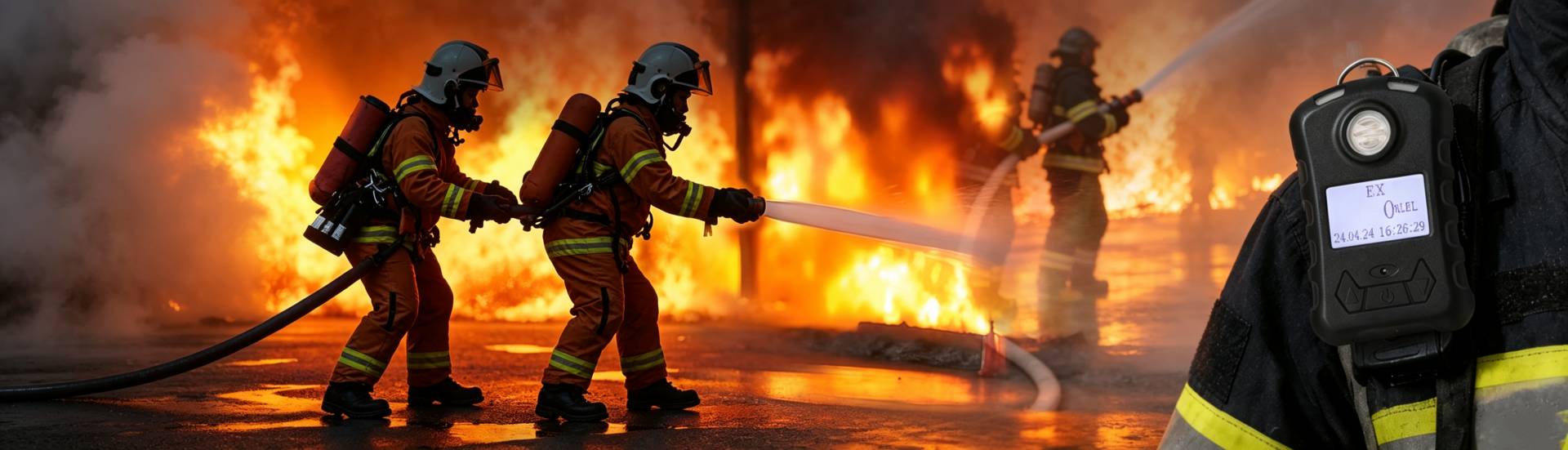
Industrial Gas Monitoring System: Composition, Application Scenarios and Selection Guide
In chemical plants, oil and gas facilities, sewage treatment plants and other industrial places, gas leakage is a problem that needs to be paid attention to in production safety. Some dangerous gases are difficult to be detected by senses, so it is very important to equip with appropriate gas monitoring equipment to ensure the safety of field operations.
Industrial gas monitoring system can detect gas leakage and concentration change, and help workers find potential risks in time. What kind of system should be adopted depends on the gas type, working environment and actual monitoring requirements.

1. What Parts Does the Industrial Gas Monitoring System Consist Of?
A common industrial gas monitoring system consists of multiple devices, which cooperate with each other to complete gas detection and abnormal alarm.
-
Gas detector: used to detect the concentration of specific gases such as methane, hydrogen sulfide, carbon monoxide or oxygen.
-
Alarm controller: receives the signal transmitted by the detector, displays the gas concentration, and triggers an alarm when it reaches the preset alarm value.
-
Communication interface: transmit monitoring data through interfaces such as 4–20ma and RS485.
-
Alarm and control equipment: send out sound and light alarm, and connect other control equipment according to the project requirements.
System configuration depends on specific application scenarios. Small workshops may only need to install a small number of detectors, while large industrial facilities usually need to connect multiple detection points to the centralized monitoring system.
2. Application Scenarios of Industrial Gas Monitoring Systems
This kind of system is widely used in oil and gas facilities, chemical production areas, sewage treatment plants, storage areas and industrial workshops.
In natural gas facilities, detectors are usually used to monitor flammable gas leakage around pipelines, valves and gas storage equipment. Sewage treatment plants may need to focus on monitoring toxic gases such as hydrogen sulfide. For some limited space operations, it is also necessary to check the oxygen concentration before and during the operation according to the site safety regulations.
The gas risks faced by different places are different, so the sensor selection and detector installation location should be determined according to the actual working conditions.
3. How to Choose a Suitable Gas Monitoring System?
Before purchasing equipment, you can focus on the following aspects.
-
Gas type and measuring range: confirm which gases need to be monitored on site, and select the detector with appropriate sensor type and measuring range.
-
Installation environment: Consider the working temperature, humidity, dust, corrosiveness and whether there are explosion-proof requirements on site.
-
Communication compatibility: Confirm whether the output mode of the equipment, such as 4–20 Ma or RS485, is compatible with the existing controller or monitoring platform.
-
Maintenance requirements: Understand the equipment calibration requirements, sensor replacement cycle and subsequent technical support, and then comprehensively compare the procurement and maintenance costs.
Reasonable system configuration should not only meet the gas monitoring needs on site, but also facilitate daily inspection and long-term maintenance.
HIREP provides fixed and portable gas detection solutions for different industrial applications. Before purchasing, it is recommended to check the equipment parameters in combination with the target gas, installation environment, output interface and relevant certification requirements to ensure that the selected products are suitable for actual working conditions.


 WhatsApp: 8619339980364
 E-mail: contact@hirepsafety.com
