
Gas Detection in Oil and Gas Industry: Application Scenarios, Detection Systems and Equipment Selection Guide
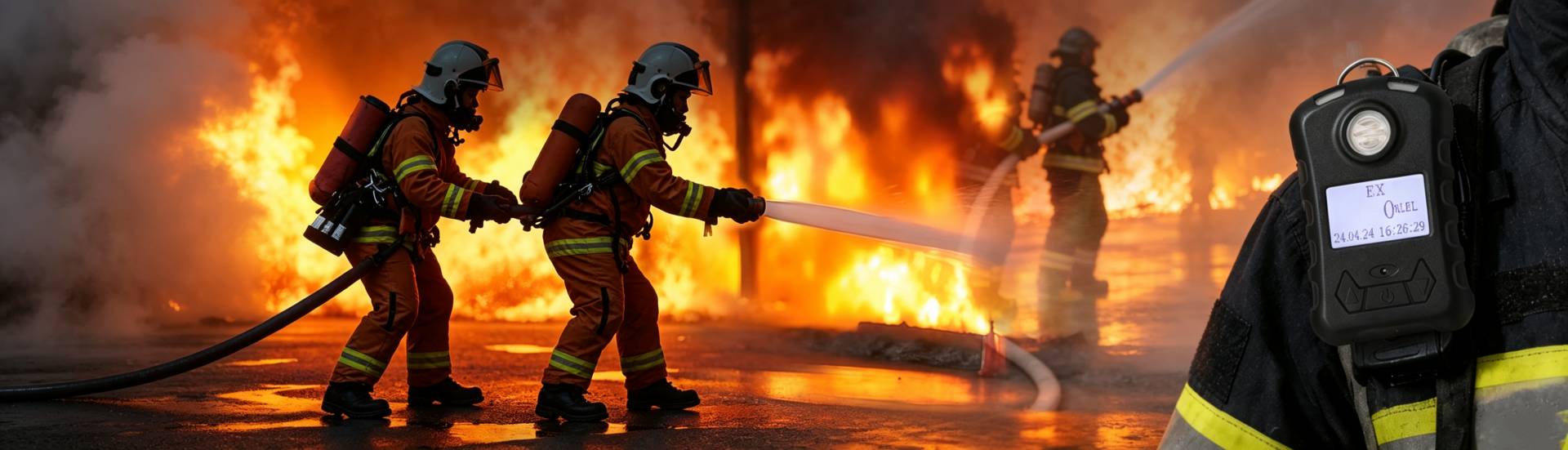
Gas detection plays an important role in the safety management of oil and gas industry. In the process of oil and gas exploration, production, transportation, storage and refining, gas leakage may occur around pipelines, valves, compressors, storage tanks and various process equipment. Some gases are flammable and explosive, others are toxic, or may cause changes in oxygen concentration in the surrounding environment.
Reliable gas detection scheme can help operators find abnormal gas concentration in time, warn relevant personnel of potential dangers and take appropriate countermeasures. According to the characteristics of on-site facilities and risk assessment results, enterprises can choose fixed gas detectors, portable gas detectors, or combine them.
1. Why Does the Oil and Gas Industry Need Gas Detection?
Oil and gas facilities involve a variety of flammable and dangerous gases. Equipment wear, pipeline corrosion, damaged seals and loose joints may all lead to gas leakage. In closed or poorly ventilated areas, gas may gradually accumulate before the staff notice it.
Gas detection equipment can help safety managers monitor these risks and support the following work:
-
Find out the abnormal situation in time before the flammable gas leaks and causes serious fire or explosion danger.
-
Monitor the concentration of toxic gases in the process area and around the equipment.
-
Check the gas environment on site before maintenance work and confined space work.
-
When the gas concentration reaches the preset alarm threshold, an audible and visual alarm is triggered.
-
Support routine inspection, preventive maintenance and emergency response.
Gas detection should be integrated into a complete safety management system, and combined with hazard assessment, equipment maintenance, staff training and clear emergency handling procedures.
2. Common Detection Gases in Oil and Gas Facilities
Different oil and gas operation scenarios require different gas detection configurations. Enterprises should determine the target gas to be monitored according to the substances treated on site and the identified risk factors.
Methane and Other Combustible Gases
Methane is one of the main components of natural gas. Gas leakage may occur around pipelines, compressors, valves, storage facilities and natural gas processing equipment. Propane, butane and other combustible hydrocarbon gases may also exist in the relevant working environment.
Combustible gas detector can help identify abnormal gas concentration and give an alarm in time when the reading reaches the set alarm threshold. In many industrial applications, the concentration of combustible gas is usually expressed as a percentage of the lower explosive limit (LEL).
For the scene requiring mobile inspection, using a portable combustible gas detector, the staff can check the gas concentration at the designated location without installing fixed inspection equipment at each inspection point.
Hydrogen Sulfide (H₂S)
Hydrogen sulfide may exist in sulfur-containing oil and gas exploitation, sulfur-containing natural gas production, petroleum processing and other operations involving sulfur-containing substances. Hydrogen sulfide is very toxic, and it must not be judged by smell whether it exists or whether it is safe.
According to the results of on-site risk assessment, enterprises may need to install fixed hydrogen sulfide detectors, equip staff with personal gas detectors, or use portable detection equipment suitable for target gases. The staff shall strictly abide by the alarm response, evacuation and respiratory protection procedures specified on site.
Carbon Monoxide (CO)
Carbon monoxide may appear in combustion equipment, engines or other process areas that generate waste gas. Because human senses cannot reliably identify carbon monoxide, it is very important to configure appropriate detection equipment in areas where carbon monoxide risk has been confirmed.
Anoxic or Oxygen-Enriched Environment
Oxygen concentration may change in storage tanks, containers, enclosed spaces and other areas where normal air may be replaced by gas. Before the workers enter the confined space, they must use appropriate testing instruments to evaluate the gas environment at the site, and strictly implement the corresponding entry permit and safe operation procedures.
Equipment selection should be determined according to the specific gas types and atmospheric environmental risks that may exist in the operation area.
3. The Difference Between Fixed and Portable Gas Detectors in the Oil and Gas Industry
Fixed and portable gas detectors have different uses. They are usually used together to achieve more comprehensive gas monitoring coverage.
Fixed Gas Detection System
The fixed gas detector is installed at the evaluated designated monitoring point to continuously monitor the gas concentration. Common installation areas include compressor station, process unit area, gas supply pipeline, storage area and other locations determined according to site risk assessment.
According to the system design, the fixed detector can transmit the monitoring data to the gas alarm controller, programmable logic controller (PLC) or distributed control system (DCS). When the gas concentration reaches the set threshold, the system can also trigger an audible and visual alarm.
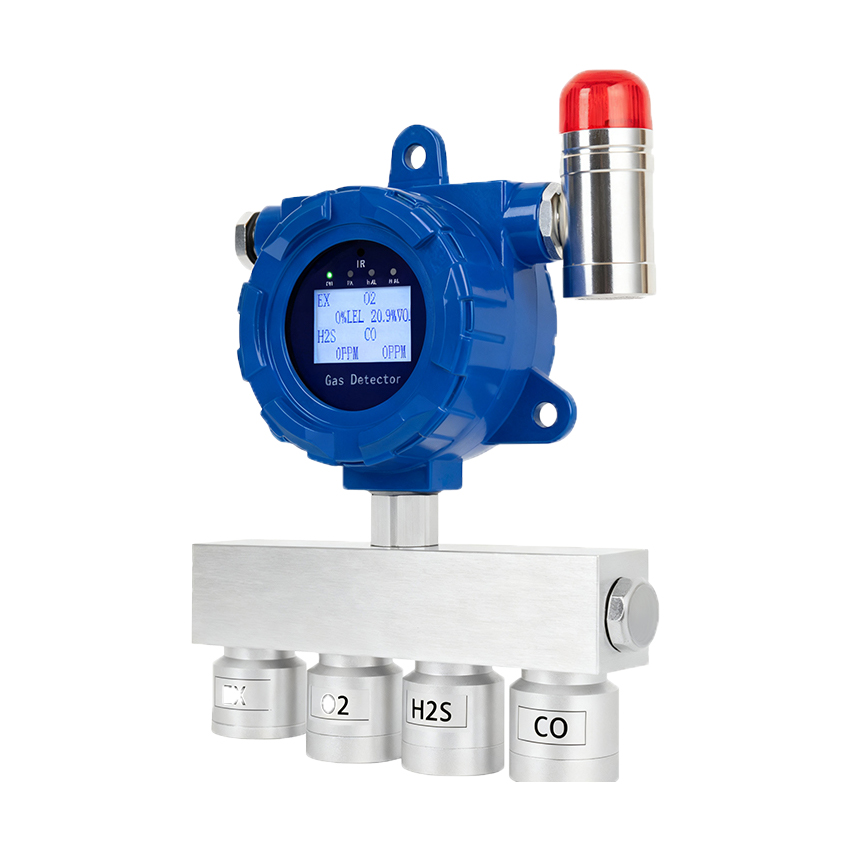
For industrial applications that need continuous monitoring, we can evaluate the applicability of HIREP Fixed Multi-Gas Detector HRP-T2000-G, focusing on its target gas, measurement parameters, signal output mode and installation requirements.
Portable Gas Detection Equipment
Portable gas detector is carried by staff, which is suitable for on-site inspection, equipment maintenance and operations requiring gas detection in multiple locations.
HIREP HRP-B1000-A Portable Combustible Gas Detector can be used as a reference for the selection of portable combustible gas detection applications. Before use, it should be confirmed that the instrument is suitable for the target gas and the actual working environment.
Portable detector is especially suitable for detecting suspected leakage points, but it can’t replace fixed gas monitoring system in scenes where specific areas need to be continuously monitored.
4. How to Choose the Appropriate Gas Detection Equipment for Oil and Gas Operations?
Equipment selection cannot be compared only by product price or measurement range. Before purchasing, the following factors should be evaluated.
Target gas: Determine whether methane, other combustible gases, hydrogen sulfide, carbon monoxide, oxygen or multiple gases need to be detected on site.
Detection range and performance: According to the actual monitoring requirements, check the measurement range, resolution, response characteristics and related precision parameters of the equipment.
Installation mode and monitoring requirements: Determine whether the application scenario needs continuous fixed monitoring, personal protection or portable leak inspection.
Environmental conditions: Consider temperature, humidity, dust, humidity, vibration and other environmental factors that may affect equipment performance.
Applicability of hazardous areas: For areas where flammable and explosive gases may exist, it should be confirmed that the explosion-proof certification and equipment grade of the detector meet the classification requirements of hazardous places in this area.
Signal and system integration: For fixed installation, it should be confirmed that the 4–20 mA, RS485, relay or other interfaces supported by the equipment can meet the connection requirements of the field control system and alarm system.
Maintenance and calibration: Understand the calibration cycle, function test process, sensor service life and technical support services of the equipment.
The final equipment selection should be based on site hazard assessment, applicable laws and regulations and technical specifications provided by manufacturers.
5. Installation, Calibration and Routine Maintenance
The performance of gas detector depends on correct installation and regular maintenance. The installation position of the fixed detector should comprehensively consider the potential leakage source, gas characteristics, ventilation conditions and site engineering evaluation results. There is no uniform installation rule applicable to all scenarios in different gases and process areas.
The portable detector shall be inspected and functional tested according to the manufacturer’s instructions and site management procedures. The equipment shall be calibrated according to the specified period, and the necessary calibration work shall be carried out in time according to the actual state or operation requirements of the instrument.
A good record of inspection and maintenance is helpful for managers to find recurring problems and arrange equipment maintenance reasonably to avoid the reliability of testing equipment being affected.
When an alarm occurs, the staff should take action according to the established on-site emergency procedures. The gas detector is only a part of the safety management system and cannot replace personnel training, ventilation measures, process safety control or appropriate personal protective equipment.
6. How to Establish a Practical Gas Detection Scheme for the Oil and Gas Industry?
An effective gas detection scheme in oil and gas industry needs to combine appropriate detection equipment with perfect operation flow. The fixed detector can continuously monitor the designated position, while the portable detector is convenient for workers to check the gas conditions in different areas during the field movement.
By identifying potential gas hazards, selecting compatible testing equipment and doing routine maintenance, enterprises can find abnormal situations more timely and take appropriate countermeasures.
HIREP provides gas detection solutions for industrial applications. You can learn about the HRP-T2000-G Fixed Multi-Gas Detector and the HRP-B1000-A Portable Combustible Gas Detector, and evaluate the equipment scheme suitable for your facility according to the gas monitoring requirements on site.


 WhatsApp: 8619339980364
 E-mail: contact@hirepsafety.com
