
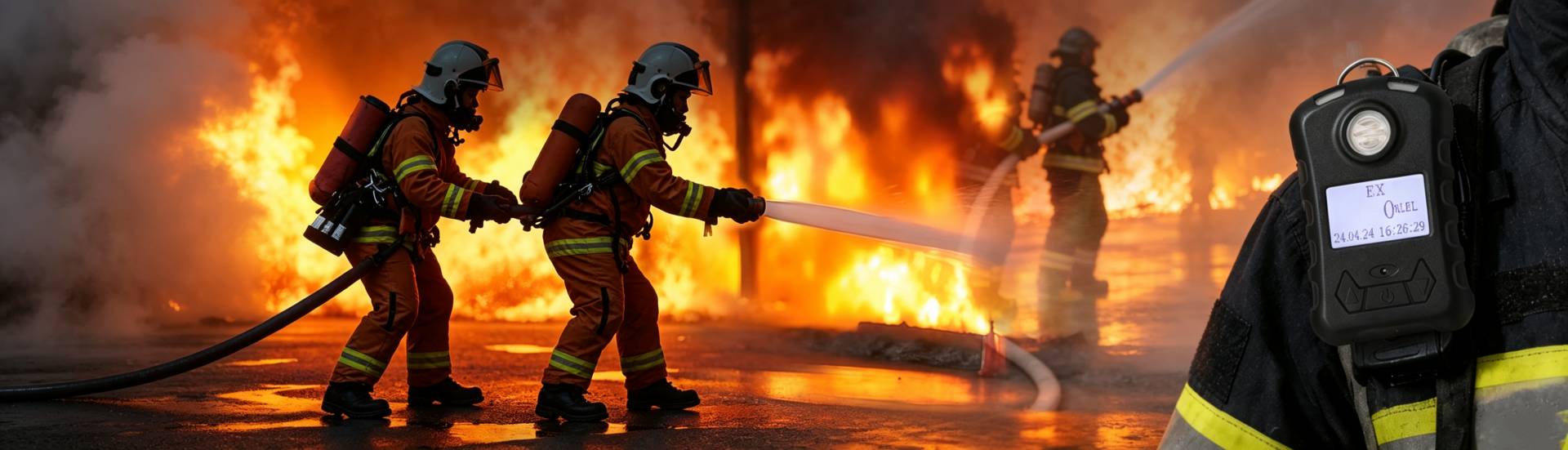
Fixed Gas Detector and Portable Gas Detector: How to Choose the Right Equipment?
In the industrial production process, gas leakage may occur around pipelines, storage tanks, valves and production equipment. Finding these dangers in time is of great significance for ensuring the safety of staff and preventing accidents.
Fixed gas detector and portable gas detector are widely used in industrial gas safety monitoring, but their uses are not the same. The fixed gas detector is mainly used for continuous monitoring of designated areas, while the portable gas detector is convenient for workers to carry around during inspection, maintenance and field operation.
Knowing the difference between the two kinds of equipment is helpful for enterprises to choose the appropriate gas detection scheme according to the actual working environment and safety requirements.
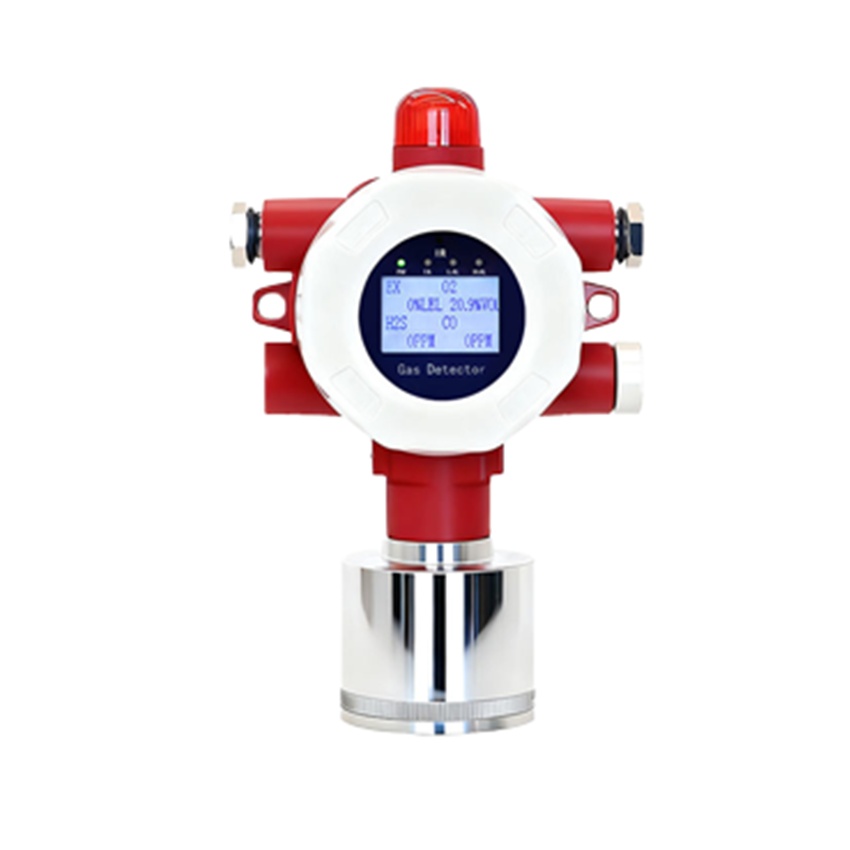
1. What Is a Fixed Gas Detector?
The fixed gas detector is installed at the designated position to monitor the gas concentration around the potential leakage source. This kind of equipment is common in chemical plants, oil and gas facilities, industrial production workshops and sewage treatment plants.
Depending on the type of sensor configured, the fixed gas detector can monitor the concentration of combustible gas, toxic gas or oxygen. When the detected gas concentration reaches the preset alarm threshold, the equipment can trigger an on-site alarm or send a signal to the gas alarm controller.
Some industrial models support 4–20ma, RS485 or relay output, and can be connected with control systems and other safety equipment.
For industrial areas that need all-weather monitoring, fixed gas detector has high practical value. After the installation of the equipment is completed, the designated points can be continuously monitored, and there is no need for staff to always stay next to the equipment.
However, the installation location will directly affect the monitoring effect. The diffusion characteristics of different gases will be affected by factors such as gas density, ventilation conditions, temperature and leakage mode. Therefore, the installation position of the detector should be determined according to the characteristics of the target gas and the results of on-site risk assessment.
2. What Is a Portable Gas Detector?
Portable gas detector is mainly used for staff to carry around during inspection, equipment maintenance and other field operations. According to different product models, the equipment can detect one gas or multiple gases at the same time.
For example, a common portable four-in-one gas detector can monitor combustible gas, oxygen, carbon monoxide and hydrogen sulfide. In addition, a single gas detector can also be selected for the working scene mainly facing the risk of a certain gas.
Portable gas detector is widely used in limited space operation, pipeline inspection, storage tank maintenance and equipment maintenance. Some models adopt built-in pumping structure, which can extract gas samples from areas that are not easy to be directly approached for detection.
Different from fixed equipment, portable gas detector can follow the movement of workers. This equipment is more flexible when the working environment changes, or the staff needs to check multiple locations in one shift.
Of course, the use effect of portable detector also depends on whether the operation is standardized. The staff should check the equipment as required before using it, and use it according to the manufacturer’s operating instructions to ensure that the selected instrument is suitable for the dangerous gas that may exist on site.
3. What Is the Difference Between a Fixed Gas Detector and a Portable Gas Detector?
The main difference between them lies in the location and mode of gas monitoring.
| Contrast Project | Fixed Gas Detector | Portable Gas Detector |
|---|---|---|
| Installation mode | Fixed installation in the designated position | Handheld or wearable |
| Monitoring mode | Continuously monitor the installation points. | Monitor the gas around the staff or at designated sampling points. |
| Typical user | Site management personnel and control room operators | Inspection, maintenance and field operation personnel |
| Power supply mode | Wired power supply or external power supply is usually used. | Battery power is usually used. |
| Alarm function | Support field alarm and system signal output according to the model. | Sound, lighting, some models support vibration alarm. |
| Common application | Production areas, pipelines, storage tanks and process equipment | Limited space, on-site inspection and equipment maintenance |
| Main considerations | Installation location and monitoring coverage | Mobile convenience, battery life and standardized operation |
Neither device can cover all monitoring requirements alone. The fixed gas detector can only monitor the environment near its installation location and cannot automatically cover the whole industrial facility; Portable gas detector needs to be carried, placed and operated correctly by staff in order to play its due monitoring role.
4. How to Choose a Gas Detector?
The specific choice depends on the job content and the risks existing in the site.
4.1 Areas Requiring Continuous Monitoring
If there is a continuous risk of gas leakage around pipelines, valves, storage tanks or production equipment, it is usually considered to install a fixed gas detector. The equipment can continuously monitor the designated position and transmit the alarm signal to the control system with the corresponding interface.
4.2 Work Scenes Requiring Mobile Inspection
Portable gas detector is more practical for workers who need to move between different areas. Staff can check the surrounding gas environment in time during routine inspection, equipment maintenance and troubleshooting.
4.3 Limited Space Operation
Portable gas detectors are particularly important for evaluating atmospheric environmental risks in limited space operations such as storage tanks, underground pipelines and sewage pools. According to the applicable safety regulations, gas detection shall be carried out before entry, and whether continuous monitoring is needed during operation shall be determined according to the site risk.
Before purchasing, the target gas, detection range, sensor type, alarm setting, working temperature and environmental protection requirements should also be confirmed. If the equipment needs to be used in a potentially explosive environment, it must also be confirmed that its relevant certification is suitable for the intended use area.
Calibration and functional testing can not be ignored. Maintenance should be carried out in accordance with the manufacturer’s recommended methods and applicable workplace safety requirements, rather than adopting exactly the same maintenance cycle for all models.
5. Why Do Many Industrial Sites Use Two Kinds of Equipment at the Same Time?
In practical application, fixed gas detector and portable gas detector can usually be used together.
Taking a chemical plant as an example, there may be gas pipelines, storage tanks and multiple maintenance areas on site. Enterprises can install fixed gas detectors at key risk positions around the equipment to continuously monitor the areas where leakage may occur. When technicians need to check the pipeline or enter the restricted operation area, then use the portable gas detector to monitor the gas environment near the operation location.
This configuration can meet two different needs at the same time: on the one hand, it can monitor the identified key risk points, and on the other hand, it can pay attention to the gas risks faced by workers when they move.
How many devices need to be installed, how to determine the installation location, and what alarm and emergency measures should be taken should be determined through professional on-site risk assessment, not just based on the price or convenience of equipment.
Summary
The key to choose fixed gas detector or portable gas detector lies in the actual monitoring task. Stationary equipment is mainly used for continuous monitoring at designated locations, while portable equipment is more suitable for on-site inspection, equipment maintenance and gas monitoring during staff operation.
For many industrial enterprises, the two kinds of equipment are not mutually substitutive, but can complement each other. To choose a suitable gas detection scheme, we should start with understanding the target gas, identifying potential leakage points and personnel exposure risks, and then determine the equipment configuration in combination with the actual working environment.
HIREP provides fixed and portable gas detection solutions for different industrial application scenarios. When selecting a specific model, we should focus on checking the sensor specifications, detection range, alarm function, communication interface and related certification to ensure that the equipment meets the actual use requirements on site.


 WhatsApp: 8619339980364
 E-mail: contact@hirepsafety.com
