
Industrial Gas Monitoring System: Application Scenarios, System Composition and Equipment Selection Guide
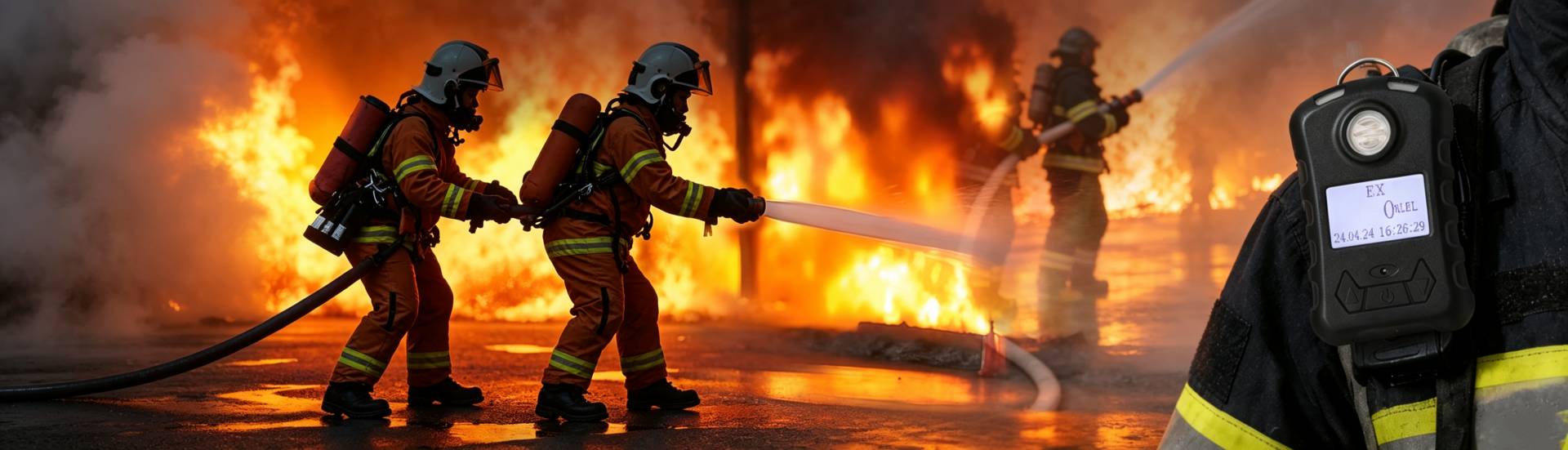
Industrial gas monitoring system plays an important role in chemical plants, oil and gas facilities, refineries, sewage treatment plants and various manufacturing industries. In the industrial production process, gas leakage may occur around pipelines, storage tanks, compressors, valves and production equipment. Some gases are toxic, others are flammable and explosive, and some may lead to insufficient oxygen concentration in the environment. Without reliable monitoring measures, these dangers may threaten the life safety of workers and cause damage to production equipment.
A set of well-designed industrial gas monitoring system can help enterprises find abnormal gas concentration in time, provide early warning and guarantee safe production.
What Is an Industrial Gas Monitoring System?
Industrial gas monitoring system is a comprehensive monitoring system composed of gas detection equipment, signal transmission equipment, alarm controller and monitoring platform. It can continuously monitor the gas concentration in the designated area and send out a signal when the detected value reaches the preset alarm threshold.
According to different industrial application requirements, the system can use fixed gas detector for continuous monitoring, portable gas detector for personnel safety protection, or combine the two devices.
For example, installing a fixed gas detector near a natural gas pipeline can monitor methane leakage in real time. When the gas concentration exceeds the set alarm value, the detector will transmit the signal to the control system, trigger an audible and visual alarm, and remind the field personnel to take timely measures.
Main Components of Industrial Gas Monitoring System
Fixed Gas Detector
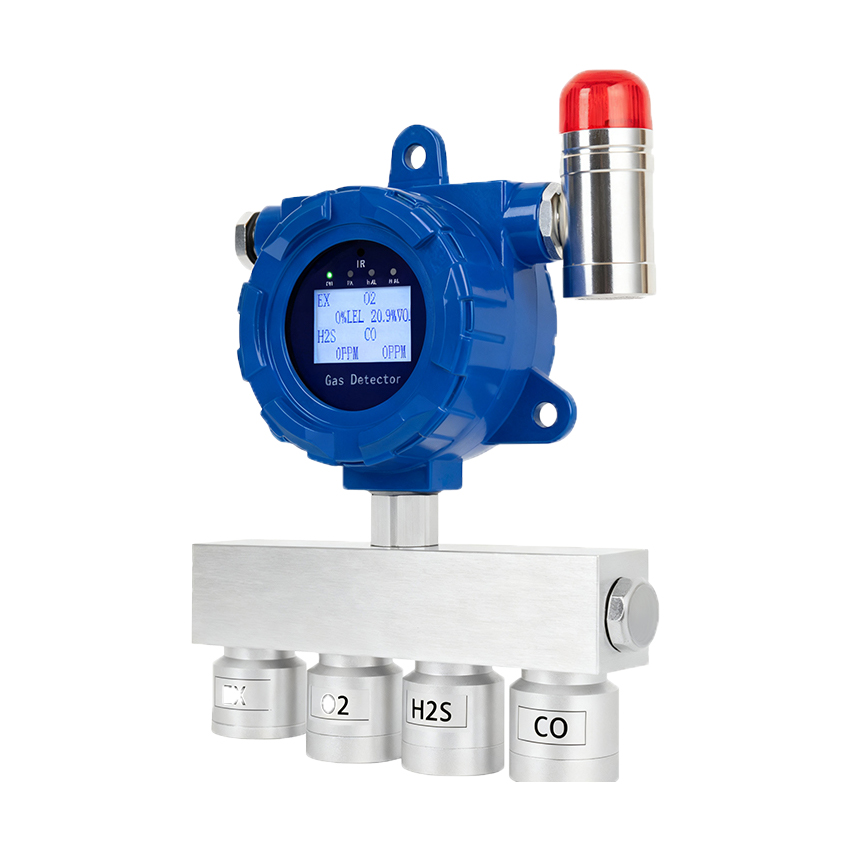
Stationary gas detectors are usually installed in the places where gas leakage is easy to occur, and are used to continuously monitor methane, hydrogen sulfide, carbon monoxide, oxygen and volatile organic compounds (VOC).
According to different target gases, different sensor technologies can be selected. Common types include catalytic combustion, electrochemical, infrared and photoionization detection technologies.
For industrial sites that need continuous monitoring, HIREP’s Fixed Gas Detector HRP-T2000-G can be considered to monitor different types of industrial gas risks.
Portable Gas Detector
Portable gas detector is mainly used for personal gas safety monitoring during equipment inspection, maintenance and confined space operation.
The common portable four-in-one gas detector can usually detect combustible gas, oxygen, carbon monoxide and hydrogen sulfide at the same time, helping workers to identify dangerous gas environment before entering confined space and during operation.
For example, HIREP’s Portable Four-in-One Gas Detector HRP-B1000-C is suitable for confined space entry, industrial equipment maintenance and on-site gas inspection.
Gas Alarm Controller
The gas alarm controller is responsible for receiving the signal transmitted by the detector, displaying the gas concentration data and managing the alarm output. Through centralized control, the staff can simultaneously check the gas monitoring situation of multiple detection points in the control room.
Signal Transmission and Control Equipment
Industrial gas monitoring system usually adopts 4–20ma, RS485 or relay output mode to transmit detection data and alarm signals. According to system requirements, these signals can also be connected to PLC, DCS or other industrial automation control systems.
In addition, the system can also be connected to audible and visual alarm to give an obvious alarm when the gas concentration is abnormal, so as to remind the field personnel to deal with it in time.
Common Application Scenarios of Industrial Gas Monitoring System
Chemical Plant
Toxic gases, combustible gases and volatile chemicals may be involved in the chemical production process. The fixed gas detector can be installed near the reaction kettle, pipeline, storage tank and chemical conveying area, so as to find the potential gas leakage risk in time.
Oil and Gas Facilities
In the process of exploitation, processing, storage and transportation of oil and gas, methane, hydrogen sulfide and other dangerous gases may exist. The configuration of gas monitoring equipment is helpful to protect the field staff and reduce the risk of fire, explosion and toxic gas exposure.
Sewage Treatment Plant
Sewage treatment facilities may produce hydrogen sulfide, methane and other gases in the process of sewage collection and treatment. Stationary gas monitoring system can be installed near pumping stations, treatment tanks, storage areas and related equipment to continuously monitor gas concentration.
Industrial Manufacturing Workshop
Some industrial manufacturing workshops will use flammable gases, solvents and other chemicals in the production process. By installing gas detection equipment, the gas concentration in the production area can be monitored and an alarm can be given in time when an abnormality occurs.
Confined Space Operation
There may be problems of insufficient oxygen or toxic gas accumulation in storage tanks, underground pipelines, inspection wells and closed equipment. Before entering these areas, workers need to use Portable Multi-Gas Detectors to check the internal air environment, and continue to pay attention to gas changes during the operation.
How to Choose an Appropriate Industrial Gas Monitoring System?
To choose a suitable industrial gas monitoring system, we need to know the actual working environment and monitoring requirements at the site first.
Firstly, the types of gases to be detected and their potential sources of leakage are defined. Different industrial fields have different requirements for gas monitoring. For example, oil and gas facilities usually need to focus on monitoring methane and hydrogen sulfide, while sewage treatment plants may pay more attention to the concentration of hydrogen sulfide and oxygen.
Secondly, the installation environment of the equipment needs to be considered. Temperature, humidity, dust, corrosive substances and explosion risk may all affect the choice of detector. The protection level and explosion-proof certification of equipment shall meet the actual requirements on site.
In addition, it is necessary to determine the communication mode required by the system. For centralized monitoring system, 4–20ma and RS485 are common signal interfaces. If it is necessary to connect existing PLC or DCS equipment, confirm whether the signal type and communication protocol are compatible before installation.
Finally, we can’t ignore the daily maintenance and calibration of equipment. Regular inspection, function test and gas calibration are helpful to maintain the measurement reliability of testing equipment and ensure the long-term stable operation of the system.
Choose HIREP to Build a Reliable Industrial Gas Safety Monitoring Scheme
An effective industrial gas monitoring system is not simply to install several gas detectors, but also needs to comprehensively consider sensor technology, equipment installation location, signal transmission mode and alarm strategy.
HIREP Safety provides Fixed Gas Detectors and Portable Gas Detectors, which can be used in industrial fields such as chemical production, oil and gas facilities, sewage treatment and confined space operations.
Whether enterprises need fixed equipment for continuous gas monitoring or portable detection equipment to provide safety protection for field workers, choosing appropriate gas detection equipment will help to improve the ability of identifying dangerous gases and improve the safety management level of industrial sites.


 WhatsApp: 8619339980364
 E-mail: contact@hirepsafety.com
