
Guide for sensitivity setting of fixed dust gas detector
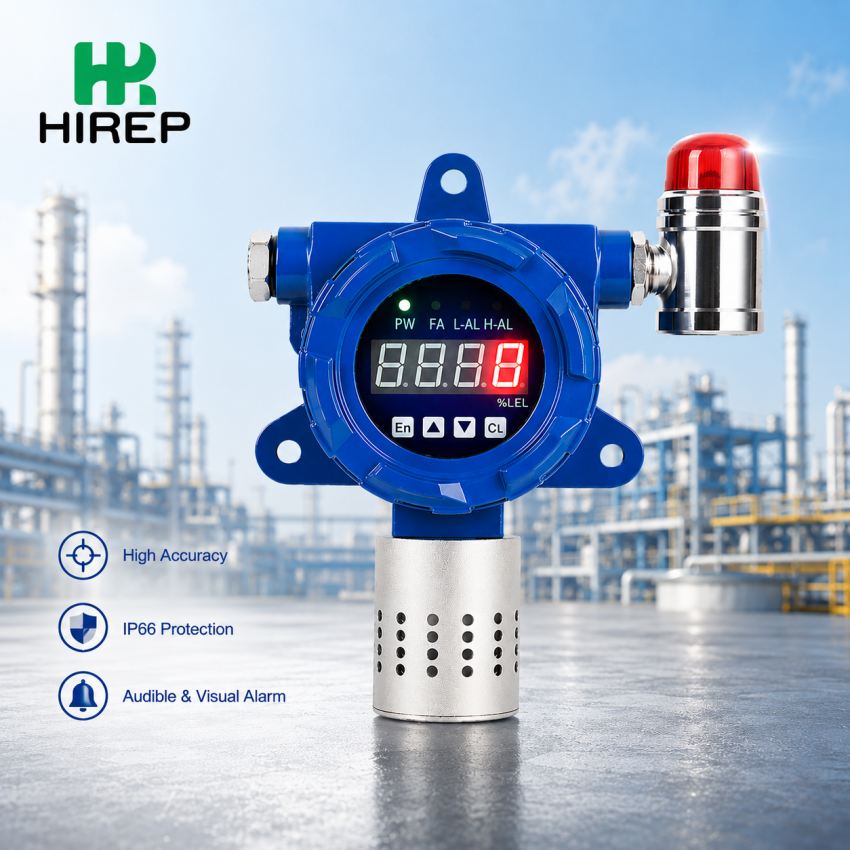
Fixed dust gas detector is used to continuously monitor the concentration of dust or gas in industrial and commercial environment. Setting the sensitivity correctly can help the detector maintain stable monitoring performance and make appropriate response to the change of detection concentration.
What is the sensitivity setting?
Sensitivity is mainly used to describe the response ability of detection system to the change of target substance concentration.
Different sensors and detection technologies have different response characteristics. Therefore, when setting the sensitivity, we should comprehensively consider the detector model, sensor type, target gas or dust, detection range and actual application environment.
Why is sensitivity setting important?
The correct sensitivity setting can help:
- Maintain stable concentration monitoring.
- Improve the response ability to concentration changes.
- Reduce unnecessary numerical fluctuations.
- Support reliable alarm function
- Adjust detection parameters according to different applications.
It should be noted that sensitivity adjustment cannot replace regular calibration and maintenance.
How to set the sensitivity of fixed dust gas detector?
The specific operation method depends on the model of the detector and its control interface. A typical setup process includes the following steps.
1. Enter the parameter setting menu.
Ensure that the tester is powered on normally and in normal working condition.
Enter the parameter setting menu through key, magnetic operation tool or corresponding control interface.
2. Find the sensitivity setting
Find the parameters related to sensitivity in the menu.
Different types of detectors may use different parameter names or menu numbers, so you should check the product manual before making adjustments.
Step 3 Adjust the sensitivity
Adjust the sensitivity according to the parameter range recommended by the manufacturer and the actual application requirements.
Do not arbitrarily increase or decrease the sensitivity value, because excessive adjustment may affect the measurement stability and detection response.
4. Save the settings
Confirm the selected parameters and save the changes.
After saving, some fixed dust gas detectors may automatically return to the normal concentration display interface.
5. Check the detector
After the adjustment is completed, observe the LCD screen to check whether the detected value is stable.
If necessary, check the alarm indicator and other related functions.
Factors affecting detection performance
Many factors may affect the detection performance of fixed dust gas detector.
Sensor type
Different sensors adopt different detection principles and have different response characteristics. The sensitivity setting should match the sensor actually installed.
Temperature and humidity
Changes in temperature and humidity may affect sensor performance, especially in outdoor or harsh industrial environments.
Dust and gas concentration
Changes in dust or gas concentration and air flow may affect the actual concentration reaching the sensor position.
Installation position
The detector should be installed in a suitable position according to the target substance, potential leakage or dust source, ventilation conditions and actual monitoring requirements.
Sensitivity setting and calibration
Sensitivity setting and calibration are different operations.
Sensitivity setting is mainly used to adjust the internal response parameters of the detector, while zero calibration and range calibration are used to establish or adjust the measurement benchmark.
After the sensitivity adjustment is completed, it should still be calibrated according to the manufacturer’s requirements.
matters need attention
When setting the sensitivity of fixed dust gas detector, the following items should be noted:
- Follow the operating instructions provided by the manufacturer.
- Confirm the sensor type and target detection substance before adjustment.
- Use the recommended parameter range.
- Don’t modify parameters without knowing their functions.
- Check the reading of the tester after the adjustment is completed.
- Perform calibration and maintenance regularly.
- Record important parameter modifications.


 WhatsApp: 8619339980364
 E-mail: contact@hirepsafety.com