
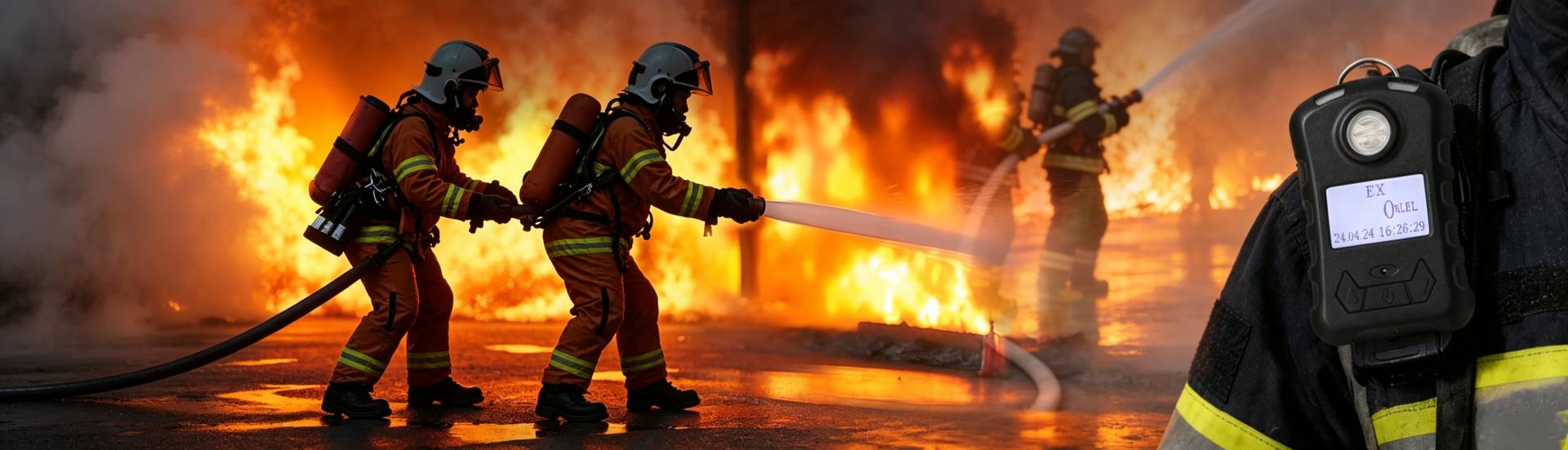
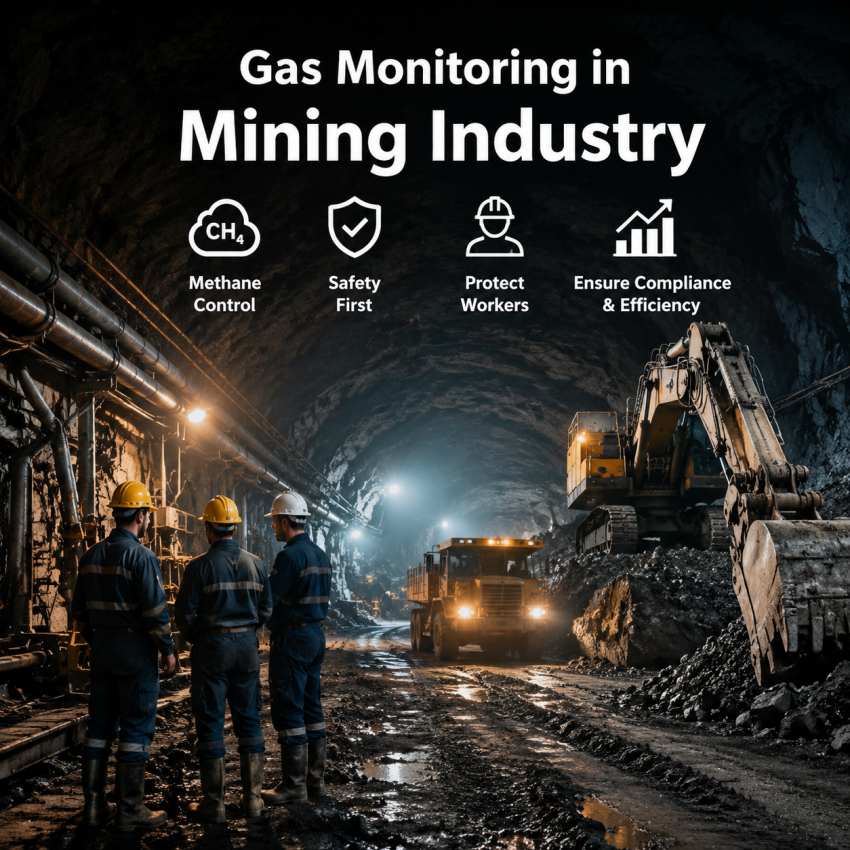
Gas Monitoring in Mining Industry
Why Does the Mining Industry Need Gas Monitoring?
Mine working environment usually includes underground roadway, limited space, blasting area and large machinery operation area, which are prone to produce dangerous gas.
The main risks include:
1. Flammable Gas Explosion Risk
Methane (CH₄) is one of the most dangerous gases in coal mines.
When the concentration of methane reaches the explosion range, serious explosion accidents may occur when it encounters fire source, electric spark or high temperature environment.
By continuously monitoring the concentration of methane, it is possible to find anomalies in time before the gas reaches the dangerous level, and take measures such as ventilation and evacuation.
2. Risk of Toxic Gas Leakage
There may be many kinds of toxic gases in the mine environment, such as:
- Carbon monoxide (CO)
- Hydrogen sulfide (HS)
- Sulfur dioxide (SO)
- Nitrogen dioxide (NO)
Even if the concentration of these gases is low, they may cause harm to human body, causing dyspnea, poisoning and even death.
Real-time gas detection can help workers find dangerous areas in time and avoid long-term exposure.
3. Risk of Hypoxia
Due to the limited ventilation conditions in underground mines and enclosed spaces, the oxygen content may decrease.
Hypoxia environment will affect the judgment ability of staff, which may lead to coma or suffocation in severe cases.
Oxygen monitoring can help ensure a safe oxygen concentration in the work area.
Common Monitoring Gases in Mining Industry
Professional mining gas monitoring system usually needs to detect the following gases:
| Common Gas | Sources of Gas Risk |
|---|---|
| Methane (CH₄) | Explosion risk, coal seam and underground mining area |
| Carbon monoxide (CO) | Poisoning, fire warning, equipment operation and combustion process |
| Hydrogen sulfide (HS) | High toxic sulfur-bearing mineral area |
| Oxygen (O₂) | Risk of deficiency and insufficient ventilation area |
| Carbon dioxide (CO₂) | Suffocation risk, geological release, underground environment |
By continuously monitoring the concentration of these gases, mine managers can find dangerous situations in advance and take effective measures.
Types of Gas Monitoring Equipment Used in Mining Industry
1. Fixed Gas Detection System
Stationary gas detectors are usually installed in important areas of mines, such as:
- Underground roadway
- Ventilation station
- Pump room
- Equipment operation area
- Storage area
The fixed system can provide 24-hour continuous monitoring, and can be connected with the control center, alarm system and safety management platform.
The main functions include:
- Real-time display of gas concentration
- Acousto-optic alarm reminder
- Remote data transmission
- Automatic alarm linkage
The fixed gas detection system is suitable for industrial scenes that need long-term safety monitoring.
2. Portable Gas Detector
Portable gas detector is mainly used for personal safety protection of miners.
Workers can bring equipment into different areas to check the ambient gas situation in real time.
Common types include:
- Single gas detector
- Multi-gas detector
- Four in one gas detector (CH₄, CO, HS, O₂)
Portable equipment has the characteristics of high flexibility and convenient movement, and is an important tool for daily safety inspection in mines.
3. Wireless Gas Monitoring System
With the development of smart mines, more and more mining areas adopt wireless communication technology, such as:
- LoRa wireless communication
- 4G remote transmission
Wireless gas monitoring system has the following advantages:
- No complicated wiring is required.
- Suitable for large-scale deployment
- Support remote data viewing
- Realize intelligent safety management.
It is especially suitable for large underground mines and areas with complex environment.
How to Improve Mine Safety by Gas Monitoring System
Discover Danger in Advance
Gas detection equipment can continuously monitor environmental changes and find the rising trend of abnormal gas concentration before the danger occurs.
Real-Time Alarm Response
When the gas concentration exceeds the set alarm value, the system can start:
- Acousto-optic alarm
- Ventilation equipment linkage
- Control center notification
- Remote alarm reminder
Help staff to take emergency measures quickly.
Data Recording and Analysis
Intelligent gas monitoring system can save historical detection data and help enterprises:
- Analysis of gas change trend
- Optimizing ventilation system
- Improve the level of safety management
- Meet the requirements of industry safety standards
Application Scenario of Gas Monitoring in Mining Industry
Gas detection systems are widely used in:
- Coal mine
- Underground metal mine
- Tunnel construction project
- Mineral processing plant
- Mine equipment room
- Storage and transportation area
Whether underground mining or ground processing, reliable gas monitoring is an important basis to ensure safe production.
How to Choose a Gas Monitoring Scheme Suitable for Mining Industry?
When selecting mine gas monitoring system, the following factors need to be considered:
1. Gas Detection Requirements
Select the appropriate equipment according to the possible dangerous gas on site, such as:
- Methane detection
- Carbon monoxide detection
- Hydrogen sulfide detection
- Oxygen detection
2. Data Communication Mode
Different application environments need different communication schemes:
4-20mA output:
Suitable for traditional industrial control system.
RS485 communication:
Suitable for centralized monitoring system.
LoRa wireless transmission:
Suitable for large-scale wireless deployment.
4G Remote Monitoring:
Suitable for Intelligent Mine Management.
3. Environmental Adaptability
The mine environment is usually characterized by dust, high humidity and harsh environment, so the equipment needs to have:
- High reliability
- Explosion-proof design
- Dust-proof and waterproof ability
- Long-term stable operation ability


 WhatsApp: 8619339980364
 E-mail: contact@hirepsafety.com