
Gas Detector: Types, Working Principles and Applications
Gas leaks are not always easy to find. Some dangerous gases have no color, and even if some gases have reached the concentration that needs attention, it is difficult to judge whether the environment is safe only by human senses. In industrial environment, it is obviously not enough to judge whether the air is safe only by smell or naked eye observation.
The gas detector is designed to solve this problem. It can detect the concentration of specific gas in the surrounding air and give an alarm when the detected value reaches the preset alarm level.
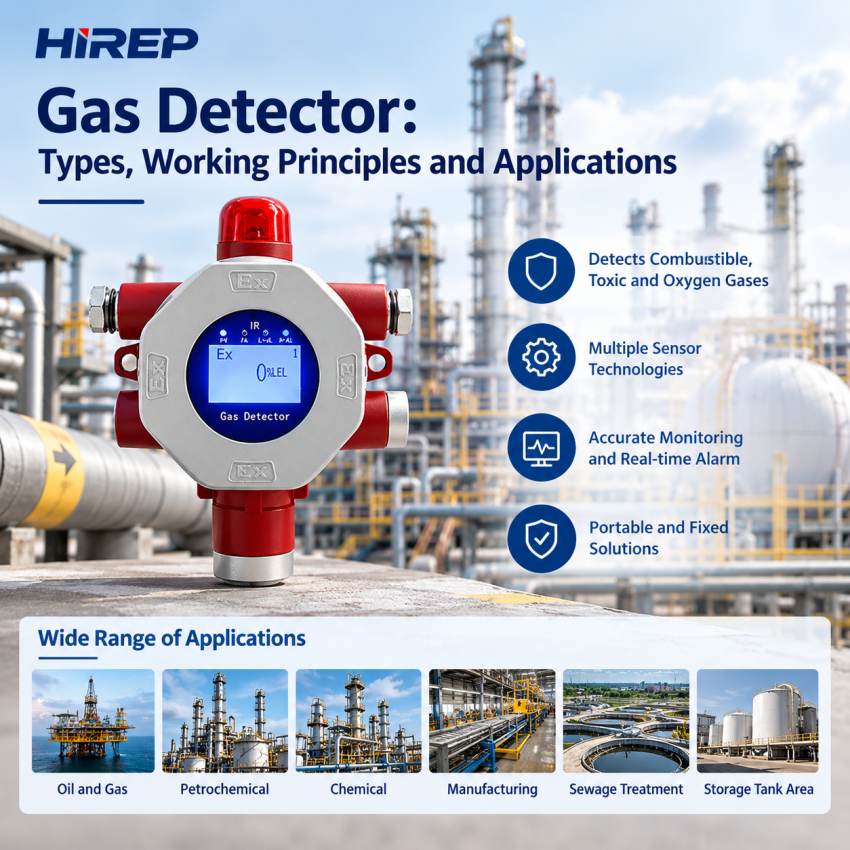
At present, gas detectors are widely used in oil and gas, petrochemical, chemical, manufacturing, sewage treatment, storage tank area, pump house, pipeline and limited space. The gas detection equipment used in different applications may be quite different, mainly depending on the type of gas to be detected, the monitoring area and whether the equipment is carried by the staff or fixed.
Understanding the working mode of gas detector and the application characteristics of different types of equipment is an important basis for selecting suitable gas detection equipment.
What gases can the gas detector detect?
The gas detector can detect a single gas or multiple gases at the same time.
Common detection objects include combustible gas and industrial toxic gas, such as:
- Methane (CH₄)
- Propane
- Hydrogen (H₂)
- Carbon monoxide (CO)
- Hydrogen sulfide (H₂S)
- Oxygen (O₂)
- Ammonia gas (NH₃)
- Chlorine gas (Cl₂)
- Sulfur dioxide (SO₂)
- Volatile organic compounds (VOCs)
What kind of gas needs to be detected depends mainly on the production process and the materials used or stored on site.
For example, methane detection is usually needed around natural gas pipelines, gas storage facilities and natural gas processing equipment. Sewage treatment and some oil and gas working environments need to focus on hydrogen sulfide. In limited space operation, it is not only a certain gas that needs to be considered, but also insufficient oxygen, combustible gas, carbon monoxide and hydrogen sulfide may become potential risks.
Therefore, there is no universal gas detector that can be applied to all scenarios.
How does the gas detector work?
Although the shape, function and application of gas detector are different, the basic detection process is similar.
After the air enters the detector, it will reach the internal sensor. When the target gas interacts with the sensor, the sensor will generate a measurable response signal. The electronic system inside the detector processes the signals and converts them into gas concentration values to be displayed on the screen.
When the detected gas concentration exceeds the set alarm value, the equipment can give an alarm by means of sound, light or vibration. The fixed gas detector can also transmit alarm signals to the control system or other safety equipment.
Therefore, the sensor is one of the core components of the gas detector. Different gases need different detection technologies, and the selection of sensors will directly affect the detection performance, range, response time and maintenance requirements of the detector.
Common gas detection sensor technology
Modern gas detection equipment adopts many different sensor technologies. Which technology to choose depends on the gas to be detected and the actual working environment.
Electrochemical sensor
Electrochemical sensors are widely used to detect toxic gases and oxygen.
Common detection objects include:
- Carbon monoxide (CO)
- Hydrogen sulfide (H₂S)
- Sulfur dioxide (SO₂)
- Chlorine gas (Cl₂)
- Oxygen (O₂)
This kind of sensor generates electrical signals by the target gas participating in electrochemical reaction, thus realizing the detection of gas concentration.
Because of its small size and low power consumption, electrochemical sensors are often used in portable gas detectors and also widely used in fixed gas detection equipment.
Catalytic combustion sensor
Catalytic combustion sensor, also known as catalytic bead sensor, is mainly used to detect combustible gas.
Its basic principle is to detect the gas concentration by using the heat generated when combustible gas reacts with oxygen on the surface of catalytic element. Test results are usually expressed as percentage of lower explosion limit (%LEL).
Common detection objects include:
- Methane
- Propane
- Butane
- Hydrogen
- Other combustible gases
Catalytic combustion sensors are widely used in industrial combustible gas detection. However, its performance may be affected by factors such as sensor poisoning, pollution and insufficient oxygen, so regular calibration and maintenance are very important.
Infrared sensor
Infrared gas detection technology uses the absorption characteristics of specific gas to measure gas concentration.
According to different sensor designs, infrared sensors can be used to detect some combustible gases and gases such as carbon dioxide.
Because the detection process does not depend on the combustion of the target gas, infrared technology has certain advantages in some industrial applications.
Infrared sensors can be applied to both portable gas detection equipment and fixed gas detectors.
PID sensor
Photoionization detection technology is usually called PID, which is mainly used to detect volatile organic compounds (VOCs).
PID sensor uses ultraviolet light to ionize gas molecules, and estimates the gas concentration through the generated electrical signal.
In the working environment involving solvents, fuels, chemicals and other VOC vapors, PID gas detection technology has good application value.
Portable gas detector: a gas monitoring tool for field personnel
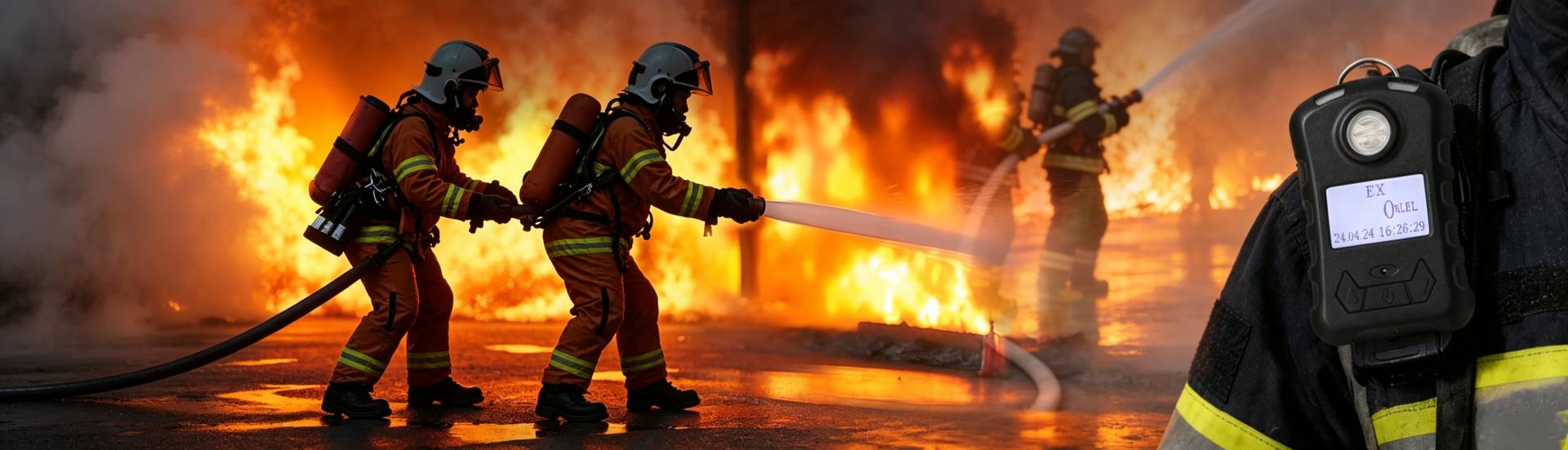
Portable gas detector can be carried by staff, and is usually used for patrol inspection, maintenance, construction and emergency operations.
Common applications include:
- Limited space operation
- Pipeline inspection
- Oil and gas maintenance
- Chemical plant operation
- Maintenance of equipment
- Industrial safety inspection
- Emergency rescue
The single gas detector is suitable for scenes where a certain gas is the main risk. For example, if there is a major risk of hydrogen sulfide in the staff area, you can choose a portable gas detector dedicated to H₂S detection.
Portable multi-gas detector can provide more comprehensive monitoring when multiple gases may exist at the same time. Some four-in-one gas detectors can usually detect oxygen, combustible gas, carbon monoxide and hydrogen sulfide at the same time.
In actual selection, the combination of detection gases should be determined according to the real gas risk in the workplace, rather than simply pursuing the more sensors, the better.
Stationary gas detector: continuous area monitoring
Unlike portable equipment, fixed gas detectors will be installed in designated monitoring positions for a long time.
Stationary gas detectors are usually installed near equipment or areas where gas leakage may occur, such as:
- Storage tank area
- Natural gas pipeline
- Pump room
- Compressor area
- Production line
- Chemical equipment
- Gas filling area
- Boiler room
- Sewage treatment facilities
The main function of fixed gas detector is continuous monitoring. When the gas concentration changes abnormally, the equipment can give an alarm on the spot and transmit the alarm signal to the central control system according to the system configuration.
In large-scale industrial facilities, multiple fixed gas detectors can be installed in different areas to build a complete gas detection system.
The installation position of fixed gas detector is very important, and it is necessary to comprehensively consider the density of target gas, potential leakage sources, ventilation conditions, temperature and site layout.
What is a multi-gas detector?
Multi-gas detector is a kind of equipment that can detect different gases simultaneously through multiple sensors.
One of the most common applications is the four-in-one gas detector in limited space operation. Typical configurations include:
O₂ + %LEL + CO + H₂S
This combination can cover several kinds of common atmospheric risks in limited space.
However, four in one does not mean that it is suitable for all limited spaces. The specific gases to be detected need to be judged according to the materials once stored in the space, the production process and the site environment. In some cases, other gas sensors may need to be added.
When choosing a multi-gas detector, we should first determine the possible gas risks in the field, and then determine the sensor combination, detection range, alarm value and other equipment parameters.
Why is gas detection so important?
Gas detection can provide some information that cannot be reliably obtained by relying solely on human senses.
The gas detector can display the actual concentration of the target gas and remind the staff in time when the environment changes. Especially in the case that gas leakage occurs gradually, or the gas itself cannot be identified by naked eyes and smell, gas detection equipment is more important.
In industrial facilities, gas detection can be used to:
- Found a potential gas leak.
- Monitoring combustible gas concentration
- Remind staff to pay attention to toxic gases.
- Detecting anoxic environment
- Support limited space operation
- Early warning of potential leakage points
- Send alarm signal to the factory control system.
It should be noted that gas detection is only a part of the overall safety system. Ventilation system, leakage prevention, equipment design, operating procedures and emergency measures are equally important.
Calibration and maintenance of gas detector
The gas detector is essentially a measuring instrument, so regular maintenance cannot be ignored.
With the increase of service time, the sensor performance may change. Contaminants, environmental conditions, sensor aging and some chemicals may affect the response of the detector.
Daily maintenance usually includes functional inspection, calibration, sensor inspection, alarm test and equipment cleaning.
Among them, calibration is one of the important links to ensure the accuracy of detection. Calibration usually checks the response of the detector through the standard gas with known concentration. The specific calibration cycle needs to be determined according to the sensor type, use environment, equipment use frequency and manufacturer’s suggestion.
During calibration, the standard gas matching the detector and the target gas should be used, and the operation instructions of the corresponding model should be strictly followed.
HIREP users can also learn more information by combining relevant materials, such as Gas Detector Calibration, fixed gas detector operation and maintenance, and gas detector sensitivity adjustment.
How to choose a suitable gas detector?
When selecting a gas detector, it is suggested to proceed from the actual gas risk, rather than directly starting from the product.
The following questions can be considered:
What gas may leak at the scene?
First, determine the combustible gas or toxic gas that may appear on the site. If there are multiple gas risks, a multi-gas detector can be considered.
Need personnel monitoring or regional monitoring?
If workers need to move around in different areas, it is usually more suitable to use portable gas detectors.
If a certain area needs long-term, continuous and unattended monitoring, a fixed gas detector can be considered.
Where is the potential leak?
For fixed installation, pumps, valves, pipelines, storage tanks, production equipment and other possible leakage locations need to be considered.
What’s the site environment like?
Temperature, humidity, dust, corrosive gas, ventilation and specific installation location may all affect the selection of detectors and sensors.
What certifications are needed?
Industrial projects may have specific requirements for explosion-proof grade, protection grade, electrical interface and regional applicable certification. Before purchasing, relevant requirements shall be confirmed according to the project location and actual use environment.
HIREP gas detection solution
HIREP focuses on gas detection equipment in industrial and commercial applications, providing gas monitoring solutions for different application scenarios.
The product range includes portable single gas detector, portable multi-gas detector, fixed gas detector, four-in-one gas detector, remote gas detection equipment and laser methane detection equipment.
For the staff who need personal gas monitoring, the corresponding portable detector can be selected according to the on-site gas risk. For industrial facilities that need continuous monitoring, fixed gas detectors can be installed at designated locations and connected with a more complete gas detection system.
HIREP also provides remote methane detection solutions for natural gas and methane detection applications. In some scenarios, workers can detect from a certain distance without directly approaching the suspected leakage point.
The suitable gas detector needs to be selected according to the detected gas, application scenarios, environmental conditions and monitoring methods. HIREP’s product range can cover different gases and different industrial monitoring needs.


 WhatsApp: 8619339980364
 E-mail: contact@hirepsafety.com