
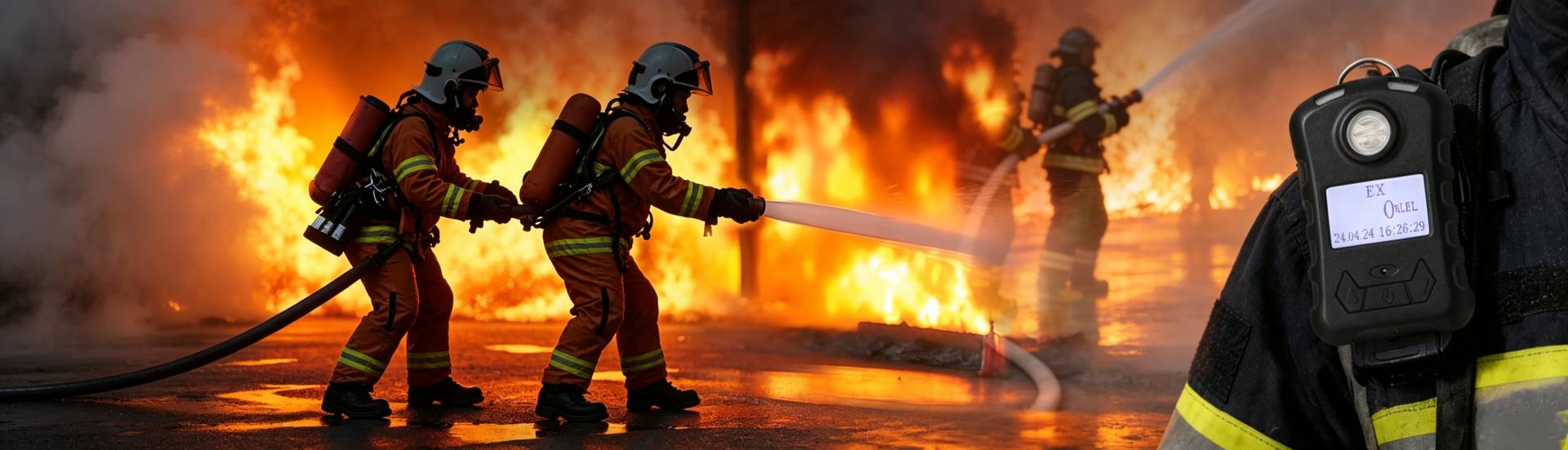
Portable gas detector and fixed gas detector: how to choose?
The demand for gas detection in different workplaces may vary greatly. The monitoring requirements of pipeline patrol workers are obviously different from those of chemical plants that need continuous gas monitoring around storage tanks and production equipment.
Therefore, gas detectors usually have different product forms. The two most common ones are portable gas detector and fixed gas detector.
Both of them are used to detect potentially dangerous gases, but they are used in different ways. Portable gas detector can be carried by staff, mainly used for personal or temporary gas monitoring; The fixed gas detector is installed at a designated location to continuously monitor a specific area.
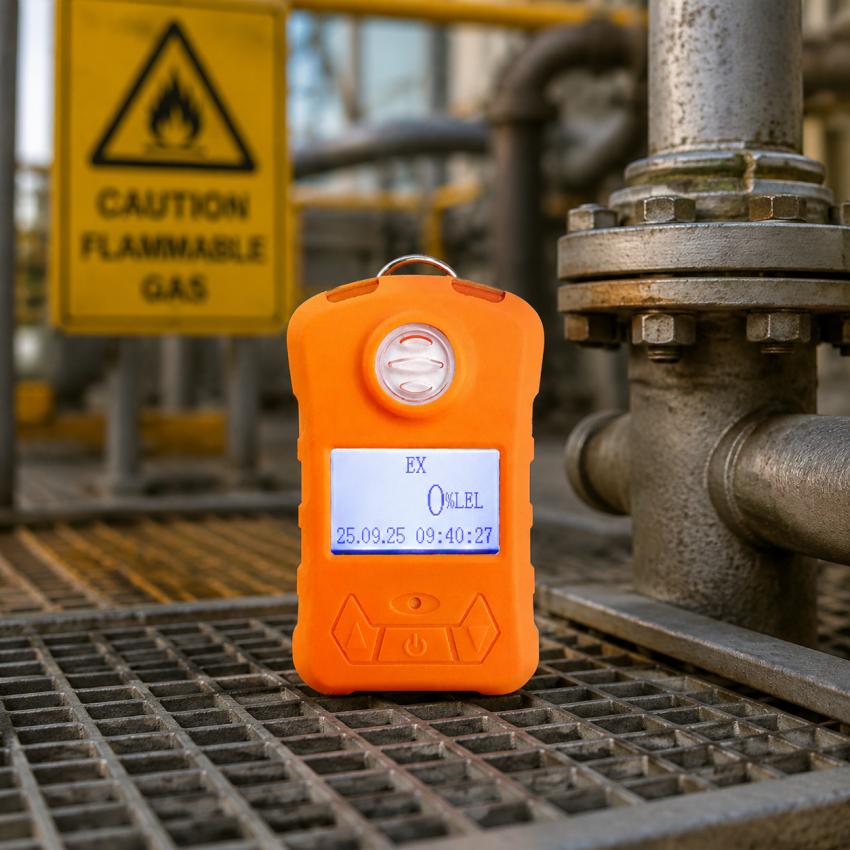
Which equipment to choose depends on the gas to be detected, the workflow, the monitoring position and the frequency to be monitored.
What is a portable gas detector?
Portable gas detector is a kind of compact detection equipment specially designed for staff to carry with them.
It can continuously monitor the air environment around workers, and when the detected gas concentration reaches the set alarm value, the equipment will give an alarm.
Common application scenarios of portable gas detector include:
- Limited space operation
- plant maintenance
- Pipeline inspection
- Oil and gas field operation
- Chemical plant inspection
- Industrial safety inspection
- Emergency rescue
- Leak investigation
The biggest feature of portable gas detector is its flexibility. Workers can take the equipment to different areas for testing, without installing a fixed detector at every location that needs to be checked.
According to the actual application requirements, the portable gas detector can detect one gas and multiple gases at the same time.
Single gas detector and multi-gas detector
Single gas detector is mainly used to detect a specific gas.
This kind of detector is very suitable when the main dangerous gases in a work area have been identified. For example, if the main risk in the worker’s area is hydrogen sulfide, a portable gas detector specially used for HS detection can be used.
The multi-gas detector integrates multiple sensors into one device.
Common four-gas configurations include:
- O₂ + %LEL + CO + H₂S
This combination is often used in limited space and industrial applications, and can simultaneously monitor multiple atmospheric risks.
However, the four-in-one gas detector is not a universal solution for all scenarios. Which sensors need to be configured should be determined according to the materials in the workplace, production technology and possible gas risks.
HIREP provides portable single gas detector and portable multi-gas detector, and the corresponding sensor configuration can be selected according to different application requirements.
What is a fixed gas detector?
The fixed gas detector is a kind of gas detection equipment installed in the designated monitoring position.
Different from the portable detector, the fixed detector will not follow the movement of the staff, but will be installed in a specific location for a long time to continuously monitor the surrounding environment.
Stationary gas detectors are usually installed near equipment where gas leakage may occur, such as:
- Natural gas pipeline
- storage tank
- pump
- compressor
- valve
- Gas filling area
- production equipment
- Chemical treatment equipment
- boiler room
When the detected gas concentration reaches the set alarm value, the fixed gas detector can give an on-site alarm. According to the system configuration, the alarm signal can also be transmitted to the control cabinet or the central monitoring system.
In large industrial facilities, multiple fixed gas detectors can be installed in different areas, thus establishing a complete fixed gas detection system.
Main differences between portable and fixed gas detectors
The easiest way to understand the difference between them is to see what they need to monitor respectively.
portable gas detector
Portable gas detector is mainly designed around the staff.
The equipment can follow the movement of the staff and continuously monitor the air environment near its working area.
Therefore, it is suitable for patrol inspection, equipment maintenance, limited space operation and other jobs that require staff to move constantly.
Fixed gas detector
The fixed gas detector is mainly designed around a specific area.
The equipment is installed in the designated location for a long time, and the gas concentration in the environment can be continuously monitored even if there is no staff nearby.
Therefore, it is suitable for industrial areas that need all-weather continuous monitoring.
In many industrial facilities, portable and fixed gas detectors can be used together instead of replacing each other.
When should I use a portable gas detector?
Portable equipment is especially suitable when the monitoring position changes frequently.
For example, maintenance personnel may need to inspect different pumps, pipes, storage tanks and production areas in one shift. It is obviously unrealistic to install a fixed detector at every temporary working position.
The portable detector allows the staff to take the equipment to any location that needs to be detected.
Limited space operation is also a typical application of portable gas detector.
It may be necessary to detect the atmospheric environment in the space before entering the limited space and during the operation. Depending on the specific risks, workers may need to detect oxygen, combustible gas, toxic gas or other substances.
Portable multi-gas detector can be used for this kind of personal atmospheric environment monitoring.
When should the fixed gas detector be used?
When a specific area needs continuous monitoring, the fixed gas detector is more suitable.
For example, take the natural gas treatment area as an example. There may be pipelines, valves, compressors and other equipment on site, which may become gas leakage points.
The fixed gas detector can be installed near the potential leakage point and connected to the alarm system or control system of the factory.
If the gas concentration rises during the operation of the equipment, the fixed detector can provide an alarm prompt even if the staff is not near the detection point.
Therefore, the fixed gas detector is usually used in:
oil and gas
Used for monitoring natural gas, methane and hydrocarbons around pipelines, processing equipment, compressors and storage facilities.
Petrochemical industry
Used for gas monitoring in storage tanks, production equipment, pumps and process areas.
chemical lines
Used to detect flammable or toxic gases that may exist in chemical production and storage.
Gas storage and filling area
It is used to monitor the area where leakage may occur during gas storage, transfer and filling.
sewage disposal
Used to detect hydrogen sulfide and other gases that may accumulate in the sewage treatment area.
What is the difference between the sensor selection of portable and fixed detectors?
Choosing the detector is only the first step, and you need to choose the appropriate sensor according to the target gas.
electrochemical sensor
Electrochemical sensors are usually used to detect toxic gases and oxygen.
Typical detection objects include:
- CO
- H₂S
- O₂
- SO₂
- Cl₂
This kind of sensor can be applied to both portable gas detectors and fixed gas detection equipment.
Catalytic combustion sensor
Catalytic combustion sensor is widely used in combustible gas detection.
It can be used to detect methane, propane, butane, hydrogen and other gases, and the detection result is usually expressed as %LEL.
Infrared sensor
According to the specific sensor design, infrared sensors can be used to detect some combustible gases and carbon dioxide.
In the scene where continuous monitoring of combustible gas is needed, infrared detection technology is usually considered.
PID sensor
PID sensor is mainly used for VOC detection.
In the working environment involving solvents, fuels and other volatile organic compounds, PID detection technology can be considered.
Therefore, the sensor technology should be selected according to the actual gas risk, not simply according to the shape of the detector.
Can portable and fixed gas detectors be used together?
Sure.
In many cases, using two types of equipment at the same time can provide more comprehensive gas monitoring.
The fixed gas detector can continuously monitor the identified high-risk areas.
At the same time, workers can carry portable gas detectors with them when they are doing equipment maintenance, inspection or other work.
For example, a natural gas facility can install fixed methane detectors around natural gas equipment, and maintenance personnel can use portable multi-gas detectors when entering restricted areas or closed areas.
The two devices undertake different monitoring tasks:
- Fixed detector → continuous area monitoring
- Portable detector → Personal and mobile monitoring
Using appropriate detection equipment according to different tasks can provide more complete gas monitoring coverage for the whole industrial facility.
What is remote gas detection?
Some gas leaks are not suitable for workers to directly approach the suspected leakage point for detection.
At this time, remote gas detection can play a role.
For example, when checking natural gas pipelines or industrial equipment, workers can use remote methane detectors to detect methane from a certain distance.
Laser methane detection technology is designed for this kind of application. It can be used for pipeline inspection, perimeter inspection and investigation of suspected methane leakage areas.
HIREP also provides laser methane detection and remote gas detection solutions, which are suitable for applications requiring remote detection.
Installation and location selection of fixed gas detector
For the fixed gas detector, the installation position is particularly important.
Simply installing a detector in the factory does not guarantee that the target area can be effectively monitored.
The installation location needs to be considered comprehensively:
- Potential leakage source
- Gas density
- atmospheric conditions
- Air flow direction
- Equipment layout
- Working temperature
- environmental conditions
- Convenience of later maintenance
For example, for the gas that is easy to gather in a low place, its installation position may be different from that of the gas with lower density and easy to diffuse upwards.
At the same time, the detector should be convenient for inspection, calibration and maintenance after installation.
Calibration and maintenance of gas detector
Both portable and fixed gas detectors need proper maintenance.
Portable detector will come into contact with different working environments as workers move, and its sensor may be affected by pollution, aging or some chemicals.
The fixed detector is installed in one place for a long time, so dust, humidity, corrosion and other environmental factors need to be considered.
Regular maintenance usually includes:
- functional test
- Sensor inspection
- calibrate
- Alarm test
- Equipment cleaning
- Battery inspection of portable equipment
- Fixed system communication check
Calibration should be carried out according to the instructions of the detector manufacturer and the actual application requirements.
If you need to know more, you can link this article with Gas Detector Calibration Guide and Fixed Gas Detector Operation and Maintenance Guide.
How to choose portable or fixed gas detector?
When choosing a detector, you should first make clear where and how to monitor the gas.
Selection of portable gas detector:
- Workers need to move between different locations.
- Personal gas monitoring is required.
- Homework belongs to temporary work.
- Involving limited space access operations.
- Equipment inspection or maintenance is required.
- It is necessary to detect the gas environment during field operation.
Selection of fixed gas detector:
- A specific area needs continuous monitoring.
- Potential leak points have been identified.
- The factory needs long-term operation.
- The alarm signal needs to be transmitted remotely.
- Multiple monitoring points need to be connected to the central system.
In some applications, it is not only a choice. The combination of portable and fixed gas detectors may be more suitable for complex industrial environment.
HIREP gas detection solution
HIREP provides gas detection equipment for various industrial applications.
The product range includes portable single gas detector, portable multi-gas detector, fixed gas detector, four-in-one gas detector, remote gas detection equipment and laser methane detector.
Portable detector is mainly used for staff who need flexible personal monitoring during patrol inspection, equipment maintenance and field operation.
The fixed gas detector is mainly used for continuous monitoring near potential leakage points and can be integrated into a more complete gas detection system.
For methane and natural gas detection applications, HIREP also provides a remote detection solution based on laser technology, which is suitable for application scenarios that need to check the suspected leakage area from a certain distance.
What kind of gas detector should be selected in the end depends on the gas to be detected, the monitoring position, the working environment and the actual detection purpose.


 WhatsApp: 8619339980364
 E-mail: contact@hirepsafety.com