
Gas Detection in Oil and Gas Industry: Application Scenarios and Equipment Selection Guide
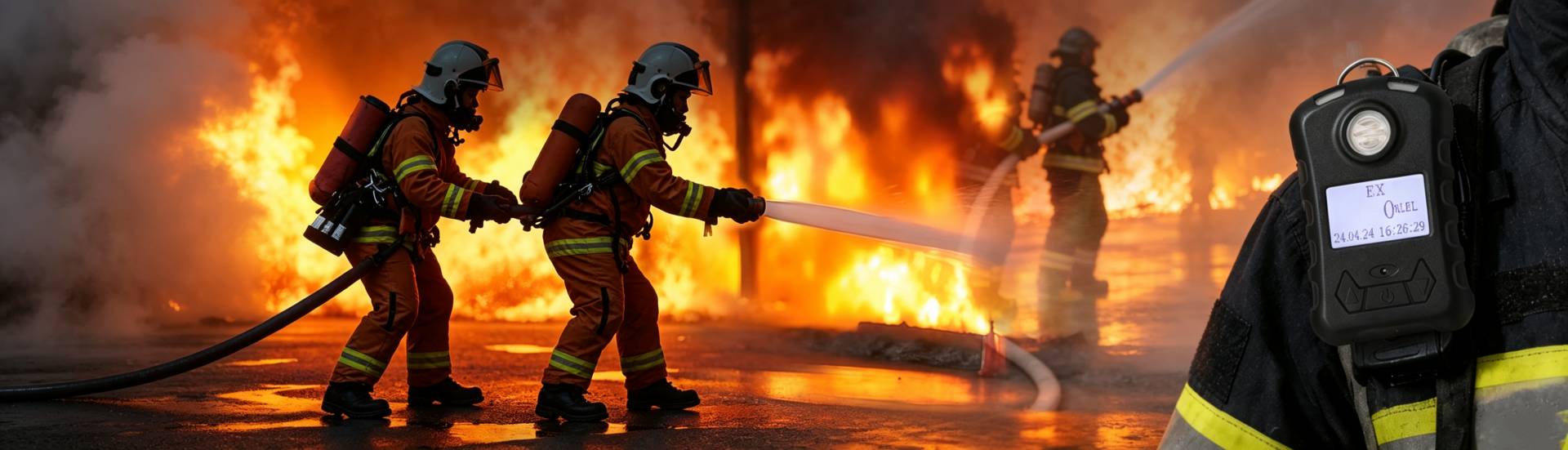
Gas detection is an important part of safety management in oil and gas industry. In the process of drilling, mining, processing, storage, transportation and oil refining, gas leakage may cause risks such as fire, explosion, poisoning and hypoxia. A reliable gas monitoring system can help field personnel find anomalies early and take corresponding measures before small-scale leakage turns into serious accidents.
Choosing suitable gas detection equipment needs to comprehensively consider the gas types, working environment and monitoring requirements in different regions.
Common Gas Risks in Oil and Gas Facilities
There are many gases that need to be monitored in the process of oil and gas production.
Methane and Other Combustible Gases
After methane and other combustible gases leak, they may be mixed with air to form combustible mixture. Pipelines, compressors, valves, pumps, storage tanks and natural gas treatment equipment are all potential leakage areas that need attention.
Hydrogen Sulfide (H₂S)
Hydrogen sulfide is a highly toxic gas, which may exist in sulfur-containing oil and gas exploitation and some oil refining operations. Because exposure to hydrogen sulfide may be life-threatening, suitable gas detection and alarm systems should be configured in areas with hydrogen sulfide risks.
Carbon Monoxide (CO) and Abnormal Oxygen Concentration
Carbon monoxide may be produced by incomplete combustion or some industrial processes. In a closed or poorly ventilated space, there may be insufficient oxygen, which further increases the safety risk of operators.
Different gases need to adopt corresponding sensor technology and alarm settings. Therefore, equipment selection should be based on the actual gas risk determined by site risk assessment.
Which Oil and Gas Operation Areas Need Gas Detection?
The gas detection requirements of different oil and gas facilities are different.
In drilling and oil and gas production sites, the detection area may include wellhead, separator, gas treatment equipment and process connection parts. In refineries and natural gas treatment plants, around compressors, pumps, pipelines, valves and other equipment that may leak, it is usually necessary to focus on gas monitoring.
Storage terminals and loading and unloading areas may need to be equipped with detection equipment near storage tanks, transport interfaces and gas treatment systems. When carrying out maintenance work in storage tanks, pits and other confined spaces, it may be necessary to carry out portable gas detection before entering, and carry out continuous monitoring according to the operation procedures.
When determining the installation position of the detector, gas characteristics, potential leakage sources, ventilation, wind direction and field equipment layout should be considered. If the installation location is unreasonable, even if a detector with good performance is used, the leakage may not be found in time.
Stationary and Portable Gas Detection Systems
Fixed and portable gas detectors undertake different monitoring tasks and usually need to be used together in oil and gas facilities.
Fixed Gas Detector
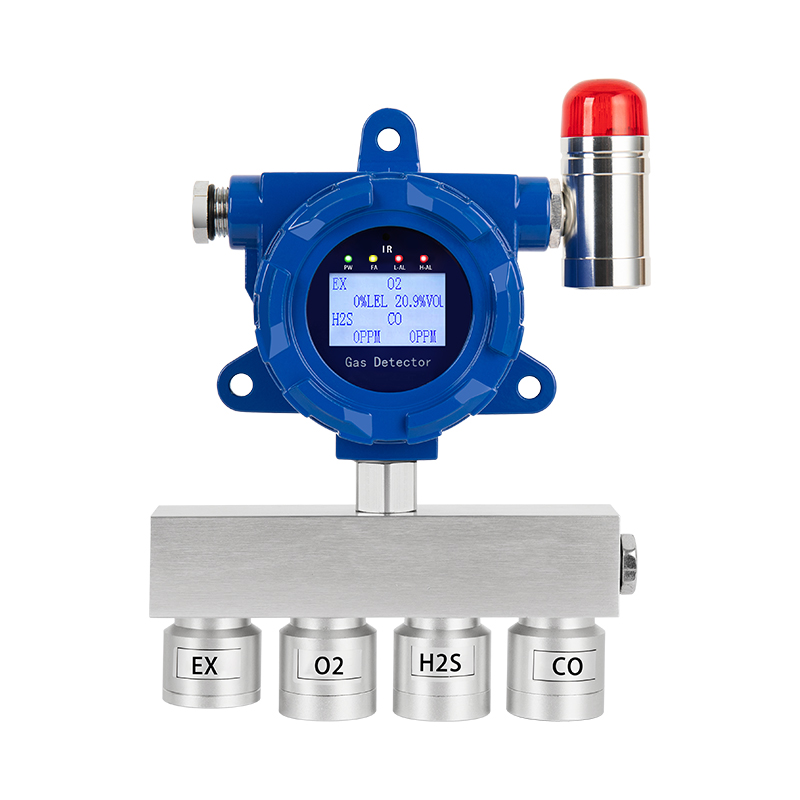
The fixed detector is installed at the designated position to continuously monitor the gas concentration. According to the equipment model and system configuration, it can transmit concentration signal and alarm signal to alarm controller or industrial monitoring system, which is suitable for continuous monitoring around process equipment and other identified risk areas.
For industrial continuous gas monitoring, you can learn about HRP-T2000-G Fixed Multi-Gas Detector.
For the application scenarios that need to monitor toxic gas, HRP-T2000-C Fixed LCD Toxic Gas Detector can also be evaluated, and the applicability can be confirmed according to the target gas and the actual sensor configuration.
Portable Gas Detector
Portable detector is mainly used for personnel inspection, equipment maintenance and confined space operation. According to the sensor configuration, a four-in-one gas detector can simultaneously monitor combustible gas, oxygen, carbon monoxide and hydrogen sulfide.
HIREP HRP-B1000-C Portable Four-in-One Gas Detector is suitable for multi-gas detection scenarios. In actual use, the corresponding sensor combination should be selected according to the expected gas risk in the field.
What Factors Should Be Considered in the Selection of Gas Detection Equipment?
When selecting equipment, the type of target gas should be defined first, and the required measuring range should be determined. Subsequently, it is necessary to evaluate whether the sensor technology, response characteristics, environmental protection ability and hazardous area certification meet the site requirements.
System integration is equally important. According to the system design, the fixed detector may need to support interfaces such as 4–20 mA and RS485, and provide relay output for alarming or connecting external control equipment. Before installation, it should be confirmed that the detector is compatible with the existing controller and monitoring platform.
In addition, the convenience of equipment maintenance, calibration requirements, power supply conditions and working temperature should also be considered. The equipment used in dangerous areas must have the certification that matches its intended installation location and use conditions.
Regular Testing and Maintenance to Keep the Monitoring System Running Reliably
The gas detection system needs to be inspected and tested regularly during the whole service life. Maintenance may include checking the air inlet of the sensor, checking the cable and casing, verifying the alarm function, and calibrating according to the manufacturer’s instructions and site requirements.
The portable detector shall be inspected before use, and the function test shall be carried out according to the applicable operating procedures. For the fixed system, it should also be confirmed that the test readings and alarm signals can be transmitted to the control system correctly.
Calibration and functional testing have different purposes, and one cannot simply replace the other. Keeping records of equipment inspection, test results, calibration and sensor replacement is helpful for maintenance personnel to find recurring problems and ensure that the equipment is available.
Establish an Effective Gas Detection Scheme for Oil and Gas Industry
An effective gas detection scheme for oil and gas industry needs to start with identifying the site risks. The combination of fixed continuous monitoring, portable detector, reasonable alarm configuration and standardized maintenance plan is helpful to manage the gas risk in the process of oil and gas production, processing, storage and maintenance.
Selecting the appropriate equipment according to the target gas and actual installation conditions can help enterprises to establish a monitoring scheme that is more in line with site requirements and provide support for safe production and gas leakage management.


 WhatsApp: 8619339980364
 E-mail: contact@hirepsafety.com
