
Fixed Multi Gas Detector Price for Chemical Plant Safety
In the production and operation of modern factories, gas monitoring is not optional, but a mandatory safety requirement.
The fixed multi-gas detector plays a key role in real-time monitoring of abnormal concentrations of toxic gas, combustible gas and oxygen. Knowing the fixed multi-gas detector price is very important for factory managers, safety engineers and purchasers to make safety budgets.
As an equipment supplier in the field of industrial gas safety, Hirep provides a variety of fixed gas detection solutions, which are widely used in chemical, petroleum, metallurgical and energy industries.
1. What is a fixed multi-gas detector?
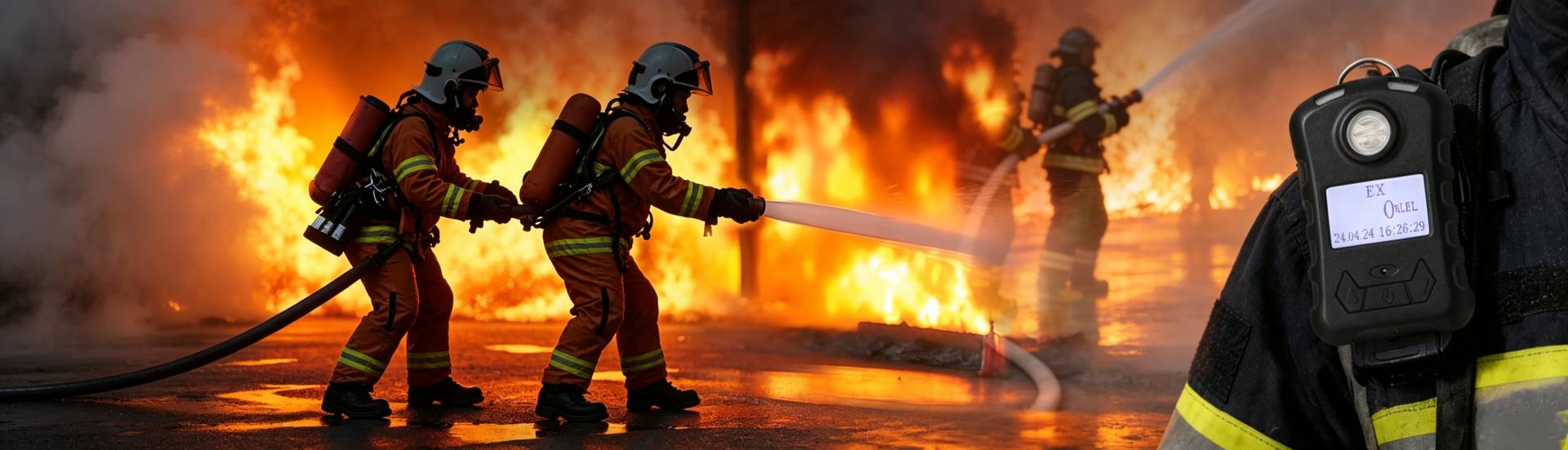
The fixed multi-gas detector is an industrial safety equipment installed in a fixed position, which is used to continuously monitor the concentration of dangerous gases for 24 hours. Different from portable equipment, it is usually linked with factory control system to realize centralized management and automatic alarm.
Hirep fixed gas detection system can be used in many industrial scenes to realize real-time online monitoring and safety early warning.
Common monitoring gases include:
- Combustible gas (LEL)
- Oxygen (o)
- Carbon monoxide (CO)
- Hydrogen sulfide (hs)
- Ammonia gas (NH) and VOC
In chemical plants, it is usually installed in:
- Storage tank area
- Pipeline corridor
- Reaction kettle area
- pumping station
- Outlet of confined space and ventilation system
2. Price range of fixed multi-gas detector (2026 market)
The price of fixed multi-gas detectors varies greatly, which mainly depends on the configuration, sensor type, explosion-proof grade and system complexity.
Common price range:
- Basic single-point fixed detector: $150–$500/set
- Standard multi-gas detection system: $500–$2,000/detection point
- Industrial system (including controller and networking function): $2,000–$10,000+/system.
- Large-scale factory-level safety monitoring scheme (Hirep customized system): $10,000–$50,000+
In the chemical industry, most enterprises will choose high-end configuration to meet the requirements of safety compliance and long-term stable operation.
3. Key factors affecting the price of fixed multi-gas detector
3.1 sensor types
Different sensors directly affect the cost:
- Electrochemical sensors (CO, hs): moderate cost.
- Catalytic combustion sensor (LEL): cost-effective, but needs maintenance.
- Infrared (IR) sensor: Long life, high stability and higher price.
Hirep system supports a variety of sensor configuration schemes, which can be flexibly selected according to working conditions.
3.2 explosion-proof and safety certification
Chemical industry must meet strict standards:
- ATEX/IECEx explosion-proof certification equipment costs more.
- Explosion-proof shell and industrial design improve the overall price
3.3 Detection of gas quantity
- Single or Double Gas Detection: Basic Configuration
- 3-5 Gas Detection: Industry Standard Configuration
- Multi-point linkage monitoring system: the cost has increased significantly
3.4 System integration capability
High-end systems usually include:
- Integration of PLC/SCADA system
- Remote monitoring platform
- Acousto-optic alarm and relay output
- Data Recording and Cloud Management
Hirep fixed system supports industrial automation integration and can be used for centralized monitoring in large factories.
3.5 Brand and Quality Standards
International and professional brands usually have higher reliability, such as:
- Honeywell
- Dräger
- Industrial Scientific
- Hirep (industrial gas detection solution provider)
Brand differences are mainly reflected in: stability, certification standards and long-term maintenance costs.
4. Why do chemical plants have to use fixed gas detection systems?
There are a lot of risks of flammable, explosive and toxic gases in the chemical plant environment. The fixed detection system provides:
4.1 24-hour continuous monitoring
Real-time data monitoring to reduce accident response time.
4.2 Early warning function
Effectively prevent:
- fire failure
- Explosion risk
- Toxic gas leakage
4.3 Compliance requirements
Meet the international industrial safety standards;
- OSHA (USA)
- ATEX (European union)
- Industrial safety standards
4.4 Risk control
In the chemical environment, even small leaks may expand rapidly.
5. Cost vs safety value (EEAT core view)
In purchasing decision, price is only one of the factors.
Low-cost equipment may exist:
- High calibration frequency
- Sensor life is short.
- System cannot be integrated.
- The detection accuracy is unstable.
Hirep advises enterprises to evaluate from the perspective of * * life cycle cost (LCC)**, not just the initial purchase price.
High-quality systems usually have:
- Longer service life
- Lower maintenance cost
- High detection stability
- Lower false alarm rate
6. Installation and maintenance costs (real projects must be considered)
In addition to the equipment price, you should also consider:
- Installation cost: $100–$500/point
- Annual calibration: 10%–20% of equipment cost.
- Sensor replacement cycle: 2-5 years
- System maintenance and software upgrade costs
Overall, the life cycle cost is usually 2-3 times of the initial investment.
7. How to choose a suitable fixed multi-gas detection system (Hirep suggestion)
In the process of type selection, we should focus on:
- Types of gases involved in the plant
- Explosion-proof and safety certification grade
- Operating environment (high temperature, corrosion, humidity)
- Do you need SCADA/PLC integration?
- Long-term maintenance and technical support capability
Hirep can provide customized gas detection scheme according to different industrial scenarios.
Step 8 summarize
The price of fixed multi-gas detector is influenced by many factors, including sensor technology, system complexity and safety certification level. Basic equipment may cost only a few hundred dollars, while a complete industrial chemical safety monitoring system may reach tens of thousands of dollars.
For chemical plants, fixed gas detection system is not only equipment procurement, but also a key investment to ensure personnel safety and production continuity.
The industrial-grade fixed multi-gas detection solution provided by Hirep aims to help enterprises reduce risks and improve the overall safety management level.


 WhatsApp: 8619339980364
 E-mail: contact@hirepsafety.com