
Fixed Gas Detector Wiring and Calibration Gas: Complete Setup Guide
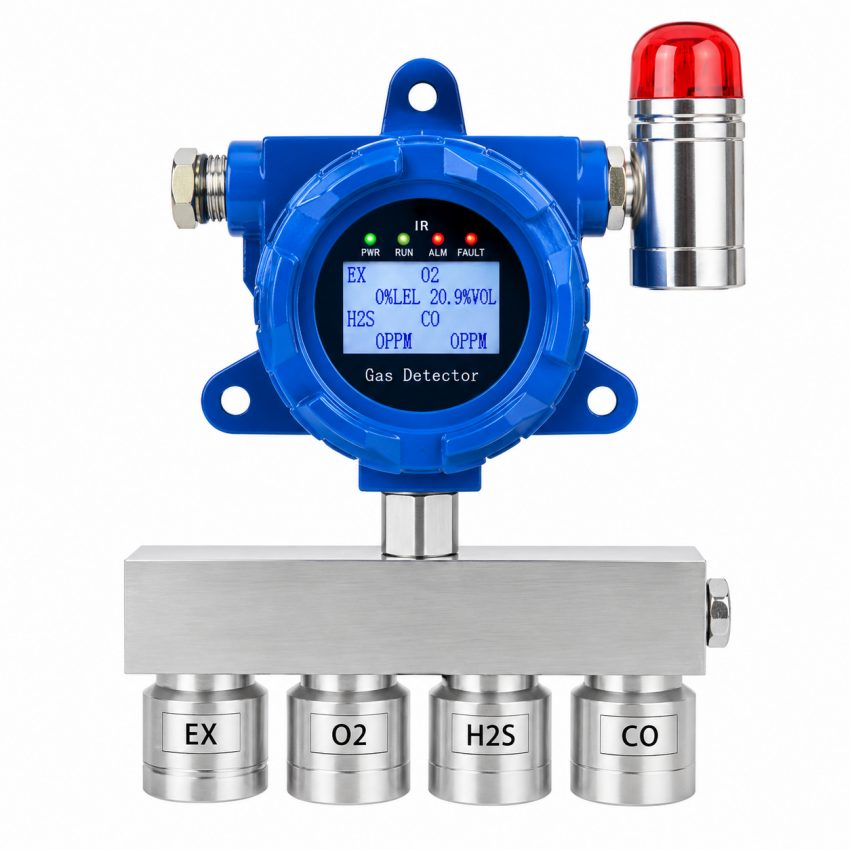
Stationary gas detector is an important part of industrial gas monitoring system, which is mainly used to continuously monitor dangerous gases in a specific area and give an alarm when the gas concentration reaches a preset alarm value. In order to ensure the long-term stable and accurate operation of the equipment, correct wiring, installation and calibration are very important.
This paper will introduce the basic wiring method of fixed gas detector and how to use standard gas correctly for gas calibration.
1. Understand the wiring of fixed gas detector.
Before connecting the fixed gas detector, you should first check the product manual and wiring diagram of the specific model.
Common fixed gas detectors usually include the following interfaces:
- power source
- 4–20ma signal output
- RS485 communication interface
- Relay or alarm output
- Grounding interface
The power supply voltage must match the rated working voltage of the detector. Wrong voltage or reverse connection of positive and negative poles may cause equipment damage or abnormal operation.
For the fixed gas detector with 4–20mA output, the gas concentration signal can be transmitted to the gas alarm controller, PLC, DCS or other monitoring equipment. If the system needs digital data transmission and centralized monitoring, it can also realize data connection through RS485 communication.
2. Check the detector after wiring is completed.
After wiring is completed, all terminals should be carefully checked before the equipment is powered on.
Ensure that:
- The power and signal lines are connected to the correct terminals.
- The terminal has been firmly tightened.
- The cable is effectively protected from mechanical damage.
- The detector is firmly installed.
- Grounding mode meets the requirements of equipment and site installation.
After power-on, wait for the tester to complete the startup and stabilization process according to the requirements of the product manual.
3. Prepare calibration gas
Standard gas is mainly used to verify and adjust the measurement response of gas detector.
The standard gas should match the type of gas to be detected. For example, methane detector should use standard gas suitable for methane detection, while hydrogen sulfide detector should use standard gas suitable for HS detection.
Typical standard gas connection methods are:
Standard gas cylinder → pressure reducing valve → airway → calibration hood → gas detector.
The concentration of standard gas should be accurate, known and within the calibration range specified by the detector.
4. Zero calibration
Zero calibration is mainly used to establish the reference measurement value of the detector.
In clean air environment, the detector should usually display zero or reference value. If the displayed value shows obvious deviation, zero calibration may be needed.
Enter the zero calibration mode according to the operation steps of the detector, so that the instrument can establish the correct zero reference in a stable state.
It should be noted that the zero calibration method of oxygen sensor may be different from that of combustible gas or toxic gas sensor, so it should always be carried out according to the operating instructions of the corresponding products.
5. Use standard gas for range calibration.
After the zero calibration is completed, the range calibration can be carried out by using the standard gas with known concentration, which is also called Span Calibration.
First, connect the standard gas to the detector through an appropriate calibration connector. Introduce standard gas according to the flow rate specified by the manufacturer, and wait for the display value of the detector to be stable.
At this time, the display concentration of the detector should be basically consistent with the standard concentration of the standard gas.
If necessary, the range value can be adjusted according to the calibration operation flow of the detector. After the calibration is completed, the standard gas is stopped to make the detector gradually return to normal working state.
6. Matters needing attention in calibration of standard gas
During gas calibration, the following items should be noted:
- Use certified standard gas with accurate concentration.
- Check the validity period of standard gas.
- Use appropriate pressure reducing valve and airway.
- Calibrate according to the gas flow specified by the manufacturer.
- Avoid excessive gas flow or pressure.
- Ensure that the calibration cover is firmly connected with the detector.
- Calibrate in a safe and well-ventilated environment.
- Record the date, result and related information of each calibration.
Different types of sensors have different calibration requirements. Combustible gas, toxic gas and oxygen sensors do not necessarily adopt the same calibration method, so it is necessary to select the correct calibration gas and calibration process according to the specific sensor type.
7. Regular calibration is helpful to improve the detection reliability.
In the process of long-term use, environmental conditions, sensor aging, pollution and continuous operation may affect the detection performance of gas detector.
Regular calibration can help to confirm whether the detector can still provide accurate and reliable measurement results.
The specific calibration period depends on the sensor type, field working environment, practical application requirements and manufacturer’s suggestions. For important industrial safety applications, calibration and functional inspection should be included in the daily gas safety maintenance plan.
tag
Correct wiring and gas calibration are important links to ensure the reliable operation of fixed gas detector. Correct electrical connection can ensure stable power supply, signal transmission and system communication, and calibration with standard gas is helpful to verify the measurement accuracy of the detector.
Through standardized installation, wiring and calibration operations, the good monitoring performance of fixed gas detection system can be maintained, and the safety level of industrial site can be further improved.
HIREP provides professional fixed gas detectors and industrial gas detection solutions. The products can be widely used in oil and gas, petrochemical industry, chemical production, industrial plants, sewage treatment and other application environments with dangerous gases.


 WhatsApp: 8619339980364
 E-mail: contact@hirepsafety.com