
Fixed Gas Detector Sensitivity Setting: A Practical Guide to LCD Display Gas Detectors
Stationary gas detectors are mainly installed in production workshops, storage tank areas, pump rooms, pipeline areas and other places where gas leakage may occur, and continuously monitor combustible or toxic gases in the air. When the gas concentration reaches the set alarm value, the detector will send an alarm signal in time.
For fixed gas detector with LCD screen, sensitivity setting is an important work in equipment debugging and daily maintenance. Reasonable parameter setting and standardized gas calibration are directly related to the measurement results and alarm response of the detector.
1. What is the sensitivity of gas detector?
The sensitivity of gas detector can be understood as the sensor’s response ability to the change of target gas concentration.
When the target gas in the air enters the sensor, the sensor will generate corresponding electrical signals. After signal processing, the detector converts the sensor output into specific gas concentration and displays it on the LCD screen.
Different types of sensors have different sensitivity and response characteristics. The factors that affect the sensitivity of the sensor mainly include:
- Sensor type
- Detection of gas types
- Sensor service time
- ambient temperature
- air humidity
- environmental pollutant
- Sensor calibration state
- The response characteristics of the sensor itself
In practical use, the sensitivity parameters can not be simply modified according to experience, but should be set in combination with specific sensor parameters and equipment specifications.
2. Why do you need to set the sensitivity?
The response of the sensor may change after long-term operation of the gas detector. If the parameter setting is unreasonable, the displayed value may be too high, too low or fluctuate greatly, which may also affect the alarm judgment in serious cases.
The correct sensitivity setting mainly involves the following aspects:
- Test the stability of reading.
- Response of sensor to gas
- Accuracy of measurement results
- Reliability of alarm action
- Long-term running state of detector
It should be noted that the higher the sensitivity, the better. Parameter adjustment should be controlled within the allowable range of equipment and sensors. It is recommended that the testers involved in important safety places be debugged by trained technicians.
3. How to set the sensitivity of liquid crystal display fixed gas detector?
Different brands and models of fixed gas detectors may have different menus and key operations. The following are common operating ideas, and the actual operation shall be subject to the product manual of the corresponding model.
Step 1: Enter the parameter setting menu
Enter the setting or calibration menu through the buttons on the tester panel.
Some devices have password protection function, and you need to enter the corresponding password before entering the parameter modification interface. This can avoid the misoperation of field personnel, resulting in the change of detection parameters.
Step 2: Confirm the sensor and test gas.
After entering the relevant parameter page, first confirm the sensor type, detection gas and measurement unit currently used by the detector.
For example, the sensor characteristics of methane detector, hydrogen sulfide detector and oxygen detector are different, so the same parameters cannot be used for setting.
Step 3: Adjust the sensitivity parameters.
According to the product technical parameters and sensor requirements, the sensitivity related parameters are adjusted.
It is not recommended to change too large a value at one time during adjustment. After modifying the parameters, the actual response of the detector should be verified by combining the standard gas, rather than judging whether the setting is correct only by displaying the numerical value.
Step 4: Save and exit.
Save the modified contents after parameter setting, and then exit the setting menu to return the detector to the normal monitoring state.
If the equipment supports the parameter locking function, the relevant parameters can be locked according to the site management requirements after debugging.
4. Check the response of the detector with standard gas.
After the sensitivity setting is completed, it is recommended to use standard gas to check the detector.
The concentration of standard gas is known, and the response of sensor and instrument can be judged intuitively by introducing gas with specified concentration into the detector.
Common connection methods are:
Standard gas cylinder → pressure reducing valve → airway → calibration hood → fixed gas detector.
After the connection is completed, control the standard gas flow according to the equipment requirements, and wait for the reading of the detector to be stable.
Compare the displayed value on the LCD with the standard gas concentration. If there is obvious deviation between them, the sensor status, calibration parameters and gas path connection should be further checked, and the zero point and range calibration should be carried out according to the product manual.
5. Sensitivity adjustment and gas calibration are not the same thing
In actual maintenance, sensitivity setting and gas calibration are often confused. In fact, they have different functions.
Sensitivity setting is mainly aimed at adjusting the response parameters of the detector.
Gas calibration is to use the standard gas with known concentration to calibrate the measurement results of the detector, so as to keep the corresponding relationship between the instrument display value and the standard gas concentration.
Therefore, simply modifying sensitivity parameters cannot replace gas calibration.
If the detector is used in an industrial site with high safety requirements, it should be calibrated according to the specified period, and the standard gas matched with the sensor should be used.
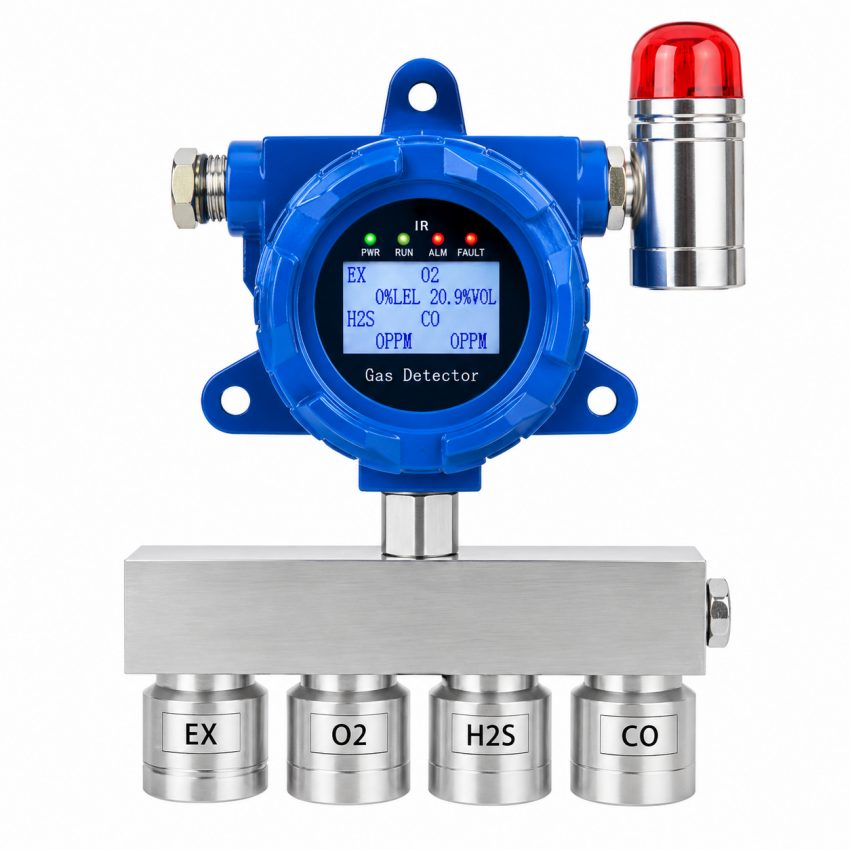
6. What information can the LCD screen provide?
Liquid crystal display is an important information interface between the fixed gas detector and the operator.
Under normal working conditions, users can directly check the gas concentration and detection status. Depending on the device model, the screen may also display:
- Current gas concentration
- Detecting gas type
- unit of measure
- Alarm status
- Fault information
- Calibration state
- Sensor information
- Parameter setting
During field debugging, the real-time changes of the detector can be quickly observed through the LCD screen, which is convenient for the staff to judge whether the sensor responds normally.
7. What should I pay attention to when setting the sensitivity?
Before adjusting the sensitivity of fixed gas detector, it is necessary to confirm whether the sensor model matches the detected gas.
Secondly, the type, concentration and expiration date of standard gas should be checked. The use of inappropriate or invalid standard gas will directly affect the calibration results.
At the same time, it is necessary to use matching pressure reducing valve, airway and calibration hood, and introduce standard gas according to the flow rate specified by the equipment. Excessive gas flow or abnormal pressure may affect the normal response of the sensor.
Don’t end debugging immediately after parameter adjustment. Response inspection shall be carried out by standard gas to confirm that the detector displays normally and the alarm function is normal before it is put into field operation.
8. Regular calibration is an important part of daily maintenance.
Fixed gas detectors usually need to work continuously for a long time. In the long-term operation process, the sensor will be affected by factors such as service time, ambient temperature, humidity and on-site pollutants, and its detection performance may change gradually.
Therefore, daily maintenance should not only check whether the equipment is powered on, but also check the actual detection performance of the detector regularly.
Common maintenance items include:
- Sensitivity check
- Zero calibration
- Range calibration
- Alarm function test
- Sensor status check
- Wiring inspection
- Liquid crystal display inspection
- Maintenance and calibration records
The specific calibration period shall be determined according to the sensor type, site environment, equipment usage and technical requirements of the manufacturer.


 WhatsApp: 8619339980364
 E-mail: contact@hirepsafety.com