
Fixed Four-Gas Detector: Calibration Guide for Accurate Gas Monitoring
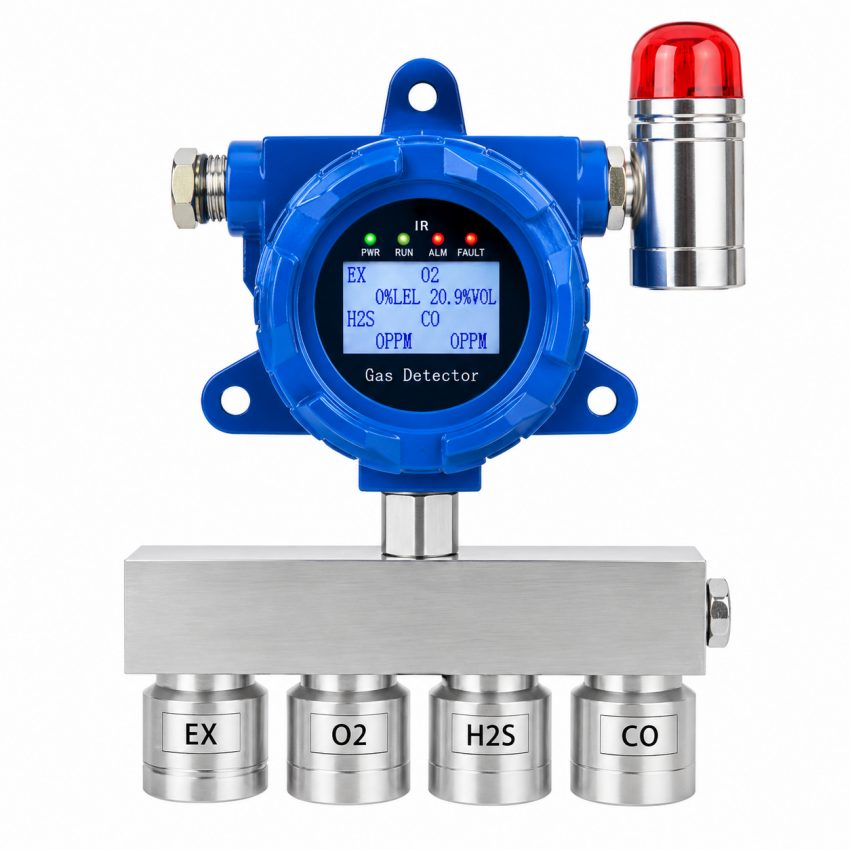
The fixed four-gas detector is an important safety equipment, which is mainly used for continuous monitoring of dangerous gases in industrial environment. Usually it can be used to detect combustible gas, oxygen and toxic gases such as carbon monoxide and hydrogen sulfide. In order to maintain stable and reliable detection performance, it is very important to conduct gas calibration and sensitivity check regularly.
Why do you need calibration?
During the long-term operation of the gas sensor, it may be affected by factors such as temperature, humidity, dust, chemicals and sensor aging, which will lead to changes in detection sensitivity. If calibration is not carried out regularly, the gas concentration displayed by the instrument may deviate from the actual concentration.
Correct gas calibration can help the detector maintain accurate measurement results and ensure that the alarm can be triggered in time when the gas concentration reaches dangerous level.
Basic calibration process
Before calibration, certified standard gas, pressure reducing valve, flowmeter, calibration tube and calibration connector shall be prepared. Confirm that the tester is running normally and calibrate it according to the operating instructions provided by the manufacturer.
1. Zero calibration
Zero calibration is used to establish the reference value of the sensor. According to the manufacturer’s operation requirements, put the detector in a clean air environment or use the designated zero gas. After waiting for the test reading to be stable, perform zero calibration.
2. Range calibration
After the zero calibration is completed, the corresponding standard gas is introduced into the detector according to the specified concentration and flow rate. Wait for the sensor reading to be stable, and then adjust the display value of the detector to keep it consistent with the standard gas concentration.
For a four-gas detector, it is usually necessary to calibrate different gas channels according to the equipment configuration and sensor type.
3. Alarm function test
After the calibration is completed, stop the introduction of standard gas to restore the detector to the normal working environment. Check whether the display values of all gas channels are normal, and carry out alarm test to confirm that the functions such as acousto-optic alarm can work normally.
Calibration period
The calibration period of the detector depends on the equipment model, use environment, sensor type and related safety requirements. In harsh industrial environment, it may be necessary to carry out inspection and calibration more frequently.
During calibration, ensure that the standard gas used is within the validity period, and operate in strict accordance with the gas flow and calibration time specified by the equipment.
Provide reliable gas detection for industrial safety.
Periodic calibration is an important part of the maintenance of fixed gas detection system. Correct zero calibration, range calibration and alarm test can help the detector maintain good measurement accuracy and improve the working safety in application scenarios such as oil and gas, petrochemical industry, natural gas facilities, sewage treatment, industrial manufacturing and limited space.
Selecting a reliable fixed four-gas detector and carrying out regular maintenance and calibration according to the manufacturer’s suggestions can provide continuous, stable and reliable gas safety monitoring for industrial sites.


 WhatsApp: 8619339980364
 E-mail: contact@hirepsafety.com