
Why Do You Need a Portable Combustible Gas Detector for Confined Space Operations?
Storage tanks, underground pipelines, sewage treatment tanks and some industrial equipment usually have the characteristics of narrow space and limited ventilation conditions. In the process of overhaul, cleaning or maintenance, if combustible gas enters these areas and gradually accumulates, it may form a fire or explosion hazard.
Because the gas concentration can’t be judged by naked eyes, the ambient atmosphere should be detected according to the relevant safety procedures before entering the confined space. A portable combustible gas detector can help workers check the concentration of target gas and provide data support for risk assessment before operation.

Where May the Combustible Gas in the Confined Space Come From?
The gas risk in confined space may come from many aspects. For example, the leakage of connecting pipes, the residual flammable substances in the equipment, or the gas in the production process entering the closed area may change the gas composition in the space.
If there is insufficient ventilation, gas may accumulate in local areas. Even if the detection results near the entrance are normal, it does not mean that the whole space is in a safe state. Therefore, it is necessary to formulate the corresponding detection scheme according to the site structure, potential gas sources and operation requirements for confined space detection.
How to Use a Portable Combustible Gas Detector for Pre-Operation Inspection?
1. Select the Detection Equipment According to the Potential Gas
First of all, it is necessary to clarify the types of combustible gases that may exist in the site and confirm whether the sensor configuration of the detector is applicable. Different sensors have different detection ranges and response characteristics, so we should not only pay attention to whether the equipment is labeled as combustible gas detector when selecting the type.
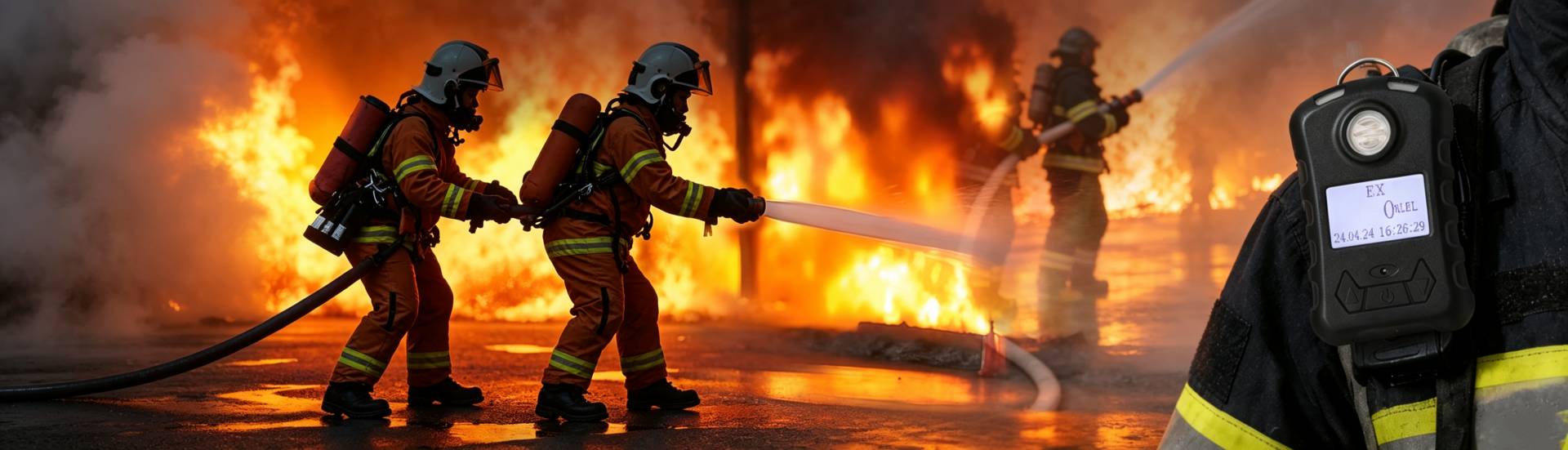
The HIREP HRP-B1000-A portable combustible gas detector is applied to combustible gas detection in industrial field. The specific gases that can be detected should be based on the actual product configuration and the technical data provided by the manufacturer.
2. Check the Instrument Status
Before testing, the appearance of the equipment, battery charge, sensor status and alarm function should be checked. Calibrate according to the manufacturer’s requirements, and carry out ventilation test according to the site regulations to confirm that the instrument can respond appropriately to the target gas.
If the instrument fails, the calibration expires or the test results are abnormal, it should not be used without confirming the reliability of the equipment.
3. Detect Different Positions According to Operating Procedures
The gas distribution in a confined space may be influenced by gas density, air flow and spatial structure. Therefore, it may be necessary to cover different heights and positions when testing, instead of just measuring the air near the entrance.
In the case of remote sampling, an appropriate sampling probe or sampling system should be used. The testing scheme shall conform to the on-site safety procedures, and the staff shall not directly enter the unconfirmed safety space for placing instruments.
4. Take Corresponding Measures According to the Test Results
During the detection process, continuous attention should be paid to the gas reading and alarm status. If the test results reach the dangerous threshold, or the instrument gives an alarm, the entry, evacuation or other specified measures shall be stopped according to the site safety procedures.
Follow-up operations can only be carried out in accordance with regulations after necessary risk assessment is completed, corresponding control measures are taken and authorization is obtained.
It should be noted that the combustible gas detector cannot replace the complete confined space atmosphere assessment. According to the site risk, it may be necessary to detect oxygen concentration and toxic gases such as hydrogen sulfide and carbon monoxide.
What Functions Should Be Considered When Selecting Confined Space Detection Equipment?
Real-Time Concentration Display
Clear concentration readings can help workers understand the test results. For instruments with %LEL as the unit, the reading meaning and alarm threshold should be made clear, and appropriate alarm parameters should be set according to the gas risk on site.
Reliable Alarm Function
Sound, light and vibration alarms can remind workers when the gas concentration reaches a preset threshold. The alarm function should be checked according to the equipment use requirements before each operation.
Convenient to Carry and Operate
Confined space detection usually involves inspection in different locations and equipment transfer. Portable hand-held equipment is convenient for workers to carry, but whether it is suitable for a dangerous area depends on the explosion-proof grade of the product and environmental requirements.
Power Supply Mode Suitable for Site Conditions
Battery power supply is suitable for on-site inspection without fixed power supply. The staff should confirm the sufficient power in advance and maintain the battery according to the manufacturer’s requirements, so as to avoid the influence of insufficient power supply on the testing work.
Which Scenarios Is the Portable Combustible Gas Detector Suitable For?
The portable combustible gas detector can be used in the following scenarios, provided that it meets the use conditions of the equipment:
-
Maintenance of storage tanks and industrial containers
-
Maintenance of underground pipelines and utilities
-
Inspection of natural gas pipeline and valve station
-
Maintenance of sewage treatment facilities
-
Maintenance of petrochemical equipment
-
Internal inspection of industrial equipment
-
Relevant detection of mines and underground working areas
What gases need to be detected should be determined according to the site risk. For the environment where combustible gas, insufficient oxygen and toxic gas may exist at the same time, it is necessary to adopt a detection scheme that can cover the corresponding risks.
HIREP HRP-B1000-A Portable Combustible Gas Detector
In industrial maintenance and daily safety inspection, portable detection equipment can help workers to carry out combustible gas detection in different locations.
The HIREP HRP-B1000-A portable combustible gas detector can be used for industrial combustible gas detection tasks that meet its technical specifications. Users should confirm whether the target gas, sensor type, measuring range and equipment meet the requirements of the expected working environment before purchasing.
Prepare for Inspection and Reduce the Risk of Confined Space Operation
The safety management of confined space operation depends not only on testing instruments, but also on risk assessment, ventilation, work permit, personnel training and emergency arrangement.
By selecting appropriate gas detection equipment, checking instrument status and strictly implementing operating procedures, enterprises can identify gas risks in the environment more systematically and provide support for equipment overhaul and on-site maintenance.


 WhatsApp: 8619339980364
 E-mail: contact@hirepsafety.com
