
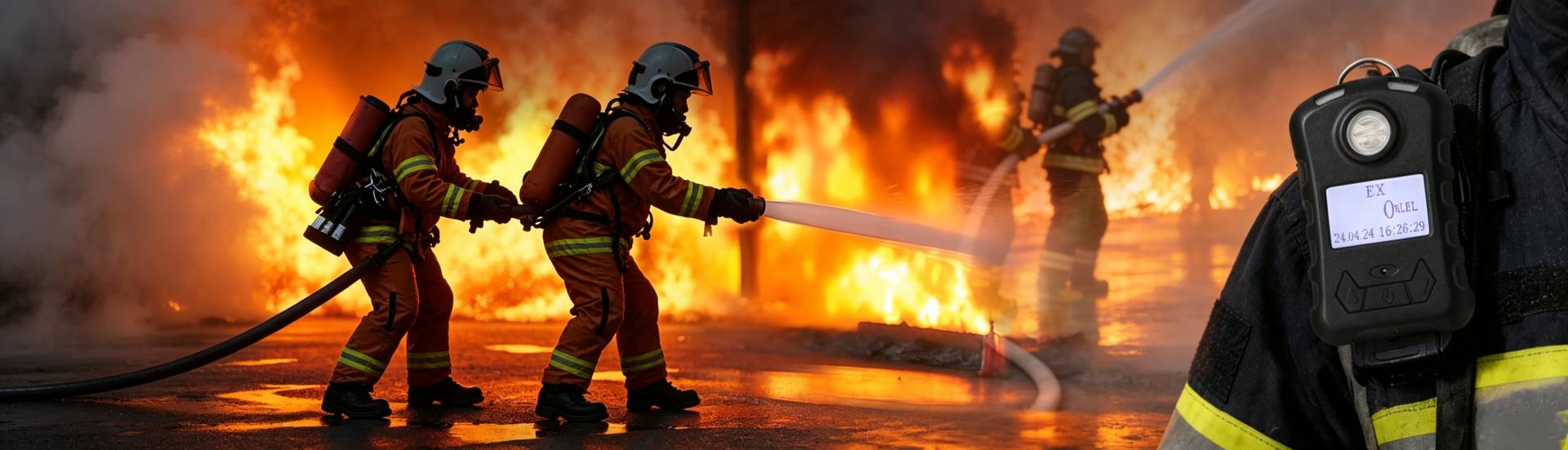
Fixed Gas Detector 4-20mA RS485 System
This paper is written by a technical team with more than 10 years experience in industrial gas detection engineering. The team has been engaged in the installation, calibration and maintenance of gas safety monitoring system for a long time, covering high-risk industrial environments such as oil and gas, petrochemical plants and mines.
All the equipment involved are produced according to ISO9001 quality management system and meet the industrial safety standards such as ATEX, IECEx and CE according to the configuration.
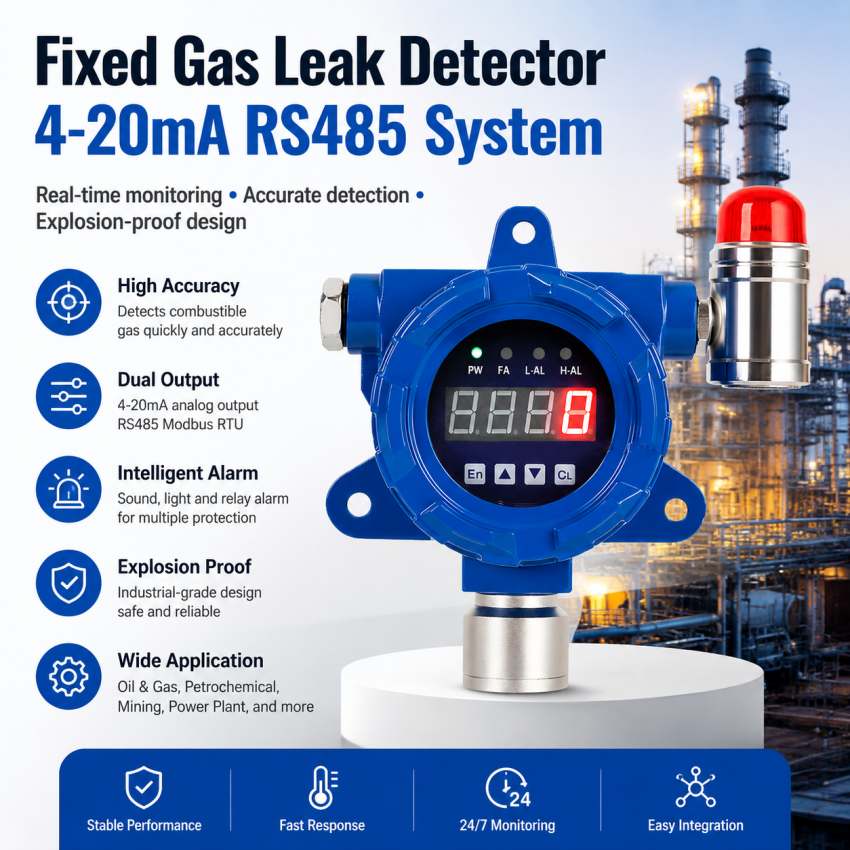
What is a fixed gas leakage detection system (4-20mA+RS485)?
The fixed gas leakage detection system is an industrial gas monitoring equipment, which is used for continuous real-time detection of dangerous gases in the environment and transmission of data to PLC, SCADA or industrial safety control system.
The system is widely used in industrial places where there is a risk of fire, explosion or toxic gas leakage.
The system integrates:
- 4-20mA analog signal output (industrial standard)
- RS485 Modbus RTU digital communication output
- Real-time gas concentration detection and alarm function
This dual-output structure makes it compatible with traditional industrial systems and can also be connected to modern intelligent monitoring platforms.
Working principle of fixed gas leakage detection system
The system realizes detection through continuous air sampling and gas concentration analysis:
- The gas sensor continuously monitors the ambient air.
- When combustible or harmful gas enters the detection cavity of the sensor, a chemical or infrared reaction occurs.
- The sensor converts the gas concentration change into an electrical signal.
- The internal microprocessor processes the signal into real-time concentration data.
- Data is output by 4-20mA or RS485 Modbus.
- When the concentration exceeds the set threshold, the system triggers the acousto-optic and relay alarm.
This mechanism can realize continuous monitoring without blind area, which is the key security guarantee in high-risk industrial environment.
Why do industrial systems have to use 4-20mA and RS485 outputs?
1. 4-20mA analog output (industrial standard signal)
4-20mA is the most commonly used standard signal in industrial field, which has the following features:
- Strong anti-interference ability
- Support long-distance transmission
- Stable and reliable operation
- Easy access to PLC control system
2. RS485 Modbus communication
RS485 supports digital communication and can realize:
- Multi-device networking
- Real time data acquisition
- Access SCADA system
- Constructing intelligent factory monitoring system
The combination of the two outputs makes the system have stronger industrial adaptability and expansibility.
Product core characteristics
High sensitivity gas detection technology
It can accurately detect methane, propane, hydrogen and other combustible gases.
24 hours continuous monitoring
Suitable for fixed installation to realize all-weather safety monitoring.
Quick response capability
It can alarm quickly before the gas reaches the dangerous concentration.
Industrial-grade structural design
Suitable for high temperature, high humidity, dust and strong electromagnetic interference environment.
Dual signal output system
Support 4-20mA and RS485 Modbus dual output modes.
Intelligent multi-stage alarm system
Support low alarm and high alarm threshold setting, and provide acousto-optic and relay linkage.
Long life and low maintenance cost
The sensor has stable performance, low maintenance frequency and low operating cost.
Application industry
Oil and gas industry
Used for pipeline monitoring, drilling platforms, LNG stations and oil refining facilities.
Petrochemical industry
Suitable for reaction kettle, storage tank and process control area.
Mining industry
Used for underground mine ventilation and gas safety monitoring.
Industrial manufacturing industry
Suitable for welding workshop, spraying and chemical production environment.
electricity industry
Used for hydrogen cooling system and fuel gas monitoring.
Sewage treatment and biogas system
Used for methane and biogas monitoring.
Closed space operation
Suitable for closed areas such as tunnels, storage tanks and underground spaces.
Field experience and safety analysis (EEAT enhanced content)
According to the experience of actual industrial projects, gas accidents are usually caused by the following reasons:
- Gas leakage detection delay
- Lack of continuous monitoring system
- Sensor and control system are not integrated
Using 4-20mA+RS485 fixed gas detection system can significantly improve data transmission efficiency and realize real-time alarm linkage, thus reducing the risk of accidents.
In petrochemical and mining applications, connecting the detection system to the centralized control platform has been proved to effectively shorten the response time and improve the overall safety level.
How to choose a reliable fixed gas detection system?
When selecting industrial gas detection equipment, we should focus on:
- Sensor type (catalytic combustion/infrared/electrochemical)
- Output mode (4-20mA+RS485 is recommended)
- Explosion-proof certification (ATEX/IECEx)
- Protection level (IP65 and above)
- Sensor life and stability
Choosing certified industrial-grade equipment is the key to ensure long-term safe operation.


 WhatsApp: 8619339980364
 E-mail: contact@hirepsafety.com