
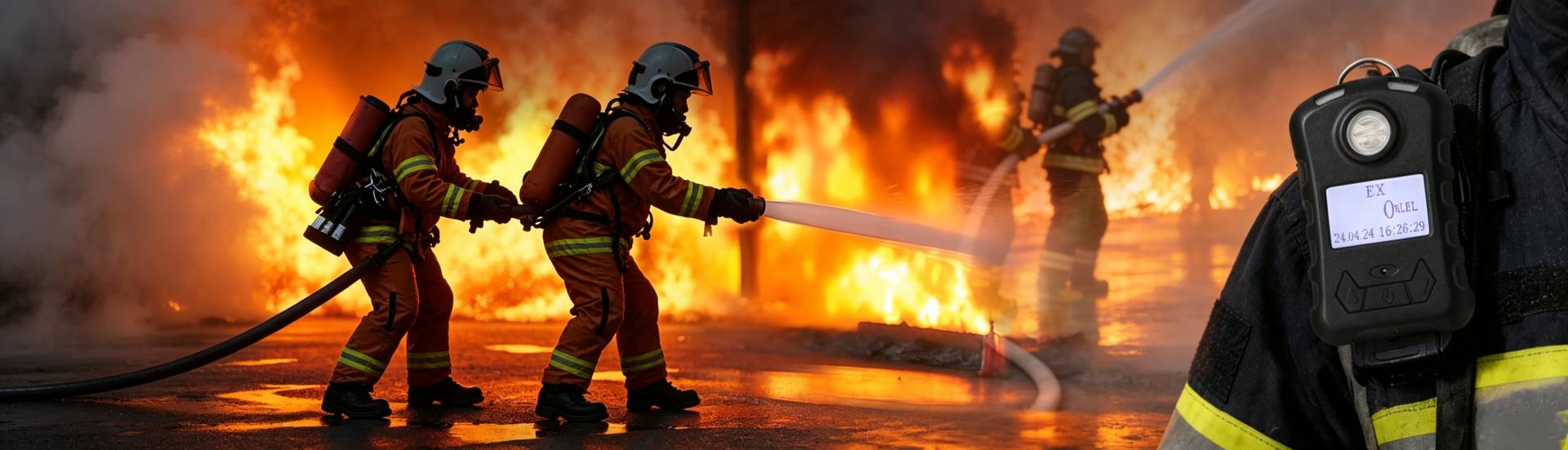
Fixed 4-in-1 Gas Detector: Continuous Industrial Gas Monitoring with HIREP HRP-T2000-H
Gas leakage is a potential safety risk in many industrial environments. Flammable or toxic gases may exist in oil and gas facilities, chemical plants, production workshops, storage areas, pipelines and sewage treatment facilities. Because the gas concentration may change with time, continuous monitoring is an important part of industrial gas safety management.
Different from the portable gas detector usually carried by staff for patrol inspection and personal protection, the fixed gas detector is installed at the designated monitoring position and can run continuously. For industrial sites with multiple gas hazards, the fixed four-in-one gas detector can simultaneously monitor multiple gases through integrated equipment, providing a more convenient solution for industrial gas safety monitoring.
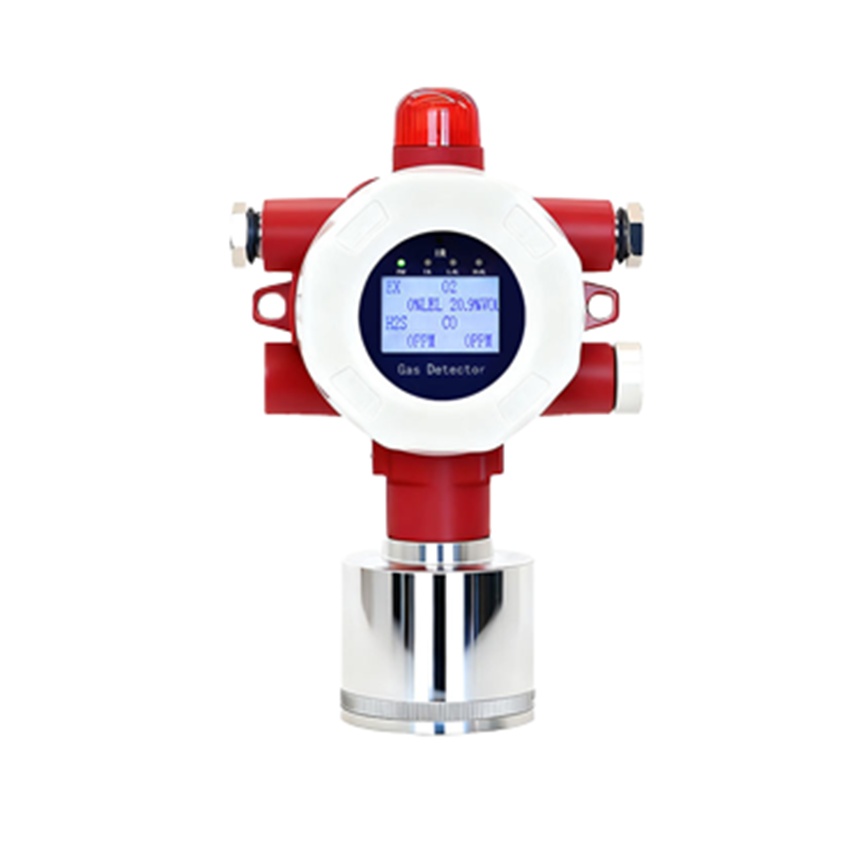
What is a fixed four-in-one gas detector?
The fixed four-in-one gas detector is an industrial gas detection device installed in a fixed position for continuously monitoring various gases. Depending on the sensor configuration, it can be used to monitor combustible gas, oxygen and toxic gases such as carbon monoxide and hydrogen sulfide.
The main advantage of the multi-gas detection scheme is that the risks of multiple gases can be monitored at the same time through an integrated device, without installing an independent detector for each gas. This helps to reduce the number of equipment, simplify field installation and make the gas monitoring system more manageable.
HIREP HRP-T2000-H fixed multi-gas detector
HIREP HRP-T2000-H is a fixed multi-gas detector for continuous on-line monitoring of industrial environment. The equipment adopts multiple independent sensor modules, which can simultaneously monitor different gas hazards according to actual application requirements.
HRP-T2000-H can be used to detect combustible gas, oxygen, carbon monoxide and hydrogen sulfide according to the configuration, and different sensor combinations can be selected according to the specific application requirements.
This flexible sensor configuration makes the detector suitable for industrial sites that need to monitor multiple gas hazards at the same time.
Real-time gas monitoring
One of the main functions of fixed gas detector is continuous monitoring.
HRP-T2000-H is equipped with LCD display screen, which can display gas concentration data, so that operators can directly check the current monitoring status at the equipment installation location. When the detected gas concentration reaches the set alarm threshold, the detector can remind nearby workers through acousto-optic alarm.
Compared with relying solely on regular manual inspection, continuous online monitoring can help workers find abnormal gas concentration changes more timely.
One device can detect multiple gases.
There may be multiple gas hazards in the industrial environment at the same time. For example, in oil and gas facilities, besides the risk of combustible gas leakage, there may be dangers such as insufficient oxygen and toxic gas.
HIREP HRP-T2000-H adopts integrated multi-sensor design, and different detection combinations can be selected according to actual application requirements.
Typical configurations may include combustible gas, oxygen, carbon monoxide, hydrogen sulfide, etc. The specific sensor type should be selected according to the target gas and the actual monitoring requirements on site.
Connecting with industrial safety system
The fixed gas detector does not necessarily need to operate as an independent device. For large industrial facilities, gas monitoring equipment can be connected with centralized safety system and automation system.
According to the configuration, hirephp-t2000-h supports signal interfaces such as 4-20mA, RS485 Modbus RTU and relay output, and can be integrated with gas alarm controller, PLC system, DCS system and other industrial monitoring platforms.
Through system integration, gas concentration data and alarm information can be managed uniformly with other industrial safety data.
Industrial application scenario
HIREP HRP-T2000-H can be used in industrial environment which needs continuous multi-gas monitoring.
Typical application scenarios include:
Oil and gas facilities
petrochemical works
Chemical production area
Industrial production workshop
Gas storage area
Pipeline area
mine environment
Sewage treatment facilities
Energy and public facilities
The installation location of the equipment should be reasonably selected according to the characteristics of the target gas, potential leakage sources, ventilation conditions and actual site layout.
Alarm and emergency response
Gas detection is more than just displaying gas concentration data. A complete gas safety system should also be able to provide effective response when abnormal gas concentration is detected.
When the gas concentration reaches the set alarm value, HRP-T2000-H can start the local acousto-optic alarm and realize the system linkage through the alarm output. External devices can be configured according to the requirements of specific security systems.
For example, the gas detection system can be linked with ventilation equipment, alarm controller or other safety-related equipment. The specific linkage logic should be designed according to the site risk assessment results and safety management requirements.
Sensor selection is very important.
Different gases need different detection technologies, so the selection of sensors should be determined according to the target gas and the actual working environment.
Combustible gases are usually monitored by catalytic combustion or infrared detection technology; Toxic gases and oxygen are usually detected by electrochemical sensors; Infrared sensors can be used to detect specific gases such as carbon dioxide and some hydrocarbon gases.
Therefore, before selecting the configuration of gas detector, users should confirm the target gas, required detection range, environmental conditions and applicable safety requirements.
Maintenance and calibration
Regular maintenance is very important for fixed gas detection equipment. Due to sensor aging, environmental factors, pollutants and other operating conditions, sensor performance may change with time.
Daily maintenance should include checking the detector shell, sensor air inlet, line connection, communication status, alarm function and sensor working status. Equipment calibration should be carried out regularly according to the manufacturer’s recommendations and actual application requirements.
At the same time, keeping calibration and maintenance records is helpful for enterprises to establish a standardized gas detection equipment management process.
Practical solution of industrial gas safety monitoring
The fixed four-in-one gas detector can continuously monitor various gas hazards, and at the same time reduce the need to install multiple independent gas detection equipment. Through multi-sensor configuration, real-time display, alarm function and industrial communication interface, it can become an important part of comprehensive gas safety monitoring system.
HIREP HRP-T2000-H combines the functions of multi-gas detection, continuous online monitoring and industrial system integration. For industrial facilities that need to monitor the risks of combustible gas, oxygen and toxic gas at a fixed location, this equipment can provide a flexible platform for enterprises to build continuous gas monitoring solutions.
Like any gas detection system, the final sensor configuration, installation location, alarm threshold and maintenance period should be determined according to the target gas, site environment, applicable standards and technical requirements of manufacturers.


 WhatsApp: 8619339980364
 E-mail: contact@hirepsafety.com