
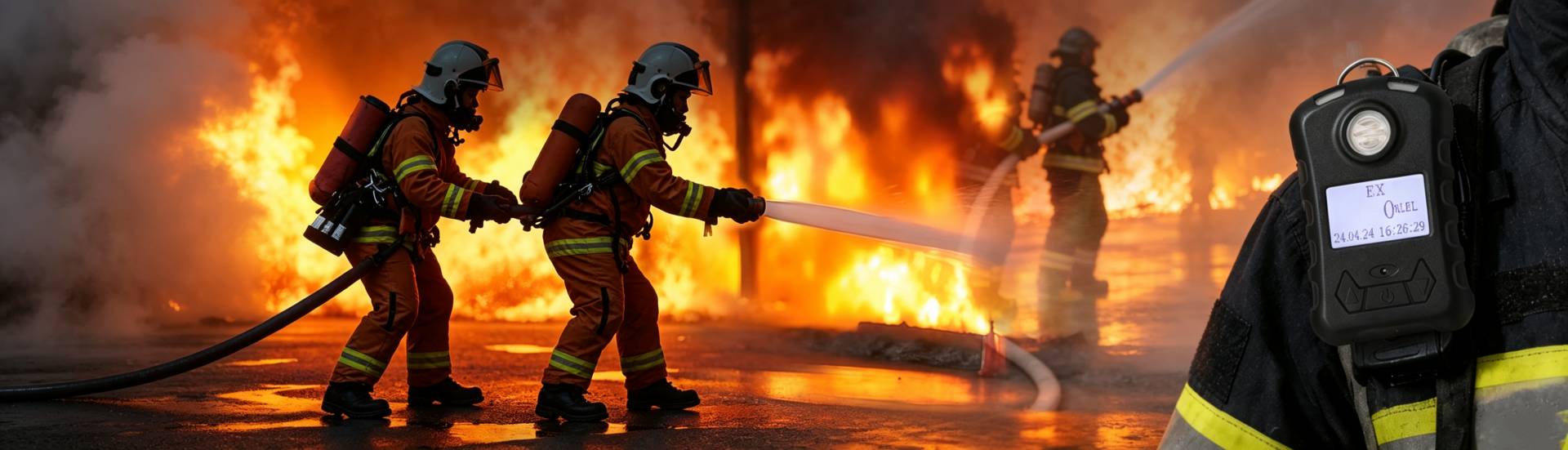
Carbon Monoxide at Home: Why Every Family Needs a CO Alarm in 2026
Carbon monoxide (CO) is often called the “silent killer” for a simple reason: it is colorless, odorless and cannot be directly detected by human senses. When you start to feel dizzy and nauseous, your body may already be in danger. Fortunately, a reliable carbon monoxide alarm can give an alarm in time before the concentration of dangerous gas reaches a life-threatening level.
This paper will introduce the basic knowledge of carbon monoxide, the common sources of carbon monoxide in the family, the importance of installing a carbon monoxide detection alarm, and the key factors that need to be paid attention to when choosing a household carbon monoxide alarm.
What Is Carbon Monoxide? Why Is It So Dangerous?
Carbon monoxide is usually produced in the case of insufficient combustion of carbon-containing fuels. Fuels such as natural gas, propane, wood, coal, gasoline and fuel oil may produce carbon monoxide when oxygen supply is insufficient, rather than carbon dioxide formed after complete combustion.
When the human body inhales carbon monoxide, it will combine with hemoglobin in the blood, and its combining ability is much higher than that of oxygen. This will reduce the ability of blood to transport oxygen, leading to hypoxia in body tissues and important organs.
Mild carbon monoxide exposure may cause headache, dizziness and shortness of breath. High concentration exposure may lead to loss of consciousness and even life-threatening in a short time.
Because carbon monoxide is colorless and tasteless, the human body can’t rely on the senses to find its existence. Therefore, building codes and fire safety agencies in many countries and regions suggest installing carbon monoxide alarms near bedrooms, so as to give timely alarms at night or when people are resting.
Common Sources of Carbon Monoxide in Families
Many people think that carbon monoxide poisoning will only happen in old and poorly ventilated houses. In fact, as long as fuel-burning equipment is used at home, there may be a risk of carbon monoxide.
Common potential sources include:
-
Gas heaters and boilers: cracks in heat exchangers or improper maintenance of equipment may lead to carbon monoxide leakage.
-
Gas water heater: Improper installation of exhaust system or poor ventilation may cause carbon monoxide to enter the room.
-
Gas stoves and gas ovens: carbon monoxide may be generated when combustion is insufficient, especially it cannot be used as indoor heating equipment.
-
Fireplace and wood stove: Blocked flue, poor smoke exhaust or poor combustion conditions may increase the risk of carbon monoxide accumulation.
-
Portable generator: Never run indoors, in the garage or near doors and windows to avoid waste gas entering the living space.
-
Car exhaust in the garage connected to the house: Even if the car is idling for a short time, the exhaust may enter the room.
-
Heater: kerosene or propane heating equipment that does not smoke properly may pose a risk of carbon monoxide.
If any of the above devices exist in your home, you should seriously consider installing a carbon monoxide alarm. What we really need to pay attention to is not whether to install it, but how to choose products suitable for the home environment.
What Functions Should I Pay Attention to When Choosing a Household Carbon Monoxide Alarm?
Different models of carbon monoxide detection alarms may be different in sensor technology, display mode and alarm function. When shopping, you can focus on the following aspects.
1. Electrochemical Sensor Technology
The carbon monoxide detection products in the market adopt a variety of sensing technologies, including bionic gel sensors, metal oxide semiconductor sensors and electrochemical sensors.
Electrochemical sensors are widely used in household carbon monoxide alarms, which can detect carbon monoxide and provide reliable concentration response. The actual detection performance also depends on the sensor quality, product design and calibration.
When selecting products, we should pay attention to the detection performance, service life and reliability of the whole machine, rather than judging the quality of products only by the type of sensors.
2. Real-Time Concentration Digital Display
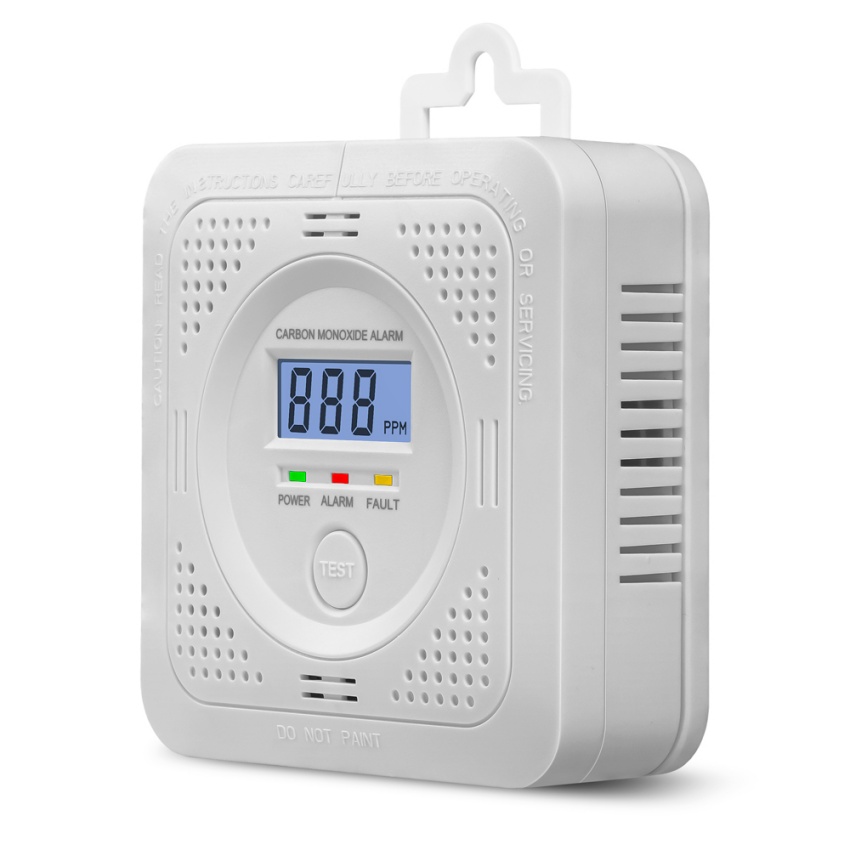
The basic carbon monoxide alarm usually gives an audible alarm when it reaches the set alarm conditions, while products equipped with LCD screens can also display the concentration of carbon monoxide in ppm (one millionth).
Real-time concentration display helps users to understand the numerical changes detected by the equipment. However, the alarm logic of carbon monoxide alarm usually considers the concentration and exposure time, so it is not possible to judge whether it is safe only by the displayed value at a certain moment, nor to ignore the alarm because of the low reading.
3. Acousto-Optic Double Alarm
When the concentration of carbon monoxide that meets the alarm conditions is detected, the alarm should be able to give an alarm in time.
The audible alarm can remind the user to take action, and the flashing LED indicator can provide additional visual cues. Acousto-optic double alarm is helpful to improve the warning effect of equipment in daytime, at night and in different indoor environments.
4. Continuous Monitoring for 24 Hours
Carbon monoxide leakage may occur at any time, so household alarms need to have continuous monitoring ability.
Choosing equipment that supports all-weather continuous monitoring can help families find potential carbon monoxide hazards in time, without the need for users to manually start testing.
5. Easy Installation and Self-Inspection
For home users, the alarm with simple installation and convenient operation is more practical.
Battery-powered products usually do not need to be connected to a fixed power supply, which is suitable for a variety of home environments. The equipment with the TEST button can check whether the sound of the alarm and related indication functions are normal through regular tests. It should be noted that self-inspection cannot replace the professional detection or calibration of sensors, nor can it guarantee that the equipment can work normally in all cases.
6. Low Power Design
For the battery-powered carbon monoxide alarm, the low-power design is helpful to prolong the battery life and reduce the replacement frequency.
When purchasing, you should also pay attention to the low battery prompt function and replace the battery in time to avoid affecting the operation of the equipment due to insufficient power supply.
Know HRP-CO102: Carbon Monoxide Alarm Suitable for Daily Household Use
If you are comparing different household carbon monoxide alarms, you can learn about the HRP-CO102 household carbon monoxide alarm.
This product combines electrochemical detection technology, digital display and acousto-optic alarm function, and is suitable for home and various indoor places.
The main features include:
-
Electrochemical sensor: used to detect carbon monoxide in the environment and help users find potential risks in time.
-
LCD digital display screen: displays the concentration of carbon monoxide (ppm) and provides information such as power supply, alarm and fault status.
-
Acousto-optic double alarm: The alarm is given by sound alarm and LED indicator light to help users notice the abnormal situation in time.
-
Double AA battery power supply: No fixed power supply wiring is needed, and the installation is more flexible.
-
24-hour continuous monitoring: continuously detect the concentration of carbon monoxide in the environment.
-
One-button TEST self-check: it is convenient for users to check the alarm sound and related indication functions of the equipment.
-
Foldable hook design: supports wall-mounted installation, and can also be placed in a suitable position according to product instructions.
-
Small and compact appearance: the product size is 8.9 × 8.9 × 3.2 cm, which is convenient for indoor installation and use.
HRP-CO102 can be used in houses, apartments, hotels, school dormitories, offices and staff dormitories. Its working temperature range is −10°C to 40°C, which can meet the needs of most common indoor environments.
Product details: HRP-CO102 household carbon monoxide alarm.
Where Should the Carbon Monoxide Alarm Be Installed?
Correct installation location is very important for timely detection of carbon monoxide risk. During installation, the planning should be combined with the building structure, the location of combustion equipment and the instructions of the product manufacturer.
-
Near the bedroom: install an alarm near each sleeping area to ensure that the alarm can be heard in time at night. The specific distance should follow local regulations and product installation instructions.
-
Every floor of the house: It is recommended to install carbon monoxide alarms on every floor of the house, including the basement.
-
Near the combustion equipment: According to the manufacturer’s requirements, an alarm can be set in the area where the water heater, heater and boiler are located, but it should not be installed directly above the gas stove.
-
Avoid inappropriate places: try to avoid installing in high humidity areas such as bathrooms, places with serious dust accumulation, and places where ventilation openings are easily blocked by paint or wallpaper.
-
Follow the installation height requirements: determine the appropriate position and height according to the installation guide of the alarm, and don’t assume that all models are suitable for the same installation method.
HRP-CO102 is easy to install and can be installed in corridors, near bedrooms or around equipment rooms according to site conditions. The specific location shall be subject to the product manual.
For more information about the product’s installation and features, visit the HRP-CO102 carbon monoxide alarm product page.
How to Maintain Household Carbon Monoxide Alarm?
Installing an alarm is only the first step in family safety management. Regular inspection is as important as proper maintenance.
Press the TEST button regularly. It is recommended to carry out tests regularly according to the manufacturer’s instructions, for example, once a month to confirm that the sound alarm and indication functions are normal.
Replace the battery in time. Replace the battery according to product requirements. If the device sends out a low battery prompt, it should be handled in time, and the alarm should not be in a state of insufficient power supply for a long time.
Keep the air inlet clean. Clean the dust on the surface of the equipment regularly. When cleaning, follow the product instructions to avoid liquid or detergent from entering the equipment.
Do not paint the surface of the equipment. Paint may block the gas inlet channel and affect the normal operation of the sensor.
Pay attention to the service life of equipment. The carbon monoxide alarm can’t be used permanently. The expired equipment shall be replaced in time according to the life of the sensor and the replacement cycle of the whole machine specified by the manufacturer.
Don’t Wait Until the Danger Occurs to Pay Attention to Carbon Monoxide Safety
Every winter, carbon monoxide poisoning incidents will arouse people’s concern about family safety, and some accidents occur in houses without carbon monoxide alarms.
Compared with the possible serious consequences caused by carbon monoxide exposure, installing an appropriate alarm is an investment worthy of attention in family safety.
HRP-CO102 household carbon monoxide alarm adopts electrochemical sensor, equipped with real-time concentration digital display, acousto-optic double alarm and convenient battery power supply design, which provides a practical choice for household carbon monoxide monitoring.
Understand the HRP-CO102 household carbon monoxide alarm immediately, and establish more perfect carbon monoxide safety protection for families.
If you have any questions about carbon monoxide safety or HRP-CO102 products, please contact the Hirep Safety team. We provide OEM/ODM customized solutions and all-weather technical support for distributors and individual customers, helping customers to choose suitable gas detection products according to different application requirements.


 WhatsApp: 8619339980364
 E-mail: contact@hirepsafety.com
