
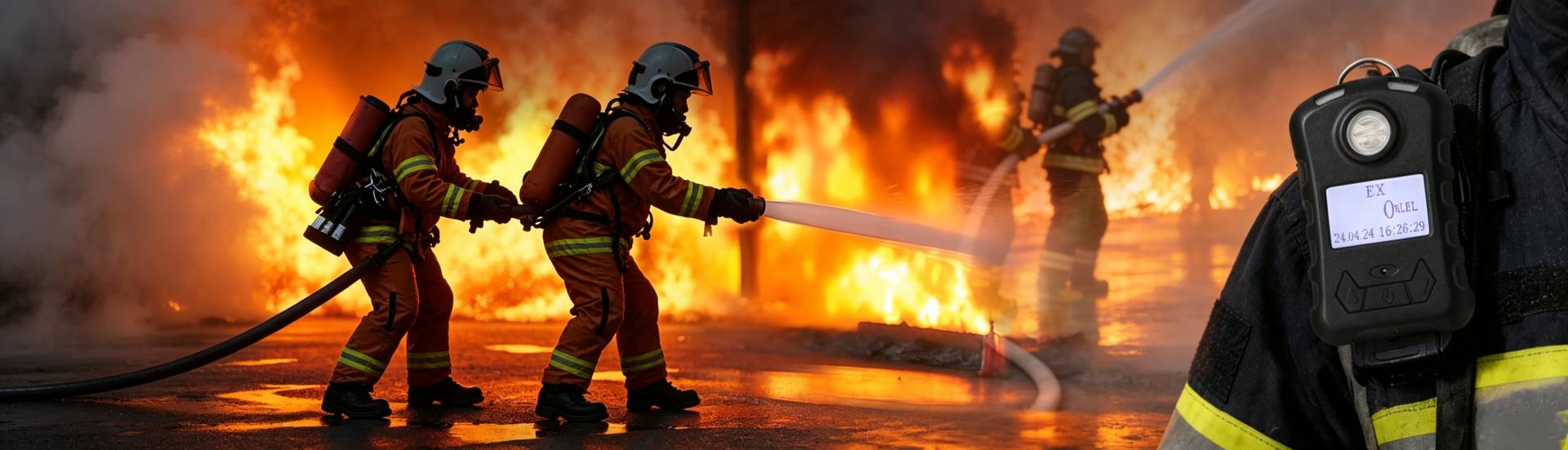
Calibration of Gas Detector: Method, Frequency and Best Operating Specification
In high-risk operation scenes such as chemical industry, mining and environmental protection, gas detector is the last line of defense for the safety of guards. However, no matter how sophisticated the equipment is, the sensor will drift over time. If the calibration link is ignored, the seemingly normal reading may cover up the fatal risk. In recent years, many safety accidents show that the equipment that fails to calibrate or simplify the calibration process on time cannot give an effective early warning at the critical moment, resulting in irreparable losses.
The core meaning of calibration
The essence of calibration of gas detector is to correct the detection error of sensor by standard gas to ensure the authenticity and reliability of measurement data. As the core component of the instrument, the sensor is influenced by many factors, such as working principle, use environment, temperature and humidity changes, etc. After long-term operation, it is inevitable that the sensitivity will decrease or zero drift will occur. Regular calibration can find and correct these deviations in time and keep the equipment in the best working condition all the time.
Complete process of calibration method
The standardized calibration operation includes two key links. Zero calibration needs to be carried out in a clean air environment, and the instrument reading should be adjusted to zero to eliminate background interference. For span calibration, standard gas with known concentration should be used to verify the response accuracy of the instrument within the target range. Two calibrations are indispensable. It is a misunderstanding for many enterprises to do only zero calibration and skip span calibration, which can not fully evaluate the real performance of sensors.
In actual operation, it is necessary to prepare standard gas cylinders, pressure reducing valves, flow meters and other necessary tools in advance. Taking combustible gas detection as an example, methane standard gas is usually used, and the operation is carried out according to the flow rate and ventilation time required in the equipment manual. During calibration, the ambient temperature, humidity, standard gas concentration and readings before and after calibration shall be recorded to form a complete traceability file.
Scientific determination of calibration frequency
The past practice of “annual inspection” has been replaced by new regulations. According to the latest specifications such as JJF 1834—2026, which came into effect in 2026, the basic calibration period of portable gas detector has been reduced to three months, which is 50% shorter than the previous standards. The measured data of testing institutions show that the error of uncalibrated equipment after three months of operation can reach plus or minus 3 LEL, far exceeding the upper limit of plus or minus 1 LEL allowed by the new regulations.
The calibration period is not fixed, so it needs to be adjusted flexibly by combining multiple factors. Equipment with high frequency of use should shorten the calibration interval, and harsh environment such as high temperature, high humidity and high dust places will accelerate the aging of sensors, so it is necessary to increase the calibration frequency. In some special situations, such as severe shock, sensor replacement or abnormal reading, calibration must be carried out immediately, and the period cannot be expired.
Practical points of best operating practices
Establishing a standardized calibration process is the basis for ensuring compliance. The enterprise shall formulate written operation procedures to specify the qualification requirements, operation steps, record format and exception handling mechanism of calibration personnel. After each calibration, a calibration label should be affixed, indicating the date, validity period and operator, so as to facilitate traceability management.
The management of standard gas is equally important. The standard gas should be used within the validity period and stored in a cool and ventilated place to avoid direct sunlight and high temperature environment. Check the integrity of the pressure reducing valve before opening the cylinder, control the flow stability during ventilation, and avoid the impact of airflow to affect the calibration accuracy.
Data recording and archiving is the key link of compliance management. Calibration records shall include equipment number, calibration date, standard gas information, readings before and after calibration, environmental conditions, operator’s signature, etc., and the storage period shall not be less than the whole life cycle of the equipment. Digital management system can realize automatic reminding, data uploading and remote monitoring, which greatly improves management efficiency.
Personnel training can not be ignored. Operators need to undergo professional training, understand the calibration principle, master the operation skills and be familiar with the emergency treatment process. Organize regular retraining and assessment to ensure that the team always maintains professional standards.
Compliance requirements under the new regulations
With the full implementation of standards such as GB/T 12358-2024 General Technical Requirements for Gas Detectors and Alarms in Working Environment, emergency management departments have included the calibration of gas detectors in special inspections. If the enterprise ignores the calibration cycle and simplifies the operation process, it will not only face a fine of 300,000 to 100,000 yuan, but also be more likely to cause safety accidents due to data distortion and bear more serious legal responsibilities.
In some industries, there have been cases of suspension of production and rectification due to failure to complete digital calibration according to the new regulations. Compliance management has been upgraded from “daily maintenance” to “full life cycle management and control”, covering all links such as procurement acceptance, daily use, regular calibration, maintenance and scrap disposal.


 WhatsApp: 8619339980364
 E-mail: contact@hirepsafety.com