
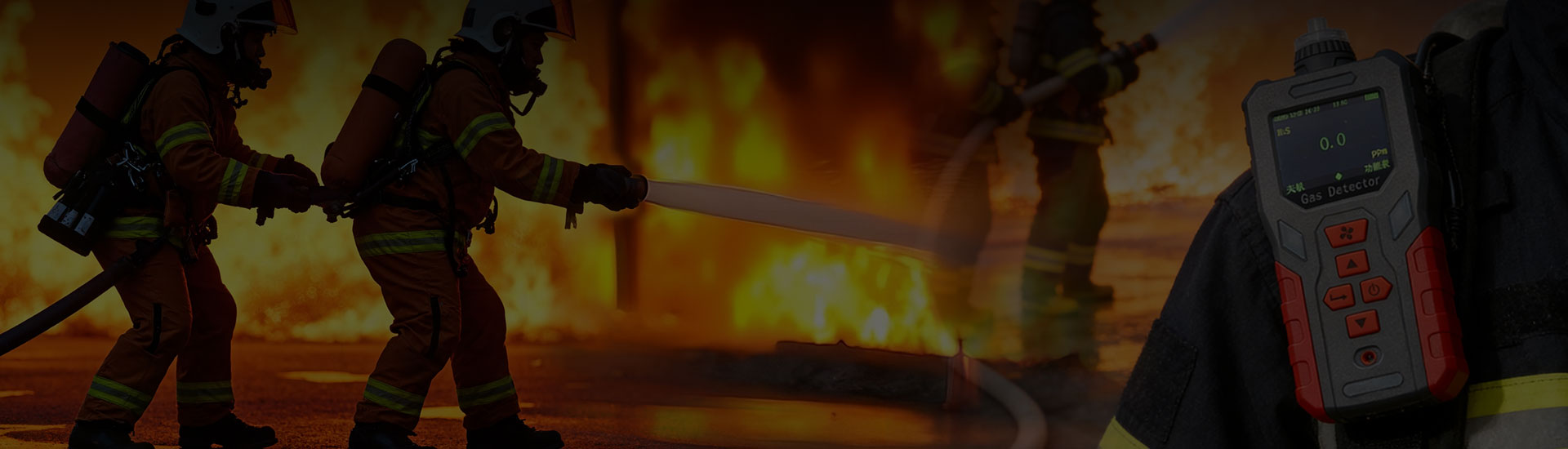
Gas Detection Systems for Oil and Gas Industry
Nursing dynamic artery: deep thinking on the detection system of oil and gas occupational gas
In the vast desert drilling channel, in the steel jungle of deep-sea oil production equipment and along the oil pipeline stretching for thousands of kilometers, the gas detection system is like a loyal sentry, guarding the safe operation of the power artery day and night. Oil and gas occupations are the blood of modern industry, but they are also synonymous with high risk. From exploration and mining to refining, storage and transportation, every link is accompanied by flammable, explosive, toxic and harmful gases. A reliable gas detection system is not only the bottom line requirement for enterprises to operate in compliance, but also a solemn commitment to the life safety of every practitioner.
The particularity of oil and gas occupation determines the complexity of its gas detection requirements. During drilling operations, high concentration of hydrogen sulfide may suddenly be released from the depths of the formation, and this highly toxic gas can kill people at extremely low concentration; Volatile organic compounds and combustible gases are everywhere around the fractionating tower in the refinery, and a tiny leak may trigger a chain explosion; In lng terminal, once the ultra-low temperature methane leaks, it will quickly vaporize to form a combustible cloud, which will explode in case of fire. These risk points are widely spread and diverse, which requires that the gas detection system must be highly professional and adaptable.
A complete oil and gas occupational gas detection system should be an organic combination of fixed and portable equipment. Fixed detectors, like rooted checkpoints, are strategically deployed in key risk areas-near the breathing valve of storage tanks, around the sealing point of pumping stations, in the low-lying areas of pipe corridors, and in the ventilation openings of tight machine rooms. These devices continuously monitor the gas concentration in the environment for 24 hours. Once an abnormality is detected, an audible and visual alarm will be triggered immediately, and emergency ventilation can be started, valves can be cut off or maintenance can be stopped. The advantage of fixed system lies in its stability and continuity, which is not affected by personnel activities and can continuously care for those unattended or high-risk areas.
The portable gas detector is the personal bodyguard of the workers. Whether it is routine inspection, equipment maintenance or emergency repair, the portable instrument carried by the staff can reflect the surrounding gas environment in real time. In the oil and gas profession, the common portable instrument equipment includes four sensors: combustible gas, hydrogen sulfide, carbon monoxide and oxygen, commonly known as “four in one”. However, for specific scenes, more professional equipment is needed, such as using photoionization detector to monitor volatile organic compounds or using infrared sensor to detect carbon dioxide. The value of portable instrument lies in its flexibility and accompaniment, which makes every employee become an active node in the security network.
The gas detection system of modern oil and gas profession is undergoing in-depth intelligent transformation. The traditional form of independent alarm is being replaced by the Internet of Things architecture. The detectors are connected to the central control room through industrial bus or wireless network, forming a monitoring network covering the whole factory. Operators can check the status of each detection point in real time on the big screen, the historical data curve is clearly visible, and trend analysis can warn potential risks in advance. The more advanced system also integrates the personnel positioning function. When a gas alarm occurs in a certain area, the system can immediately show the number and specific location of personnel in the area, and provide vital information for emergency evacuation and rescue.
In extreme environments such as deep-sea drilling channels, the gas detection system is facing more severe challenges. High humidity, high salt spray, strong vibration and explosion-proof requirements all put forward extremely high standards for the reliability of equipment. These devices must be certified by world authorities, such as ATEX, IECEx and other explosion-proof certifications, to ensure that they will not become ignition sources in risk areas. Together, the sensor needs to have anti-poisoning ability and can insist on accurate detection in the presence of disturbing substances such as silicon compounds and lead compounds. Behind the details of these skills are the sweat of many engineers and the ultimate search for safety.
However, no matter how advanced the skills are, they can’t replace the strength of handling. The useful operation of gas detection system depends on a perfect handling system. Regular calibration and maintenance are the basis of ensuring accurate data. Sensors have their service life and need to be replaced according to the manufacturer’s opinion. The training of personnel is equally important. Every operator must understand the meaning of alarm, grasp the correct application method of the instrument and know how to maintain the safety of himself and others in an urgent situation. More importantly, enterprises need to establish a clear gas detection process, and clarify who is responsible for detection, who is responsible for approval and who is responsible for response, which constitutes a closed loop of responsibilities.
In the history of oil and gas industry, there have been too many painful incidents caused by the failure of gas detection. These lessons have exchanged life for today’s standards and standards, reminding us that we should not take it lightly at any time. The gas detection system is not a decoration, not a perfunctory thing, but a protective barrier that really concerns life. When the alarm goes off, it is not making trouble, but saving lives. Every time the alarm is ignored, every time the maintenance is delayed, it is laying the groundwork for future incidents.
Looking forward to the future, the gas detection system of oil and gas industry will continue to develop in the direction of higher precision, faster response and stronger interconnection. Artificial intelligence algorithm will be used for speculative maintenance, and by analyzing the changing trend of sensor data, the omen of equipment failure will be found in advance. The UAV is equipped with gas detection equipment and will be able to enter the risk area that is difficult for personnel to reach for inspection. Enhancing practical skills can enable maintenance personnel to directly see the visual dispersion of gas concentration on the spot. These innovations will further improve the level of safety protection, but the core remains unchanged-that is, the fear of life and the persistence of safety.
On the back of the magnificent picture scroll of the power industry, many details are carefully carved. The gas detection system may be only a small part of it, but the weight it carries is beyond imagination. It not only cares for equipment and property, but also the integrity of every family and the dignity of every life. In every corner of the oil and gas profession, this system is working quietly, silently telling a simple and in-depth truth: safety is always the first, and no production task is worth taking risks with your life. Let’s take care of this defense together, so that the power activities will always be accompanied by the security guarantee, so that every power worker can supply the world with a steady stream of power in a safe environment.


 WhatsApp: 8619339980364
 E-mail: contact@hirepsafety.com