
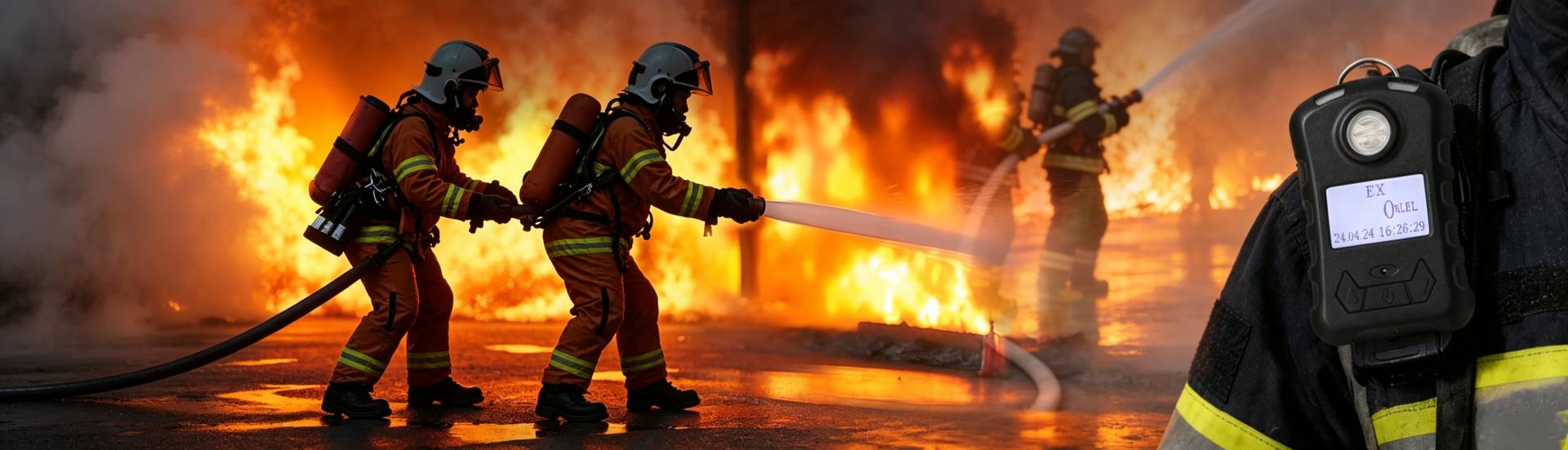
Gas Detector Maintenance Checklist for Industrial Safety
In the grand narrative of industrial safety, gas detectors often play the most silent but crucial role. They monitor invisible threats in the air 24 hours a day, from flammable and explosive methane to colorless and odorless hydrogen sulfide. However, many managers have a fatal misunderstanding: they think that the equipment is safe as long as the lights are on and the numbers are displayed. On the contrary, sensors are consumables, electronic components will age, and environmental pollutants will poison the probe. An unprotected gas detector can not only fail to give an early warning, but also paralyze the operator with seemingly normal readings and become a “silent killer” lurking around. Therefore, establishing a set of life cycle protection system from routine inspection to invalidation and replacement is not a perfunctory paperwork, but a bottom line for life.
The center of daily protection is “verification” rather than “review”. Every time before work, the operator should perform a strict “look, hear and ask”. “Looking” is to investigate the appearance, and confirm that the waterproof and dustproof film has not been pasted by oil pollution, the shell has no cracks, and the display screen has no scratches; “Smell” is to listen to the sound, whether the buzzing sound is clear and loud when starting the self-test, and whether the motor is powerful; “Q” is the self-inspection status, whether the battery capacity can support full-load work for more than 8 hours, and whether there is a faulty code shining; The most crucial “cut” is to carry out the fresh air zero return and shock test. It is necessary to calibrate the oxygen reading to 20.9% in a clean environment, and other toxic and combustible gases will return to zero, and then the standard gas will be introduced to see if the equipment can trigger the alarm within the specified time (generally less than 30 seconds). If the equipment has no response or slow response to the gas with known concentration, it has already failed, so it is necessary to immediately label it as “No Use” and send it for repair, and never take it to the site with luck.
Periodic calibration is a necessary means to eliminate the “memory drift” of sensors. Due to the influence of temperature, humidity and time, the zero point of electrochemical sensor and catalytic incineration sensor will drift and the sensitivity will decrease. Generally speaking, it is recommended to carry out full-range calibration every 3 to 6 months, but it is necessary to perform it immediately after exposure to high-concentration gas, pole temperature difference shock or failure in shock test. The calibration process is by no means random ventilation, so it is necessary to use the standard gas that has been certified by measurement and is within the validity period, and cooperate with the precision flowmeter to control the flow rate. Technicians should record the reading difference, response time (T90) and adjustment coefficient before and after calibration. If the adjustment of a calibration demand fluctuates too much (for example, more than 50%), it is generally a signal that the life of the sensor is over or poisoned. At this moment, forced calibration will only cover up the truth, and the correct way is to replace the sensor directly. At the same time, every calibration should update the label in a prominent position on the fuselage, indicating the date, the executor and the next calibration time, so that the equipment status can be known at a glance.
Deep protection and life span management are often neglected, but they are the key to prevent “sudden failure”. Sensors with different principles have strict “shelf life”: electrochemical toxic gas sensors are generally 2 years, oxygen sensors are 1-2 years, and catalytic incineration sensors are 2-3 years. Although infrared sensors are long, they need to clean the optical window regularly. In order to save money, many factories let the sensors that have been in service for a long time continue to work, which is a great safety hazard. Because the electrolyte inside the sensor will dry up and the catalyst will be deactivated, this aging is irreversible. Annual protection should also include dust removal inside the equipment, circuit board corrosion inspection, sampling pump flow test and firmware upgrade. Regarding the equipment used in dusty, high humidity or corrosive environment, the protection frequency should be doubled. In addition, it is very important to establish an electronic account of “one machine for one file”, which records every alarm event, every calibration data and every maintenance record. This is not only for auditing by ISO or OSHA, but also for predicting the equipment trend through data analysis and completing preventive protection.
Finally, the closed loop of the protection system is inseparable from human factors. No matter how advanced the equipment is, it will be in vain if the operator doesn’t know how to use and protect it correctly. It is necessary for enterprises to train all staff regularly, which should cover not only how to wear it, but also why to do impact test, how to identify the symptoms of sensor poisoning, and the correct evacuation procedure when the equipment alarms. Let users understand that gas detectors are the last line of defense, not amulets. Only when every employee protects the detector in his hand as he protects his eyes, strictly performs daily inspection, regular calibration and timely replacement, can we really build an indestructible safety barrier. In the industrial field, there is no “almost” safety, only “zero tolerance”. Keeping each gas detector in the best condition at all times is a promise to care for everyone to go home safely.


 WhatsApp: 8619339980364
 E-mail: contact@hirepsafety.com