
Petrochemical gas detection solutions: from “passive alarm” to “active defense”
The petrochemical industry is facing multiple challenges of high temperature, high pressure, flammability, explosiveness and toxic and harmful gases. Traditional single gas detection has been difficult to meet the dual needs of “intrinsic safety” and “environmental compliance” in modern chemical parks. Based on the latest industry practice, this scheme puts forward a set of “air-ground integration” three-dimensional protection system which integrates fixed monitoring, mobile inspection and AI analysis.
Stereoscopic perception: multi-dimensional technology integration
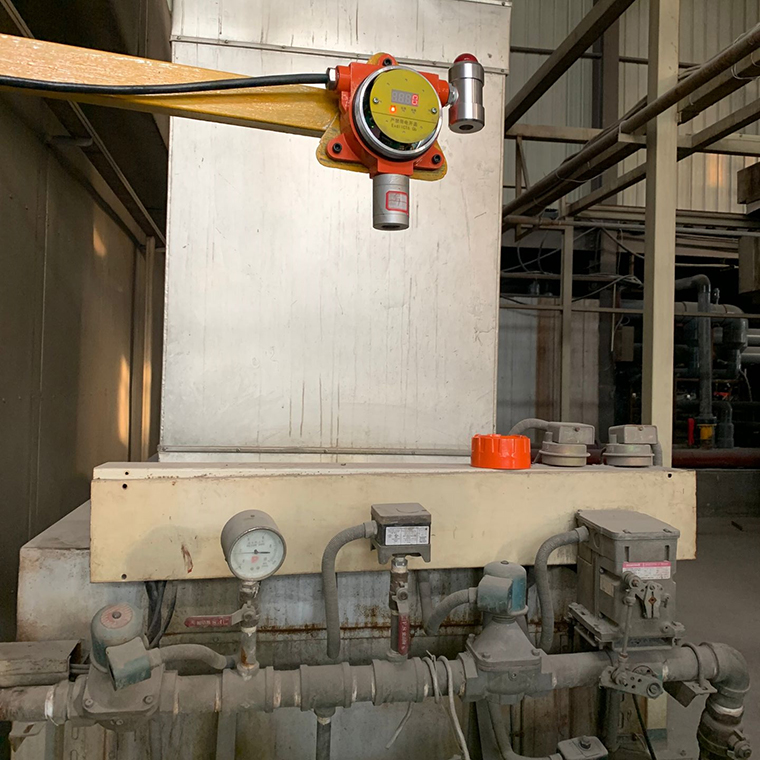
In view of the complexity of petrochemical scene, the technical strategy of “point, line and surface” must be adopted. In the core device area, such as around the reaction kettle and compressor, explosion-proof fixed detectors are deployed, and trace toxic gases such as hydrogen sulfide and carbon monoxide are accurately captured by electrochemical sensors, and combustible gases such as methane are monitored by infrared sensors to ensure stable operation in oxygen-deficient or sensor-poisoned environments. Aiming at the open areas such as storage tank area and pipe gallery, gas cloud imaging and Fourier infrared hyperspectral telemetry technology are introduced. These devices are like “clairvoyance”, which can show the invisible gas leakage in visual video thousands of meters away, and completely solve the pain point of “undetectable and invisible” blind area. At the same time, hyperspectral telemeters are deployed at the factory boundary to monitor unorganized emissions in real time to ensure environmental compliance.
Mobile inspection: man-machine cooperation
In order to make up for the limitation of fixed points, the scheme introduces UAV and explosion-proof robot to build a mobile monitoring network. The UAV is equipped with a laser methane telemeter, which can quickly inspect the overhead pipe gallery and the top of the storage tank at high altitude, with long detection distance and no need for personnel to climb up, greatly reducing the operation risk. On the ground, an explosion-proof inspection robot equipped with an air cloud imaging camera is deployed to conduct normal patrols in the device area. This “air-ground cooperation” mode not only improves the inspection efficiency, but also can be used as an advance force to enter the high-risk area for reconnaissance when an accident occurs.
Wisdom hub: data-driven decision-making
Hardware is the foundation and platform is the core. All monitoring data are imported into the central management platform and analyzed in real time through AI algorithm. The platform has three core capabilities: first, real-time visualization, dynamic display of gas concentration distribution and diffusion trajectory on 3D map; Second, intelligent linkage, once the monitoring data exceeds the standard, the audible and visual alarm is triggered in milliseconds, and the fan is automatically linked to turn on or turn off the emergency cut-off valve; The third is predictive maintenance, which uses big data to analyze the health status of sensors, forewarns equipment failures in advance, and eliminates security loopholes caused by equipment failures.
Whole life cycle operation and maintenance management
The plan emphasizes “three-point construction and seven-point operation and maintenance”. It is suggested to establish electronic archives of equipment and realize the closed-loop management of “detection-recording-repair-retest” by using digital platform. Strictly implement the system of “impact test before use” of portable equipment and regular calibration of fixed equipment to ensure the authenticity and reliability of data. Through scientific operation and maintenance, gas detection will be upgraded from passive “alarm afterwards” to active “prevention beforehand” to build a safe defense line for enterprises.
The above is the introduction of petrochemical gas detection solutions: from “passive alarm” to “active defense”


 WhatsApp: 8619339980364
 E-mail: contact@hirepsafety.com