

Wireless Gas Detection Solution for Gas Stations
Mobile Explosion-Proof Gas Alarm System Case Study
Project Overview
This project involves a large chain gas station located on a major urban roadway.
Due to strict explosion-proof requirements and continuous daily operation, traditional wired gas detection systems were not suitable. The customer required a wireless gas detection solution capable of monitoring combustible gases such as methane (CH₄) and VOCs, while also supporting mobile deployment in temporary operation areas.
Customer Requirements
The customer outlined the following key requirements for the gas detection system:
1. Wireless communication between gas detectors and the alarm controller
2. Fast alarm response and linkage after gas detection
3. Support for both fixed installation and mobile gas monitoring
4. Certified explosion-proof design with outdoor weather protection+
5. The sensor’s lifespan should be more than 5 years.
Gas Station Safety Challenges
Gas stations present unique safety challenges, including:
Evaporation of gasoline producing combustible gases such as methane and VOCs.
High-risk leakage points at fuel dispensers, unloading areas, and vent pipes.
Difficulty installing wired detectors without disrupting station operations.
Inability of wired systems to cover temporary or mobile working areas.
These challenges make wireless gas detectors increasingly essential in modern gas station safety systems.
Wireless Gas Detection Solution
To address these challenges, an explosion-proof wireless gas alarm system was deployed.
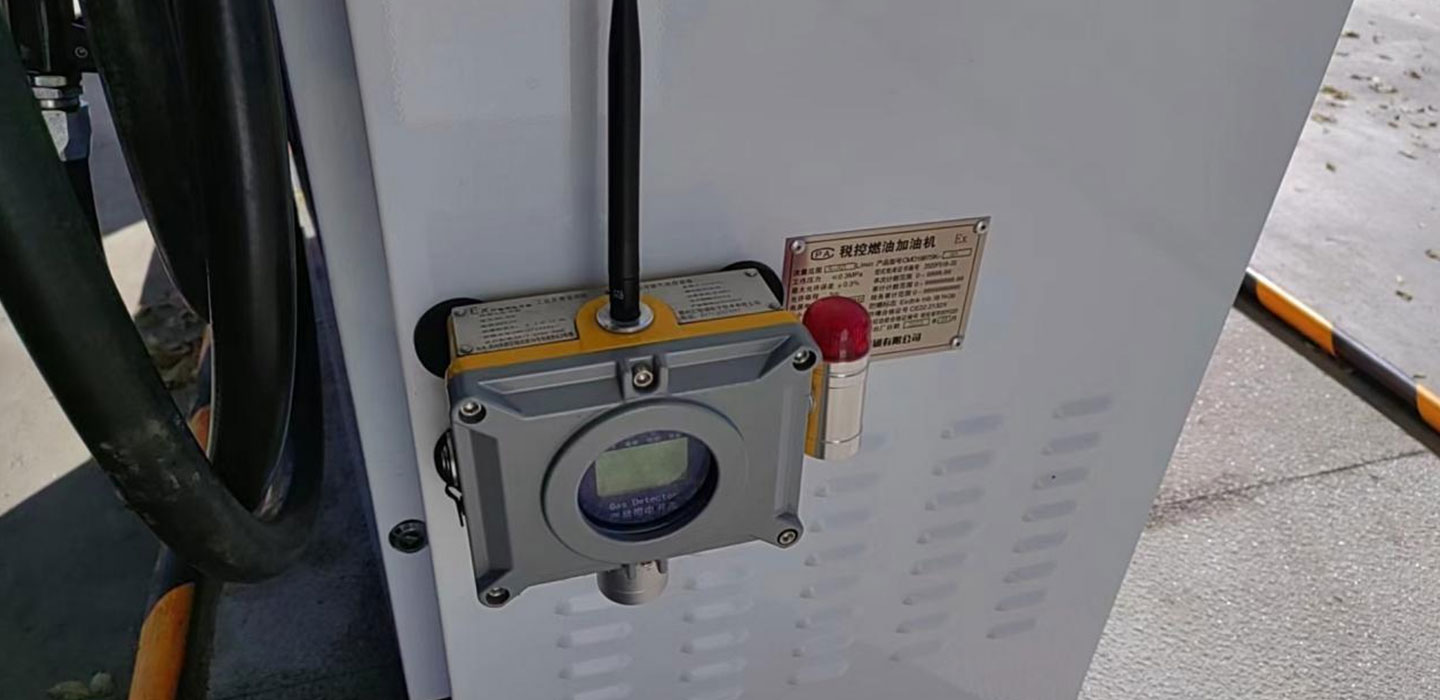
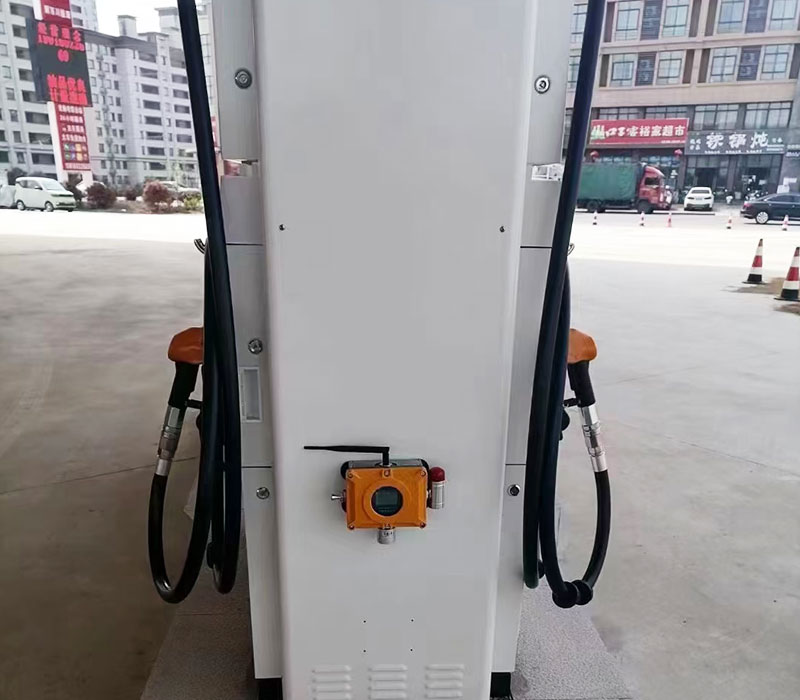
As required, at gas stations, when detecting flammable gas, the horizontal distance between the detector and any leak source must not exceed 5 meters. We adopted a magnetic wireless detector; the magnet directly attaches the entire detector to the fuel dispenser, providing better detection while also meeting the distance requirements between the detector and the leak source.
System Configuration
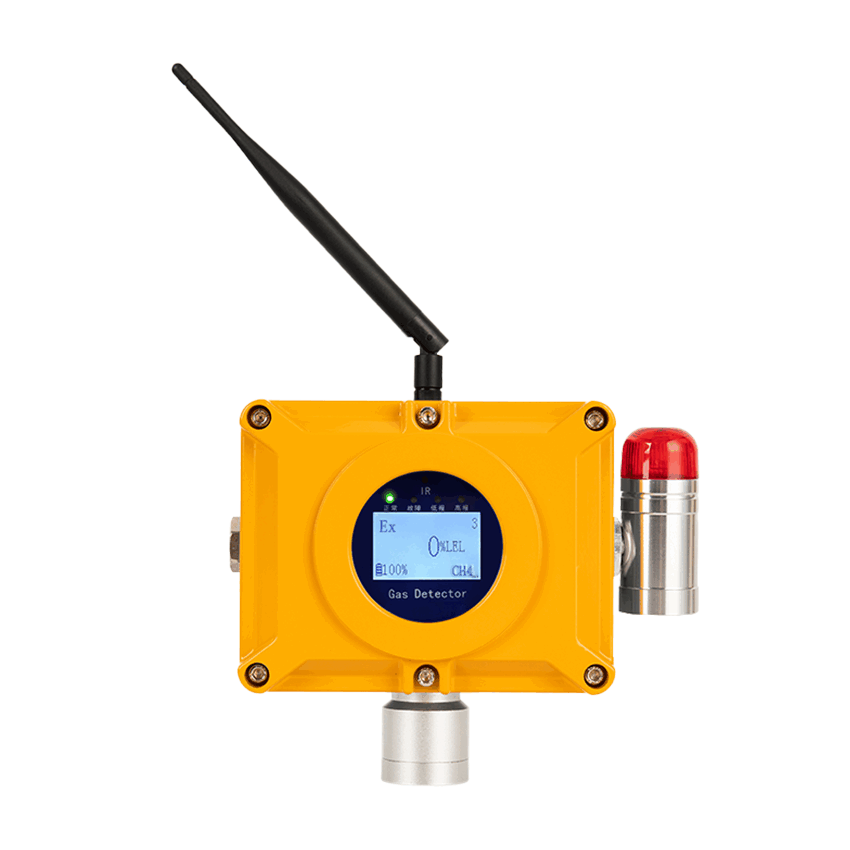
Detection section:
Detection Gases: Methane (CH₄), VOCs (Non-methane hydrocarbons)
Transmission Method: Lora Wireless communication
Explosion-Proof Rating: ll 2G Ex db lIC T6 Gb
Protection Level: IP68
Detection principle: non-dispersive infrared technology
Deployment Method: Flexible placement at unloading points, tank areas, and other high-risk zones
Alarm Controller:
Display Screen: 4.3-inch LCD color display.The screen displays the real-time concentration values of detectors.
Power Supply: AC 85-240V 50Hz/60Hz,Installed in the duty room
Relay Output: 4 passive relay output ,Linked with area sound and light alarm
Transmission Method: Lora wireless input
System Functions
Real-time gas concentration display at each detection point.
Automatic alarm transmission to the gas alarm controller when thresholds are exceeded.
Support for rapid relocation of detectors for temporary monitoring tasks.
Implementation Results
After deployment, the system delivered significant safety and operational improvements:
Successfully detected a micro-crack leakage in an unloading hose, with VOC concentration reaching 8% LEL, preventing potential fire hazards.
Improved inspection efficiency by approximately 70%, eliminating the need for manual handheld gas inspections.
Recommended Wireless Gas Detector Configuration for Gas Stations
|
Requirement |
Recommended Configuration |
|
Target Gases |
Methane (CH₄), VOCs (NMHC), Ethanol vapor |
|
Installation Mode |
Fixed (fuel dispensers, tank areas) + Mobile (unloading points, inspections) |
|
Explosion-Proof Rating |
ll 2G Ex db lIC T6 Gb |
|
Protection Level |
IP66 (rain and dust protection) |
|
Communication |
Lora preferred, independent of station network |
|
Compliance Standards |
AQ3010-2022, GB 50156 |
Conclusion
Wireless gas detectors have become a standard safety solution for modern gas stations.
Beyond accident prevention, they directly support mobile payment compliance, smart supervision, and intrinsic safety improvement, enabling gas station operators to clearly identify and control invisible risks.


 WhatsApp: 8619339980364
 E-mail: contact@hirepsafety.com