
Wireless Gas Detection System
Wireless Gas Detection System: A Complete Guide to Industrial Gas Safety Monitoring
What Is a Wireless Gas Detection System?
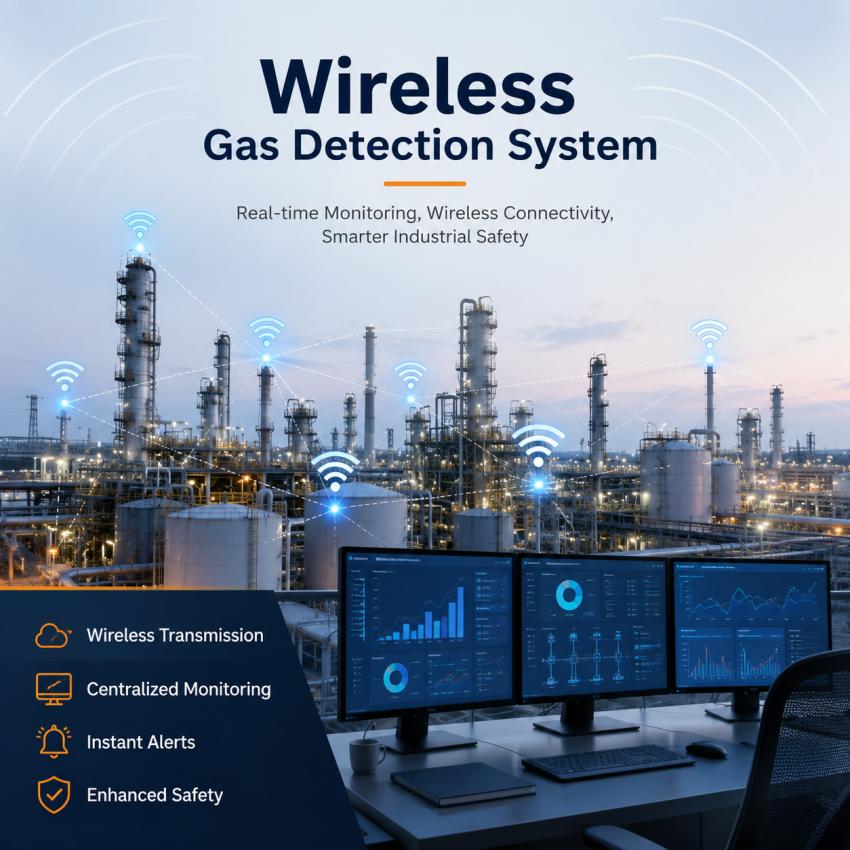
Wireless Gas Detection System is an advanced industrial safety monitoring solution, which realizes real-time detection, data transmission and remote management of dangerous gas concentration through wireless communication technology.
Different from the traditional wired gas detection system, the wireless gas detection system does not need complicated cable laying, but uses wireless communication technologies such as 4G, LoRa and Wi-Fi to transmit the on-site gas detection data to the control platform or monitoring center in real time.
The system is mainly used in industrial fields with gas leakage risk, including:
- Oil and gas industry
- Chemical production enterprises
- Mining industry
- Sewage treatment plant
- Manufacturing factory
- Energy and power industry
- Warehouse logistics area
Through continuous gas monitoring and remote data transmission, the wireless gas detection system can improve the industrial safety level, reduce the installation cost, and help enterprises to respond to dangerous situations quickly.
How Does the Wireless Gas Detection System Work?
A complete wireless gas detection system usually consists of the following parts:
1. Wireless Gas Detector
The wireless gas detector is installed in a dangerous area where gas leakage may occur, and mainly integrates:
- High precision gas sensor
- Gas concentration detection module
- LCD display (optional)
- Acousto-optic alarm device
- Wireless communication module
- Battery or power supply system
The equipment can continuously detect the gas concentration in the environment and process the detection data in real time.
Common detection gases include:
Combustible gas:
- Methane (CH₄)
- Liquefied petroleum gas (LPG)
- Hydrogen (H₂)
- Other combustible gases
Toxic gas:
- Carbon monoxide (CO)
- Hydrogen sulfide (H₂S)
- Ammonia gas (NH₃)
- Chlorine gas (Cl₂)
Oxygen detection:
- Lack of oxygen
- Oxygen excess
2. Wireless Communication Network
The detected gas data is transmitted by wireless communication, including:
4G Wireless Transmission
4G communication allows the detector to send data directly to the cloud platform or remote monitoring center through the mobile network.
Advantages:
- Long communication distance
- No need to build a local network.
- Suitable for large industrial areas and outdoor scenes.
LoRa Wireless Communication
LoRa is a low-power and long-distance wireless communication technology.
Advantages:
- Low power consumption
- Strong signal penetration ability
- Suitable for large factories and complex industrial environments.
Wi-Fi Communication
Wi-Fi wireless solution is suitable for factories or indoor areas with wireless network environment.
3. Monitoring Management Platform
The wireless gas detection system can be connected to the remote monitoring platform, and managers can:
- View real-time gas concentration
- Query historical detection data
- Receiving alarm information
- Manage multiple detection devices
- Analyze security trends
Through remote monitoring, security personnel can grasp the state of industrial environment in real time without arriving at the scene.
Why Choose Wireless Gas Detection System?
1. The Installation Is Simple and the Wiring Cost Is Reduced
The traditional fixed gas detection system needs to be laid:
- Signal cable
- Power cable
- Cable bridge
- Communication line
Wireless gas detection system reduces:
- Cable installation cost
- Engineering construction time
- Post-maintenance difficulty
Especially suitable for:
- Built factory
- Temporary monitoring area
- Remote industrial site
- Large industrial site
2. Realize Remote Real-Time Monitoring
Wireless gas detection system allows safety managers to obtain on-site gas information anytime and anywhere.
When abnormal gas concentration is detected, the system can:
- Start the on-site alarm
- Send remote alarm notification
- Remind staff to take measures
- Auxiliary accident emergency treatment
3. Flexible Deployment and Convenient Expansion
Wireless devices are not limited by complex wiring, and can be installed in places that are difficult to be covered by traditional systems, such as:
- Tank area
- Near the pipeline
- Outdoor equipment area
- Mine area
- Remote industrial site
When the monitoring demand increases, the number of detection points can also be increased rapidly.
4. Improve the Level of Industrial Safety
Gas leakage accidents usually develop rapidly, and timely detection of dangerous gases is the key to reduce the risk of accidents.
The wireless gas detection system provides:
- 24 hours continuous monitoring
- Early warning of gas leakage
- Rapid accident response
- Reduce personnel and equipment risks
Application Field of Wireless Gas Detection System
Oil and Gas Industry
There are a lot of risks of flammable and toxic gases in oil and gas facilities.
The wireless detection system can be used to:
- Oil field
- Refinery
- Gas storage station
- Gas pipeline area
Monitoring:
- Natural gas leakage
- Hydrogen sulfide risk
- Hydrocarbon gases
Chemical Industry
Dangerous chemical gases are often involved in chemical production.
The wireless gas detection system can be applied to:
- Chemical storage area
- Machine shop
- Reaction equipment area
Real-time monitoring:
- Toxic gas leakage
- Combustible gas leakage
Mining Industry
Mine environment may exist:
- Methane (CH₄)
- Carbon monoxide (CO)
- Hypoxia risk
The wireless gas monitoring system can provide:
- Underground environment safety monitoring
- Remote data transmission
- Early warning of accidents
Industrial Manufacturing Field
The factory can use wireless gas detection system to monitor:
- Boiler room
- Compressor area
- Energy station
- Exhaust gas treatment area
Main Characteristics of Modern Wireless Gas Detection System
High Precision Sensor
Adopt advanced sensing technology to realize:
- Quick response
- Stability detection
- High accuracy measurement
Various Wireless Communication Modes
Support:
- 4G
- LoRa
- Wi-Fi
- Industrial wireless network
Meet different site needs.
On-Site Acousto-Optic Alarm
When the gas concentration exceeds the preset alarm value, the equipment can be started immediately:
- Audible alarm
- LED flash alarm
- Warning signal output
Remote Data Management
Users can use:
- Cloud platform
- Mobile app
- Industrial control system
Realize centralized management of multiple devices.
Low Power Design
Low-power wireless technology enables devices to:
- Long run
- Reduce maintenance times
- Reduce operating costs
Comparison Between Wireless Gas Detection System and Traditional Wired System
| Comparison | Wireless Gas Detection System | Traditional Wired System |
|---|---|---|
| Installation method | Simple and flexible | Requires a lot of wiring |
| Construction cost | Lower | Higher |
| Installation speed | Fast | Slow |
| Expandability | Easy to increase detection points | Need to rewire |
| Remote monitoring | Support | Has certain limitations |
| Suitable areas | Remote and complex industrial areas | Fixed industrial sites |
How to Choose a Wireless Gas Detection System?
When selecting a wireless gas detection scheme, the following factors need to be considered:
1. Detection of Gas Type
Select the corresponding sensor according to the possible dangerous gas on site.
For example:
- Combustible gas selective catalytic combustion or infrared sensor
- Toxic gas selective electrochemical sensor
2. Communication Distance
Select the wireless mode according to the site environment:
- 4G: Suitable for long-distance and wide-range monitoring.
- LoRa: Suitable for large industrial parks.
- Wi-Fi: Suitable for indoor network environment.
3. Environmental Conditions
Need to consider:
- Temperature
- Humidity
- Dust
- Explosion-proof requirements
4. Data Management Requirements
Confirm whether the system needs:
- Cloud monitoring
- Mobile phone alarm reminder
- SCADA system integration
- PLC data connection
Summary
Wireless gas detection system provides an intelligent, efficient and flexible solution for modern industrial safety management.
Through the advantages of wireless communication, real-time monitoring, remote management and rapid deployment, the system can help enterprises reduce installation costs and improve the monitoring ability of dangerous gases.
For oil and gas, chemical, mining, energy and manufacturing industries, wireless gas detection technology is becoming an important solution to build an intelligent and safe industrial environment.


 WhatsApp: 8619339980364
 E-mail: contact@hirepsafety.com