
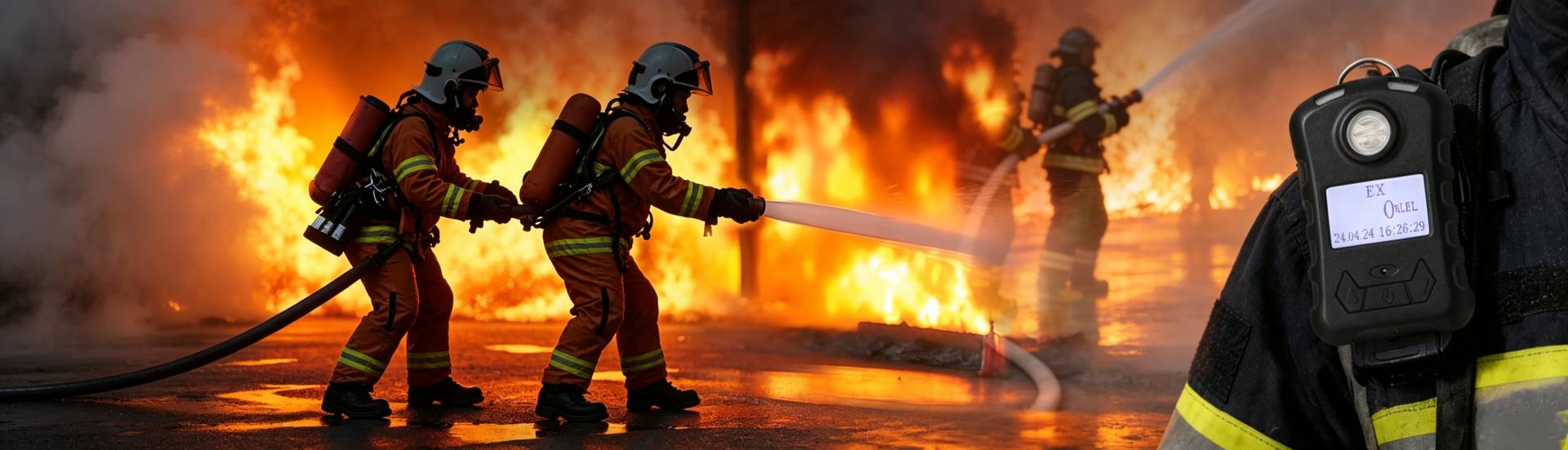
What is LEL in Gas Detection? A Complete Guide to Industrial Safety
Introduction
In industrial environment, combustible gas leakage is one of the main safety risks leading to fire, explosion and serious accidents. In order to prevent these dangers, gas detection systems usually use some important safety parameters to evaluate the gas concentration level.
Among them, LEL (Lower Explosive Limit) is one of the most important parameters in combustible gas monitoring.
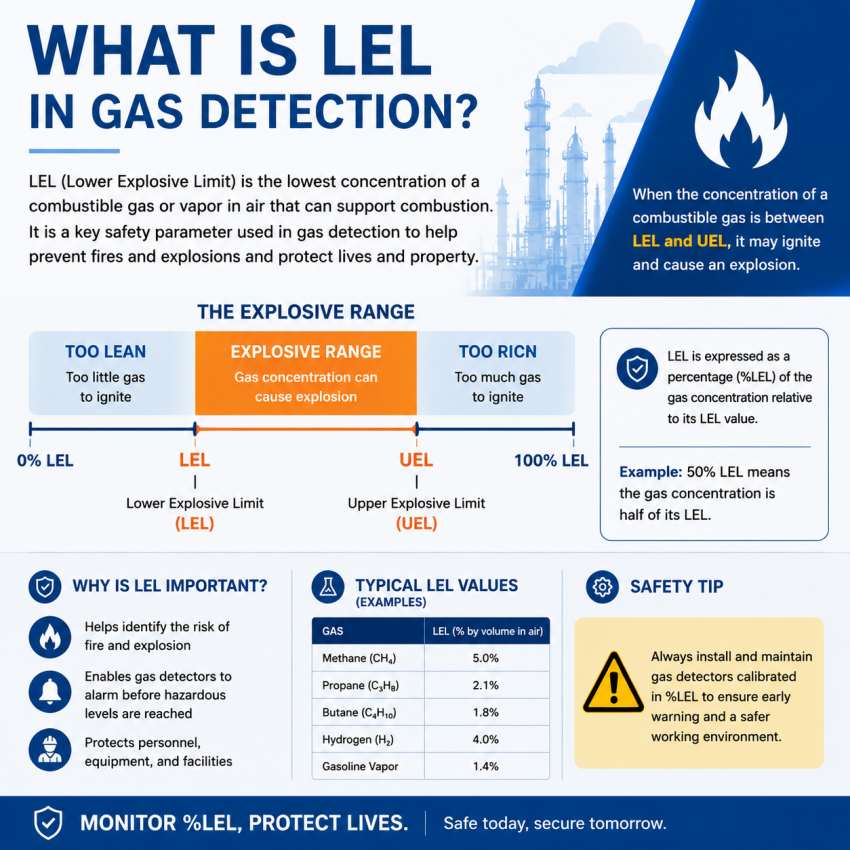
LEL means that the combustible gas in the air reaches the lowest concentration that can be ignited. When there is an ignition source in the environment, reaching or exceeding this concentration range may cause combustion or explosion.
Understanding LEL value is of great significance to oil and gas, chemical manufacturing, mining and industrial production.
By monitoring the concentration of LEL, gas detection equipment can give an alarm in advance to help enterprises avoid the accumulation of dangerous gases, thus reducing the risk of accidents.
What Does LEL Mean in Gas Detection?
LEL is the abbreviation of Lower Explosive Limit.
It refers to the lowest concentration at which combustible gas and air form a combustible mixture and can burn or explode.
When the gas concentration is lower than the LEL value, combustion cannot be supported due to insufficient fuel concentration.
When the gas concentration reaches or exceeds the LEL value, the environment may become dangerous, because any fire source may cause combustion or explosion.
The gas detector usually displays the concentration of combustible gas in the form of %LEL.
For example:
- 0% LEL indicates that combustible gas is not detected.
- 50% LEL means that the gas concentration reaches half of the lower explosion limit.
- 100% LEL means that the gas concentration reaches the lowest explosion concentration.
Why Is LEL Important for Gas Detection?
LEL monitoring plays an important role in industrial safety.
1. Find Gas Leakage in Advance
Small-scale flammable gas leakage, if not found in time, may gradually develop into a serious danger.
LEL gas detector can continuously monitor the concentration of combustible gas in the environment and provide early warning before it reaches dangerous level.
This enables staff to:
- Found a gas leak
- Strengthen ventilation
- Stop the operation of related equipment.
- Take emergency measures
2. Prevent Fire and Explosion Risks
Many industrial gases are highly flammable, including:
- Methane
- Natural gas
- Liquefied petroleum gas (LPG)
- Hydrogen
- Hydrocarbon gases
When these gases are mixed with air to a certain concentration and meet ignition sources such as sparks and flames, an explosion may occur.
LEL monitoring can help enterprises control gas concentration and keep the environment in a safe range.
How Does LEL Gas Detector Work?
LEL gas detector measures the concentration of combustible gas in the surrounding environment through sensors.
Common sensor technologies include:
Catalytic Combustion Sensor
The catalytic combustion sensor detects the gas concentration through the oxidation reaction of combustible gas.
Widely used in detection:
- Methane
- Propane
- Butane
- Other hydrocarbon gases
Infrared Sensor Technology
The infrared sensor realizes reliable detection by measuring the absorption characteristics of infrared light by gas.
This technology is usually used in demanding industrial environments.
Application Field of LEL Gas Detection
LEL gas monitoring system is widely used in industries with combustible gas risks.
Oil and Gas Industry
Application scenarios include:
- Refinery
- Natural gas storage facilities
- Tubing
- Fuel treatment area
LEL monitoring can help detect methane and other hydrocarbon gas leaks.
Chemical Industry
Flammable materials are usually used in chemical plants during production.
LEL detector can be used to monitor:
- Production area
- Storage area
- Processing equipment area
Help enterprises find risks in advance and avoid accidents.
Industrial Manufacturing Industry
Factories that use fuels, solvents or combustible materials need reliable gas monitoring schemes.
Typical applications include:
- Boiler room
- Equipment area
- Maintenance area
What Is the Difference Between LEL and % Volume?
Gas concentration can be expressed in different units.
LEL is usually used for safety monitoring because it can directly reflect the explosion risk level.
% Volume (volume percentage) indicates the proportion of actual gas in the air.
For example:
- %LEL is mainly used for security risk judgment.
- %Volume is used to indicate the actual gas concentration.
Industrial gas detectors usually use %LEL display mode, because it can more intuitively reflect the degree of danger.
How to Choose a Suitable LEL Gas Detector?
When selecting LEL gas detector, the following factors should be considered:
Target Detection Gas Type
Different gases need to match different sensor settings.
For example:
- Methane detection
- LPG detection
- Hydrogen detection
Installation and Use Environment
Need to consider:
- Indoor or outdoor environment
- Temperature condition
- Humidity effect
- Explosion-proof requirements
Alarm Function
A reliable gas detector should have:
- Audible alarm
- Lighting alarm
- Vibration alarm
- Remote communication function
Conclusion
LEL is a key parameter in combustible gas detection and industrial safety management.
By continuously monitoring the concentration of combustible gas, LEL gas detector can help enterprises find dangers in advance, prevent explosion accidents and protect the safety of workers.
For industrial industries involving flammable gases, choosing reliable LEL monitoring solutions is an important measure to establish a safer working environment.


 WhatsApp: 8619339980364
 E-mail: contact@hirepsafety.com