
What is a portable gas detector?
What is a portable gas detector? Comprehensive Understanding of Personal Gas Safety Monitoring Equipment
Introduction
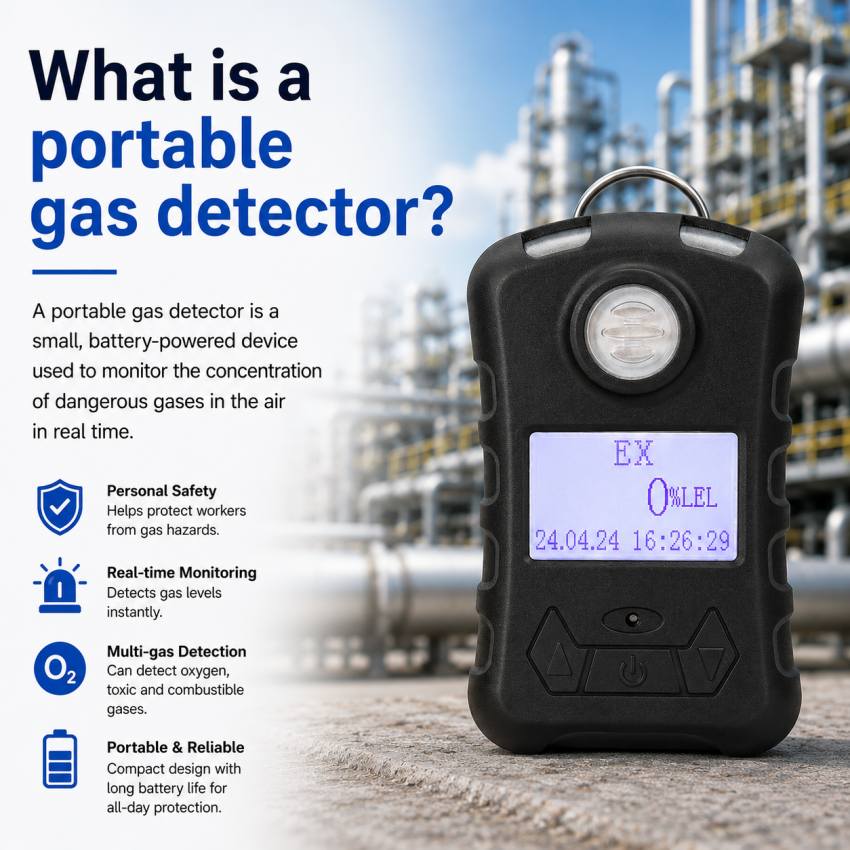
Portable Gas Detector is a small, battery-powered gas detection device, which is used to monitor the concentration of dangerous gas in the environment in real time. When the concentration of toxic, harmful or combustible gas exceeds the safe range, it can immediately give an alarm to remind staff to take timely measures, thus effectively preventing accidents such as poisoning, suffocation, fire and explosion.
Portable gas detectors are widely used in oil and gas, chemical industry, mining, fire fighting, sewage treatment, confined space operation, shipbuilding and construction. Because many dangerous gases are colorless, odorless and imperceptible to the naked eye, it is impossible to judge whether there is danger only by human senses, so portable gas detector has become an important equipment for modern industrial safety protection.
This paper will introduce the working principle, detectable gas types, application scenarios and key points of purchase of portable gas detector to help you fully understand this important safety equipment.
Working principle of portable gas detector
The portable gas detector continuously samples the surrounding air through the built-in sensor and analyzes the gas concentration in real time. When the detected value reaches the preset alarm value, the device will immediately remind the user in various ways, including:
- audible alarm
- Highlight LED flash alarm
- Strong vibration alarm
- The LCD screen displays the gas concentration in real time.
According to different detection objects, modern portable gas detectors usually adopt the following sensor technologies.
Electrochemical Sensor (electrochemical sensor)
Mainly used to detect toxic gases and oxygen.
Typical gases that can be detected include:
- Carbon monoxide (CO)
- Hydrogen sulfide (hs)
- Oxygen (o)
- Chlorine gas (cl)
- Sulfur dioxide (so)
- Nitrogen dioxide (NO)
- Ammonia gas (NH)
Electrochemical sensor has the advantages of high detection accuracy, low power consumption and fast response, and is one of the most widely used gas detection technologies in industrial field.
Catalytic combustion sensor (Catalytic Bead Sensor)
Mainly used for detecting combustible gas.
Common detection objects include:
- Methane (ch)
- Propane (C₃H₈)
- butane
- Hydrogen (h)
The detection results are usually expressed as a percentage of the Lower Explosive Limit (LEL), which can effectively warn the risk of combustible gas leakage.
Infrared sensor (NDIR)
Infrared sensors are mainly used to detect hydrocarbon gases and carbon dioxide.
Its main advantages include:
- Long service life
- Not susceptible to sensor poisoning.
- High stability
- Suitable for harsh industrial environment
PID Photoionization Detector
PID sensor is mainly used to detect volatile organic compounds (VOC).
Typical applications include:
- Chemical production
- environmental monitoring
- Emergency rescue of dangerous chemicals
- Indoor air quality detection
What gases can the portable gas detector detect?
Different models can be equipped with different sensors according to requirements.
Common detection gases include:
| Main danger of gas | |
|---|---|
| Oxygen (O₂) | is anoxic or oxygen-enriched. |
| Carbon monoxide (co) | poisoning |
| Hydrogen sulfide (HS) | is highly toxic. |
| Methane (CH₄) | is flammable and explosive. |
| Propane (CH) | fire and explosion |
| Hydrogen (H₂) | is highly flammable. |
| Carbon dioxide (CO₂) | asphyxiation |
| Ammonia (NH₃) | is irritating and toxic. |
| Chlorine (Cl₂) | is highly corrosive and toxic. |
| Sulfur dioxide (SO₂) | Harm to respiratory system |
| VOC | Exposure risk of volatile organic chemicals |
In addition, many manufacturers can also provide customized gas detection schemes according to different industrial scenarios.
What types of portable gas detectors are there?
Single gas detector
A single gas detector is used to continuously monitor a specified gas.
For example:
- CO detector
- Hs detector
- O detector
- NH detector
It is suitable for the scene where there is only one main hazardous gas in the working environment.
Multi-gas detector
Multi-gas detector can detect many kinds of dangerous gases at the same time.
The most common four-in-one configurations include:
- Oxygen (o)
- Carbon monoxide (CO)
- Hydrogen sulfide (hs)
- Combustible gas (LEL)
This is the most widely used standard configuration in limited space operations.
Some high-end products also support five-gas, six-gas or even more sensor combinations to meet the needs of different industrial applications.
Application field of portable gas detector
Portable gas detectors are widely used in various working environments with dangerous gas risks.
Oil and gas industry
Mainly used in:
- oil drilling
- Inspection of oil and gas pipelines
- Refinery maintenance
- Offshore oil platform
- Tank cleaning operation
chemical lines
Used to monitor the following dangerous gas leakage:
- chlorine
- ammonia
- VOC organic solvent
- All kinds of toxic chemical gases
Sewage treatment industry
Common hazardous gases include:
- hydrogen sulfide
- methane
- oxygen-deficient environment
Portable detector can ensure the personal safety of maintenance personnel in underground pipe network, pumping station and sewage pool.
Mining industry
Underground mines may exist:
- methane
- carbon monoxide
- oxygen-deficient environment
Continuous gas monitoring is an important guarantee for mine safety production.
Fire rescue
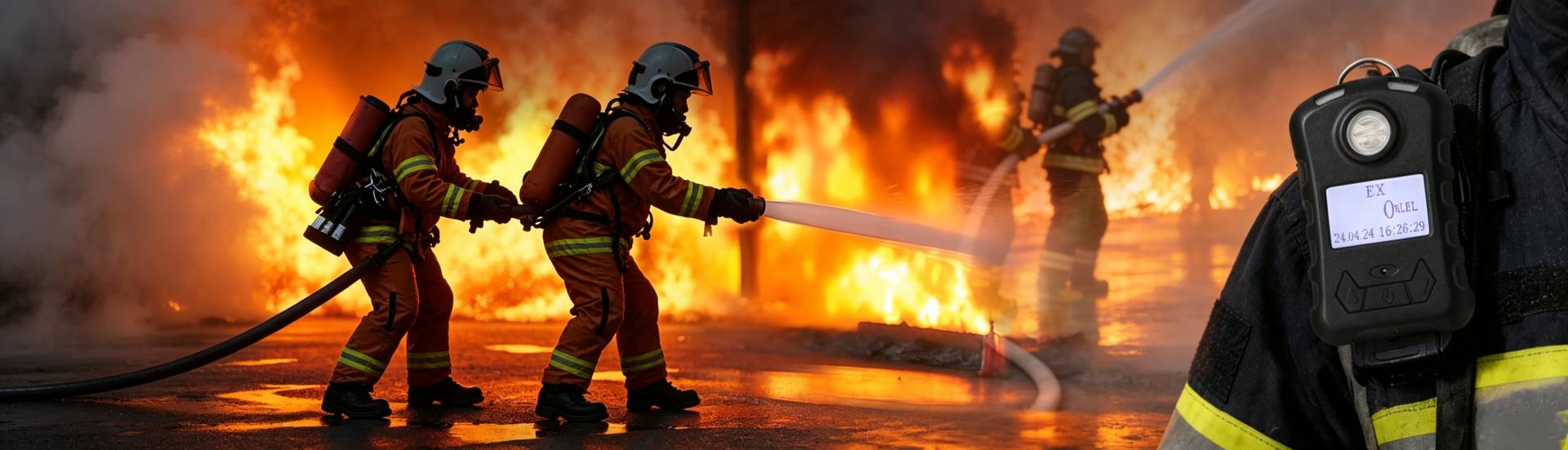
Before firefighters enter the scene of the accident, portable gas detectors can be used to quickly determine whether there are toxic, harmful or flammable and explosive gases, thus providing security for rescue operations.
Naval Architecture and Ocean Engineering
Portable gas detectors are widely used in:
- Cargo hold inspection
- Engine room inspection
- Ballast tank detection
- Safety confirmation before entering confined space
Why is a portable gas detector so important?
Many dangerous gases cannot be recognized by human senses.
For example:
- Carbon monoxide is colorless and tasteless, which can easily lead to poisoning.
- Hypoxia environment can hardly be detected in advance by human body.
- High concentration of hydrogen sulfide will quickly paralyze people’s sense of smell and make people mistakenly think that the danger has disappeared.
- After the combustible gas reaches the explosion limit, it only needs a little fire source to explode.
Portable gas detector can monitor environmental changes in real time around the clock, give an alarm in time before the danger occurs, and strive for valuable evacuation and emergency disposal time for workers, which is an important line of defense for industrial safety.
How to choose a suitable portable gas detector?
When selecting products, we should focus on the following aspects.
Detection of gas types
Firstly, the possible dangerous gases in the working environment are identified, and the corresponding detection scheme is selected.
Sensor type
Select the appropriate sensor technology according to the target gas to ensure accurate and reliable detection.
Number of sensors
According to the actual demand, you can choose:
- Single gas detector
- Four-in-one gas detector
- Five-in-one gas detector
- Luheyi gas detector
- Customized multi-gas detector
Alarm function
Quality products usually have:
- Acousto-optic alarm
- Vibration alarm
- High and low alarm value setting
- STEL (short time contact limit) alarm
- TWA (time weighted average) alarm
Battery life
Industrial sites usually require equipment to work continuously for 18 ~ 24 hours or even longer, so long endurance is very important.
product certification
It is recommended to choose products certified by international authorities, such as:
- ATEX
- IECEx
- UL
- CSA
- CE
- RoHS
These certifications show that the products meet the relevant safety and performance standards and are more suitable for dangerous environments.
Data recording function
Modern portable gas detectors usually support:
- Alarm event record
- Data storage
- USB data export
- Bluetooth communication
- Wireless monitoring
- GPS positioning (some models)
These functions help enterprises to carry out safety management and accident tracing.
Daily maintenance suggestions
In order to ensure the accuracy and reliability of the test results, regular maintenance should be carried out:
- Bump Test shall be conducted before use every day.
- Calibrate the equipment regularly according to the requirements of the manufacturer.
- Keep the sensor air inlet clean to avoid blockage.
- Make sure the battery is fully charged before long-term use.
- Replace the sensor in time after reaching its service life.
- Store the equipment in a dry, clean and suitable temperature environment.
Standardized maintenance can not only ensure the detection accuracy, but also effectively extend the service life of the equipment.
Frequently asked questions (FAQ)
Can the portable gas detector detect multiple gases at the same time?
Sure. Multi-gas detector can monitor a variety of dangerous gases at the same time, the most common of which is the four-in-one configuration, which can simultaneously detect oxygen, combustible gas (LEL), carbon monoxide and hydrogen sulfide.
How often does the portable gas detector need to be calibrated?
The calibration period depends on the manufacturer’s recommendation, sensor type and use environment. It is generally recommended to calibrate regularly according to the manufacturer’s regulations, and carry out impact test before use every day to ensure the detection accuracy.
What is the difference between portable gas detector and fixed gas detector?
Portable gas detector is carried by staff and used to monitor the gas concentration in personal surroundings in real time; The fixed gas detector is installed in a fixed position, which can continuously monitor the specific area for 24 hours and can be linked with the factory alarm system.
Can a portable gas detector detect oxygen?
Sure. Most multi-gas detectors are equipped with electrochemical oxygen sensors, which can monitor oxygen-deficient and oxygen-rich environments in real time to ensure the safety of personnel.


 WhatsApp: 8619339980364
 E-mail: contact@hirepsafety.com