
How to calibrate portable gas detector?
Calibration of portable gas detector is a key link to ensure the safety of operation. Although the operation details of different brands and models are different, the core logic is the same. The following is a simplified general calibration process to help you quickly master the core steps.
The preparation before calibration is very important, which directly determines the effectiveness of calibration. You need to prepare standard zero gas (usually pure air or high-purity nitrogen) and range standard gas (the concentration should match the detection range of the equipment), and check the air tightness of the pressure reducing valve, flowmeter and connecting hose to ensure that the flow rate is stable at 0.5 to 1 liter per minute. The operating environment must be well ventilated and free of interfering gases, and the temperature and humidity are appropriate. Zero calibration is strictly prohibited in the vehicle exhaust or chemical volatilization area.
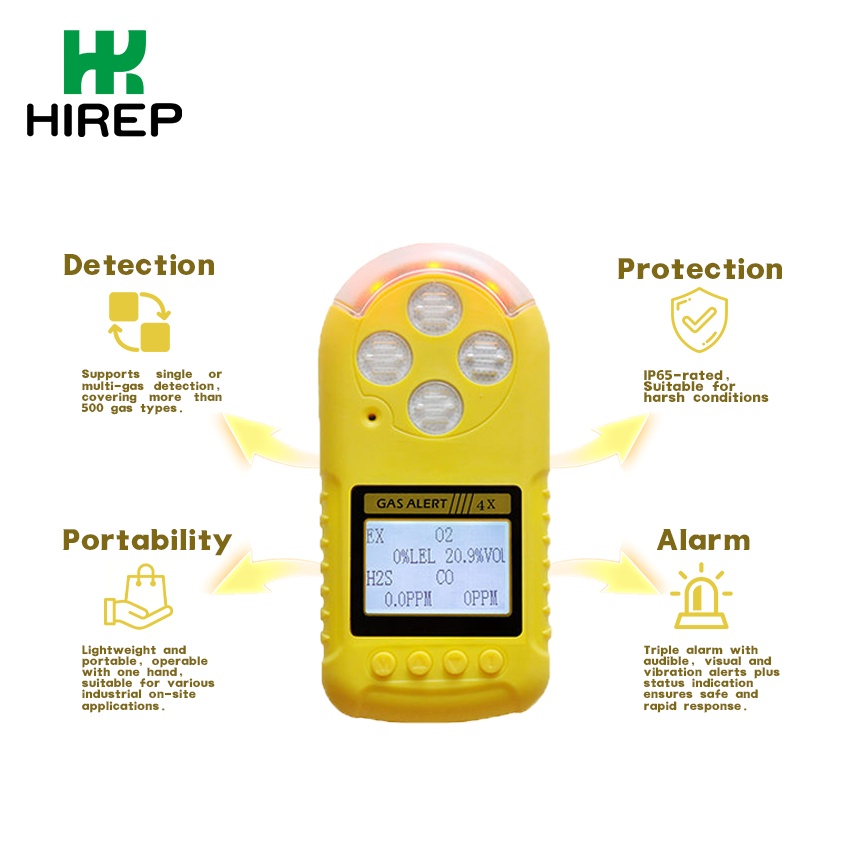
The calibration process mainly includes two core steps: zero point and span. First, zero calibration. After the instrument is turned on in clean air for preheating and stabilization, enter the calibration menu to select zero setting, and introduce zero gas. When the reading is stable, the benchmark will be reset to zero. At this time, the oxygen reading should be corrected to 20.9%, and other toxic and combustible gases should be zero. Then span calibration is carried out, the standard gas cylinder is connected, the standard gas with known concentration is introduced, and the reading is observed to rise to a stable value. Enter the concentration value corresponding to the standard gas in the menu for confirmation, and the instrument will automatically adjust the sensitivity to match the standard value.
After the calibration is completed, the function test must be carried out to verify whether the alarm function is normal, and the calibration date, gas batch number and operation results should be recorded in detail for inspection. It is recommended to conduct a comprehensive calibration every three to six months. If the equipment is repaired, the sensor is replaced or the reading is obviously abnormal, it needs to be recalibrated immediately.


 WhatsApp: 8619339980364
 E-mail: contact@hirepsafety.com