
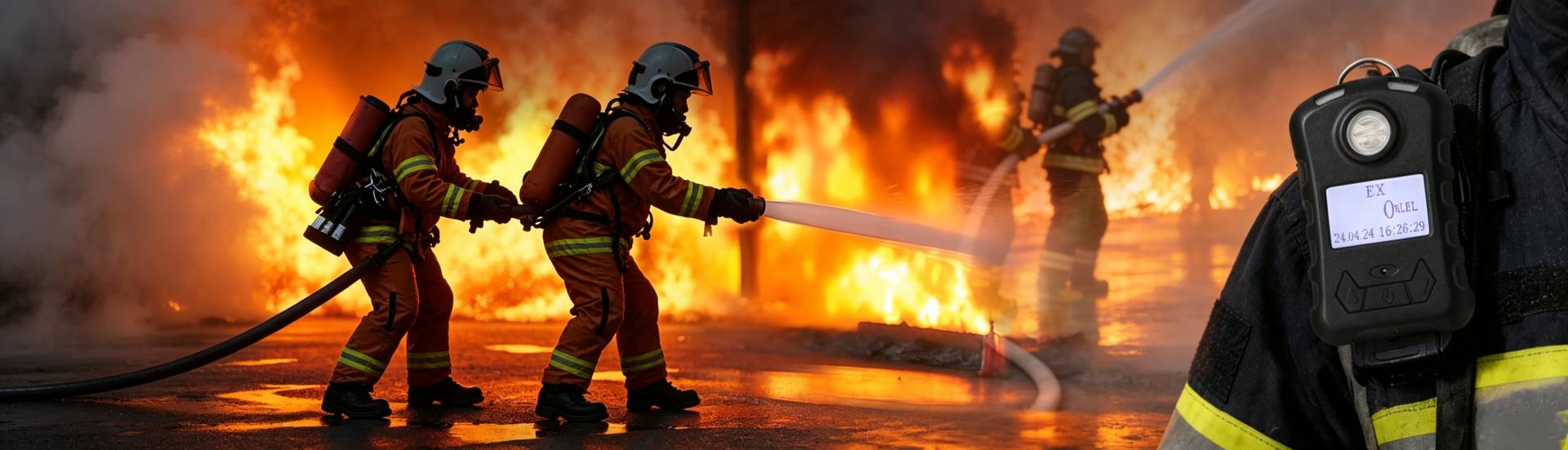
How to use the calibration procedure of fixed gas detector
Fixed gas detector is the core equipment to ensure personnel safety and production compliance in industrial production, chemical parks, gas stations and other scenes, and its detection accuracy is directly related to the reliability of leakage warning. Due to sensor aging, environmental interference and other factors, the detector is prone to reading drift, and regular calibration has become a key link to ensure the normal operation of the equipment. The standardized use of the calibration procedure can effectively correct the deviation and prolong the service life of the equipment. This paper will disassemble its use process, core points and matters needing attention in detail to help the operators standardize the operation.
The premise of using calibration procedure is to make full preparation, which is the basis of ensuring calibration accuracy. First of all, it is necessary to confirm that the calibration environment meets the requirements, and a clean area with no gas to be measured, no strong electromagnetic interference, temperature and humidity controlled at 23 2℃ and humidity of 50 5% RH should be selected to avoid too fast airflow affecting the test results. Secondly, prepare qualified calibration equipment and consumables, including standard gas with measurement certificate, supporting flowmeter, calibration cover, explosion-proof screwdriver, etc. The standard gas should be selected according to the type of detector, and the concentration is preferably about 50% of the full range, and it is within the validity period. At the same time, it is necessary to check the state of the detector, confirm that the equipment is not damaged and the wiring is firm, and power on for 15-30 minutes in advance to ensure the stability of the sensor. In addition, it is necessary to disconnect the detector from the linkage equipment to prevent misoperation during calibration.
The core operation of the calibration procedure is divided into two steps: zero calibration and range calibration, and the order cannot be reversed. Zero calibration is the key to eliminate the sensor baseline drift. First, the calibration cover is tightly sleeved on the detector probe, high-purity nitrogen or clean air is introduced as zero gas, and the flow rate is adjusted to 200-500mL/min. After the reading is stable, enter the calibration mode through the detector button or supporting software, select “zero calibration”, and the system will automatically correct the current reading to 0, and complete the zero calibration after confirmation. If it can’t return to zero, it may be sensor poisoning or aging, so it is necessary to clean the sensor or replace the probe and recalibrate.
After the zero calibration is completed, perform range calibration. Turn off the zero gas, connect the standard gas with the selected concentration, and keep the flow stable. After the detector reading is stable, enter the calibration mode and select “Range Calibration”, input the actual concentration value of the standard gas, and the system will automatically calculate the gain coefficient and complete the calibration. After calibration, it is necessary to blow the sensor with zero gas for 3-5 minutes, and make sure that the reading drops to near zero to ensure the calibration is effective. For the requirement of high precision, multi-point linearization calibration can be adopted, and standard gases with different concentrations are introduced in turn to fit the calibration curve to correct the deviation.
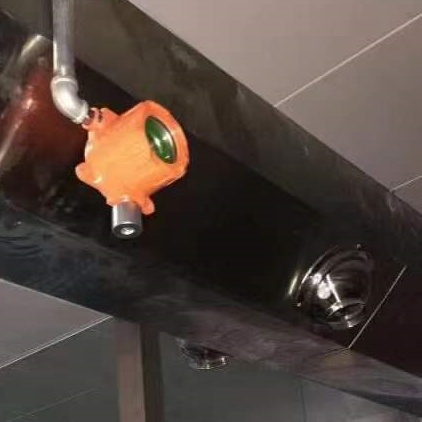
In the process of calibration, the operating specifications should be strictly followed to avoid common misunderstandings. Operators should receive professional training and be familiar with the key functions of the equipment, such as the use of buttons such as “Set”, “Confirm” and “Cancel” to avoid misoperation. The calibration gas path should be sealed to avoid leakage when gas is introduced, otherwise the calibration result will be distorted; At the same time, it is forbidden to expose the detector to gas with concentration exceeding the range, so as to avoid damaging the sensor and shortening the service life. For the calibration of highly toxic gas, it is necessary to wear a positive pressure respirator, use a negative pressure calibration cover, and thoroughly purge the pipeline after calibration to prevent gas accumulation from causing danger.
After the calibration is completed, follow-up verification and recording should be done. By introducing standard gases with different concentrations for cross-verification, the error is ensured to be within 5% fs, and the relative standard deviation of repeatability test is less than 1.5%. At the same time, record the calibration information in detail, including calibration date, standard gas number and concentration, readings before and after calibration, operator, etc., and keep it on file for at least 3 years for inspection by the safety supervision department. Labels shall be posted on qualified equipment to indicate the next calibration date, and unqualified equipment shall be stopped, repaired or replaced immediately.
In addition, it is necessary to follow a reasonable calibration cycle, once every six months under normal working conditions and once every three months in high-risk scenarios. After the detector is repaired, the sensor is replaced or stopped for a long time, it is necessary to conduct full calibration immediately. It is strictly forbidden to put equipment that has not been calibrated or failed to be calibrated into use, otherwise it may lead to leakage and failure to give early warning in time, which may lead to safety accidents.
In a word, the standardized use of calibration procedures for fixed gas detectors is the core to ensure the accuracy and safety performance of equipment. Operators should strictly follow the process of “preparation-zero calibration-range calibration-verification-recording” and control every detail to ensure that the calibration work is compliant and effective, so that the detector can play a reliable role in production safety protection.


 WhatsApp: 8619339980364
 E-mail: contact@hirepsafety.com