
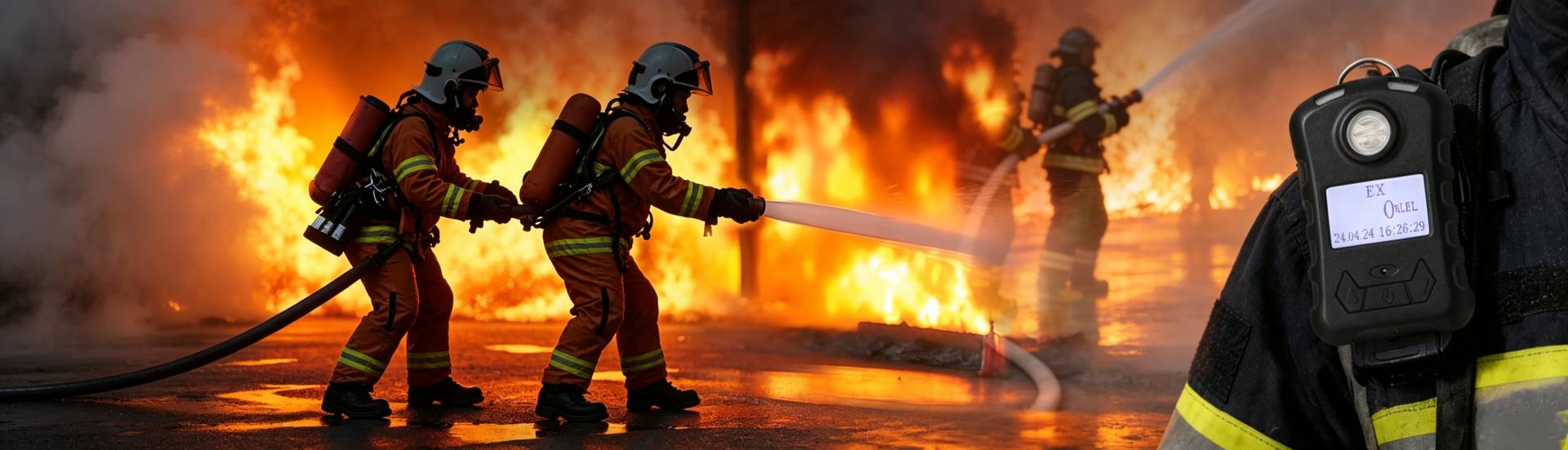
Fixed vs Portable Gas Detectors
In the corners of the factory, between the gaps in the pipes, and in places invisible to the naked eye, the gas is moving quietly. They may be necessary materials for production, or they may be the danger of ambush. On the map of industrial safety, gas detection is always the first line of defense to care for life, and when enterprises start to build this system, a fundamental but key question will always emerge: which one should they choose, fixed or portable?
In fact, this question itself is somewhat misleading. It seems that they are two products on the shelf, so we can only choose one. But people who really understand safety understand that they are more like two sides of the same coin, and they each undertake different missions. The fixed gas detector, like a loyal soldier, stopped moving after choosing the position and watched the area day and night. It doesn’t need to rest, it doesn’t need to change shifts, and it stares at every change in the air for 24 hours. Once the danger is detected, it can not only give an alarm, but also link the whole system, close the valve, start ventilation, cut off the power supply, and control the situation before the personnel arrive. This ability of continuous monitoring is irreplaceable by any portable device.
But the post soldiers also have their limitations. It can only take care of the land under its feet. As for a larger area, more soldiers are needed to stand guard, and the cost will rise accordingly. And once it stands, it is difficult to move. If the process layout of the factory changes, it becomes a fixed decoration there. At this time, the value of portable detector appears. It is ingenious and simple, and it can follow the workers into any local demand detection. On the inspection road, the repair site, and inside the confined space, those blind spots that can’t be covered by fixed equipment are the stage where portable equipment can show its talents. It makes every employee become his own safety caretaker, know his surroundings in real time, and evacuate in time when danger comes.
What kind of equipment to choose is essentially answering several deeper questions. Is there a continuous risk of leakage in your factory? In those storage tank areas, pipeline-intensive areas and around the reaction kettle, gas may escape at any time. In this case, fixed equipment is necessary. Does your employee’s demand frequently enter the temporary operation point? Overhaul, hot work and confined space operation are indispensable for portable equipment in these scenes. What is the budget? The fixed system has a large initial investment, but the long-term operation cost is controllable; The unit price of portable equipment is low, but the demand for consumables and replacement frequency continues to be invested. What are the regulations? In many areas, the safety production laws and regulations clearly stipulate gas detection, which is a hard constraint and not negotiable.
A real and mature security system never makes a choice between the two. The fixed equipment is woven into a monitoring network covering the whole plant, which outlines the basic summary of safety. Portable devices are flexible on this network, filling gaps and extending gaps. When the fixed equipment gives an alarm, emergency personnel enter the site with portable equipment to accurately locate the leakage source. When an employee finds an abnormality with a portable device, the handler can evaluate whether it is necessary to add a fixed monitoring point. The data of the two types of equipment make up for each other, and the fixed supply has a continuous historical record, which is convenient for trend analysis; Portable records of changes in the operation process provide a basis for safety assessment. Only by integrating them can we present a complete security picture.
The lucky thing about the new factory is that it can be planned from scratch. In the design stage, the layout of the fixed system is considered comprehensively, and according to the process danger, equipment distribution and personnel activities, the operation team is equipped with satisfactory portable equipment together. Existing factories need to make an assessment first, identify the blind spots of the existing system, give priority to installing fixed equipment in high-risk areas, and gradually improve the network. In any case, equipment is just a thing, and talent is the center. Employees need to understand the working principle of the equipment, grasp the correct use method and know how to respond after the alarm. Timing calibration and protection can’t be ignored. Sensors will age and the accuracy will decrease. Only by timing calibration as required and establishing clear records can we ensure that each device is in good condition.
Safety is, in the final analysis, respect for life. Every investment in gas detection and every attention to alarm are practicing this responsibility. Fixed and portable, like the two wings of the security line, can’t soar without either side. Wise enterprises will build the best combination of the two according to their own risk characteristics and handling needs, so that every practitioner can work in a safe environment and return to his family safely. This is not only the responsibility of enterprises, but also the most basic promise of industrial civilization to life.


 WhatsApp: 8619339980364
 E-mail: contact@hirepsafety.com