
Fixed Multi Gas Detector: The Complete Guide for Industrial Continuous Gas Monitoring
Understand how the fixed multi-gas detector can realize stable and reliable industrial all-weather gas monitoring, covering core functions, main application scenarios, selection methods and maintenance points, and help enterprises implement compliance management of safety production.
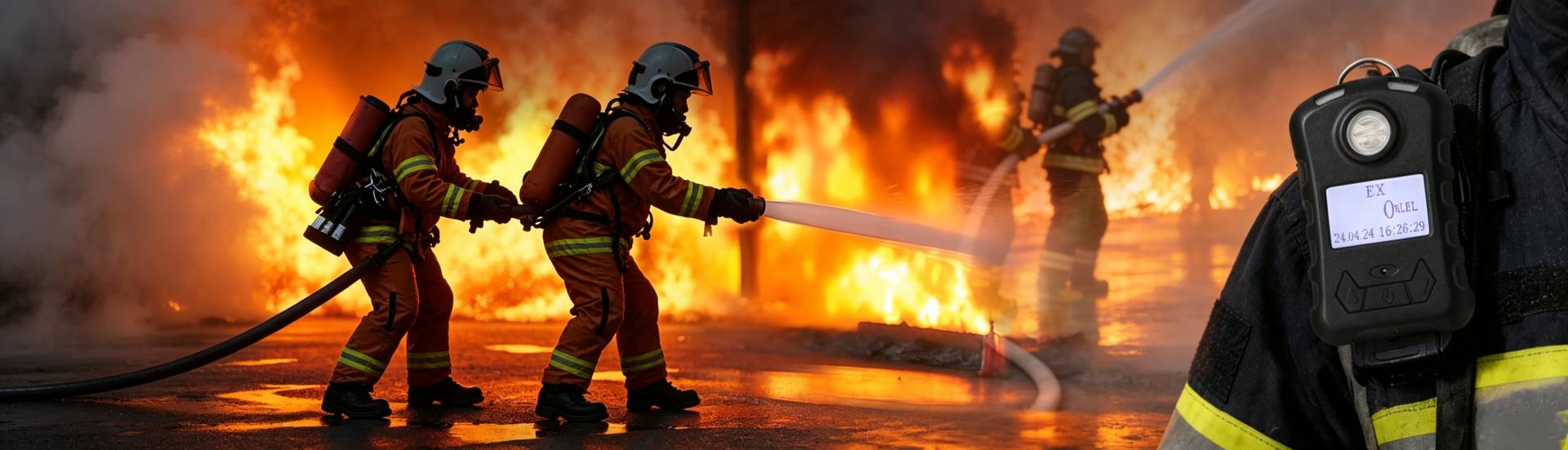
Oil and gas, chemical workshops, sewage treatment stations, battery energy storage stations and other industrial sites have long-term risks of flammable and toxic gas leakage. If the gas accumulation can not be monitored in time, it will easily lead to personnel poisoning, fire and explosion accidents, and cause irreversible losses to enterprise personnel and equipment assets. Different from the portable gas detector which relies on manual inspection, the fixed multi-gas detector can realize all-weather and uninterrupted real-time monitoring, and it is an important safety equipment for the prevention and control of modern industrial safety hazards.
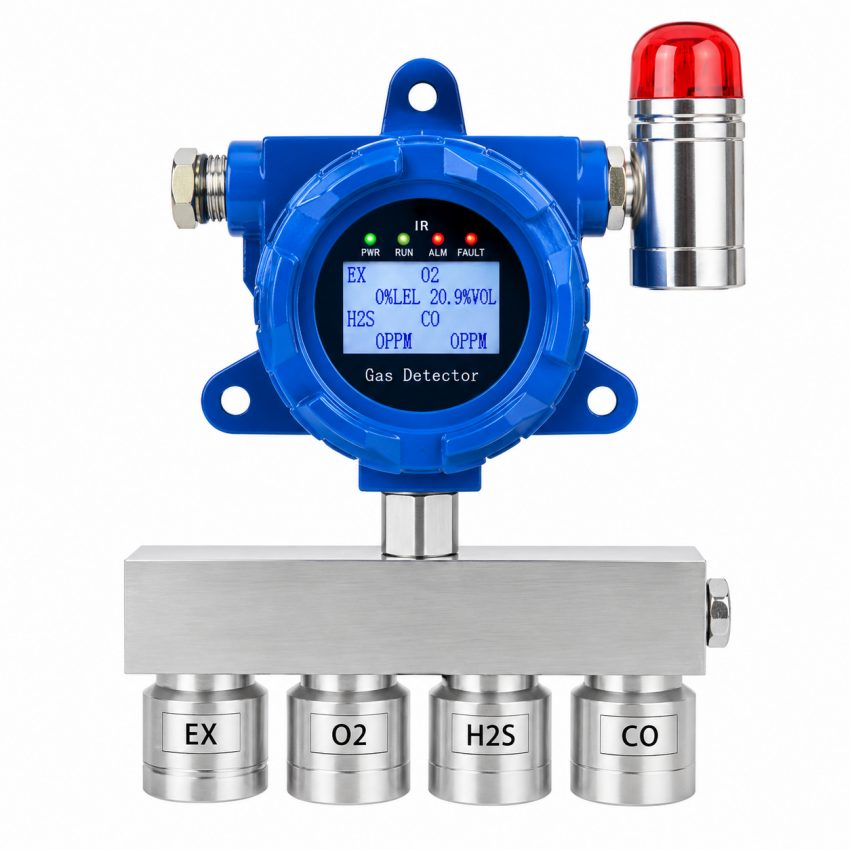
The fixed multi-gas detector is a wall-mounted and long-term online monitoring device, equipped with multiple groups of high-precision independent sensors, which can simultaneously detect 2 to 8 kinds of dangerous gases, including combustible gas (lower explosive limit LEL), oxygen, carbon monoxide, hydrogen sulfide, volatile organic compounds (VOC) and so on. When the gas concentration exceeds the preset safety threshold, the equipment will immediately trigger the local acousto-optic alarm, and transmit the real-time monitoring data and alarm records to the programmable logic controller (PLC), distributed control system (DCS) or special gas alarm host through industrial common signals such as 4-20mA and RS485 Modbus, and at the same time, it can be linked with exhaust system, emergency cut-off valve and other equipment to realize automatic emergency protection.
The core advantage of fixed multi-gas detector lies in its stable and all-weather monitoring ability without manual attendance, which can effectively reduce the monitoring blind spots caused by manual intermittent inspection, and is suitable for various high-risk and unattended industrial areas. Compared with installing multiple single gas detectors separately, the integrated multi-gas detection design can effectively reduce the site installation cost, wiring workload and equipment occupation space, and optimize the enterprise safety management budget.
Industrial fixed multi-gas detector usually adopts explosion-proof shell, with protection level of IP65/IP66, and can obtain relevant explosion-proof certifications such as ATEX and IECEx according to product configuration, which can adapt to high temperature, high humidity, dust and corrosive harsh industrial environment, maintain stable operation and reduce the risk of equipment failure. The equipment adopts modular sensor design, which can quickly replace the sensor and complete periodic calibration without disassembling the whole machine, thus greatly reducing the downtime of the equipment and reducing the later operation and maintenance costs.
Scientific selection and standardized maintenance are the keys to ensure the accuracy of detection. Enterprises need to select the corresponding sensors and detection ranges according to the type and risk level of on-site gas: catalytic combustion sensors are suitable for combustible gas detection; Electrochemical sensors are suitable for the detection of toxic gases and oxygen; Infrared sensors have a long service life and are usually used to detect gases such as carbon dioxide and refrigerants. In areas with explosion hazards, explosion-proof equipment that meets the requirements shall be selected in strict accordance with the classification of hazardous areas such as Zone 0, Zone 1 and Zone 2 and relevant explosion-proof standards.
Daily operation and maintenance should follow the relevant industrial safety standards: it is recommended to conduct a functional test once a month to check the alarm response and sensitivity of the equipment; Zero and range calibration shall be conducted every 6 to 12 months. Regularly cleaning the dust-proof filter screen of the sensor and checking the line connection and equipment operation state can effectively avoid the deviation of the detection data, ensure the monitoring accuracy for a long time, and meet the requirements of industrial safety compliance review of enterprises.
In a word, the fixed multi-gas detector is an indispensable safety facility for industrial gas hazard warning. With the advantages of stable all-weather monitoring capability, good environmental adaptability and convenient operation and maintenance, the equipment can help enterprises to timely investigate gas safety hazards, standardize the safety management system and meet the requirements of relevant international industrial safety standards.


 WhatsApp: 8619339980364
 E-mail: contact@hirepsafety.com