

Gas detection system in chemical industry: intelligent upgrade from passive response to active defense
In the chemical industry, safety is the lifeline of development, and gas leakage is the “sword of Damocles” hanging overhead. With the development of Industry 4.0 and intelligent manufacturing, the traditional gas detection has already gone beyond the scope of single alarm and evolved into an intelligent security defense system integrating perception, analysis and decision-making. This paper will analyze how modern gas detection system can build an iron wall of active defense for chemical enterprises from four dimensions: products, accessories, solutions and core values.
Product Selection: Constructing “Nerve endings” of Multidimensional Perception
In the complex chemical scene, there is no universal sensor, only the most matching technology combination. The core of product selection lies in “adapting to the atmosphere and adapting to the environment“.
The first is the precise matching of technical principles. For flammable and explosive gases, such as hydrogen and methane, catalytic combustion sensor is an economical and applicable choice, but it is easy to fail in oxygen deficiency or high concentration environment; The infrared (NDIR) sensor, by virtue of its “anti-poisoning and calibration-free” characteristics, has become the first choice for large tank farms and harsh environments. For the trace leakage of volatile organic compounds (VOCs), photoionization detector (PID) has become an “eagle eye” with its sensitivity of ppb. In the open area, the open-circuit laser gas detector can form an invisible “light wall” to achieve effective coverage of a large area.
Secondly, the adaptation of form and function. As a “sentinel”, the fixed detector is responsible for 24-hour continuous monitoring; The portable detector is the “personal bodyguard” of the inspection personnel, which has the functions of data recording and wireless transmission to ensure the absolute safety of the personnel when entering the confined space. In addition, for the tiny leakage of high-pressure pipelines or valves, the ultrasonic gas leakage detector can identify the sound frequency and capture the leakage signal before the gas diffuses.
Accessories selection: the “immune system” to ensure the long-term operation of the system
Accessories are not only the link to connect the equipment, but also the key to ensure the system to “survive” and “measure accurately” under bad working conditions.
- Sampling pretreatment system: this is a “purifier” to deal with high temperature, high humidity and high dust environment in chemical industry. Through the heat tracing pipeline, condenser and multi-stage filtration device, the sample gas entering the sensor is ensured to be clean and dry, and the temperature is appropriate, so as to prevent the sensor from “choking” due to flooding or blockage.
- Explosion-proof and protective components: chemical areas are mostly inflammable and explosive, and accessories such as explosion-proof junction box, glen head and stainless steel explosion-proof flexible pipe must meet strict explosion-proof grade (such as Ex d IIC T6). These seemingly inconspicuous accessories are the last physical barrier to block the spread of sparks and prevent secondary disasters.
- Calibration and test accessories: In order to ensure the legal effect of data, high-precision standard gas and flow control devices must be equipped. Regular zero calibration and span calibration, combined with special calibration cover, can ensure that the detector is always in the “best competitive state”.
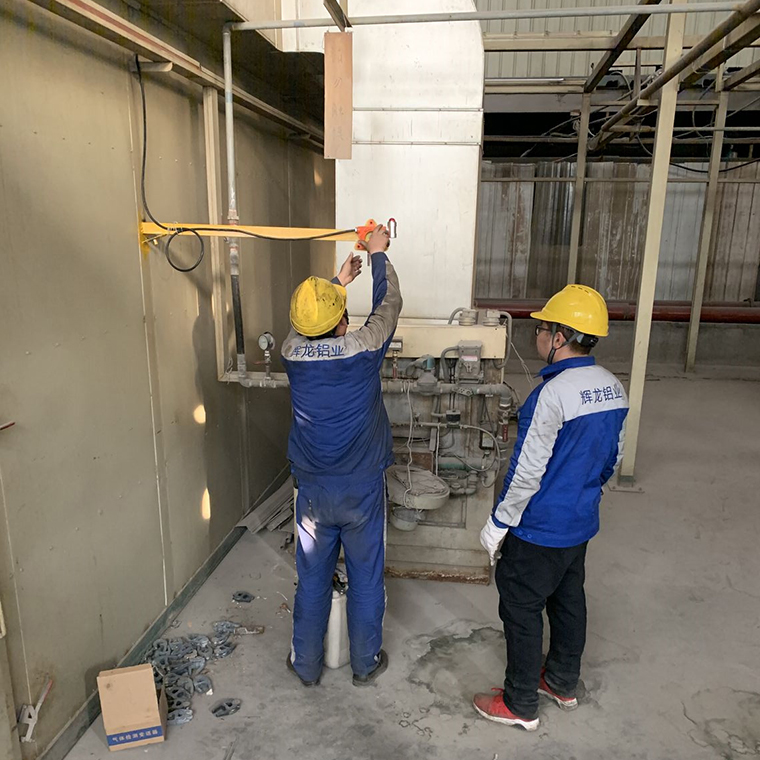
Solution: Create a “smart brain” with global coverage
A single device is just an island, and an excellent solution is to connect the island into a continent to realize three-dimensional prevention and control from “point” to “surface” and then to “body”.
A mature solution usually includes three levels:
- Front-end sensing layer: According to the process flow chart (P&ID) and hazard and operability analysis (HAZOP), scientific points are arranged at high-risk points such as compressor, flange interface and tank breathing valve to form a monitoring network without dead ends.
- Transmission and control layer: Real-time transmission of front-end data to gas alarm controller (GDS) or distributed control system (DCS) using industrial bus (such as RS485 and Modbus) or wireless LoRa/NB-IoT technology.
- Application and linkage layer: this is the “brain” of the solution. When the gas concentration is detected to exceed the standard, the system not only sends out an audible and visual alarm, but also can automatically interlock to start the fan, cut off the emergency cut-off valve, turn on the spray dilution device, and link with video monitoring to capture the scene picture. For large chemical parks, the cloud platform can also use big data to analyze leakage trends and achieve predictive maintenance.
Value Embodiment: Double “Moat” of Safety and Benefit
Investing in gas detection system is essentially to buy an all-weather “safety insurance” and “benefit accelerator” for enterprises.
- Life first, compliance exemption: the most direct value lies in preventing poisoning, suffocation and explosion accidents and ensuring the safety of employees. At the same time, the perfect detection system is a strong proof that the enterprise meets the requirements of “Safety Production Law”, “Design Standard for Detection and Alarm of Combustible and Toxic Gases in Petrochemical Industry” and other laws and regulations, thus avoiding legal risks and huge fines.
- Protect assets and reduce losses: if a tiny leak is not found in time, it may lead to paralysis of the whole production line or even shutdown of the whole plant. Through early warning, the gas detection system can nip the accident in the bud and protect expensive equipment and huge production capacity.
- Digital transformation, cost reduction and efficiency improvement: Modern gas detection system integrates safety data into the enterprise’s industrial Internet system through digital interface. This not only reduces the frequency and risk of manual inspection, but also optimizes the equipment maintenance cycle through data analysis, prolongs the sensor life, and realizes the cost reduction and efficiency improvement of safety management.
To sum up, the construction of gas detection system in chemical industry is a systematic project that integrates materials science, optics, electronics and information technology. Through scientific product selection, rigorous accessory configuration and intelligent solutions, enterprises can not only obtain a sensitive “smell system”, but also build a set of active defense security ecology, which will escort the continuous, stable and efficient operation of chemical production.


 WhatsApp: 8619339980364
 E-mail: contact@hirepsafety.com