
What Gas Detection Systems Do Refineries Need to Configure?
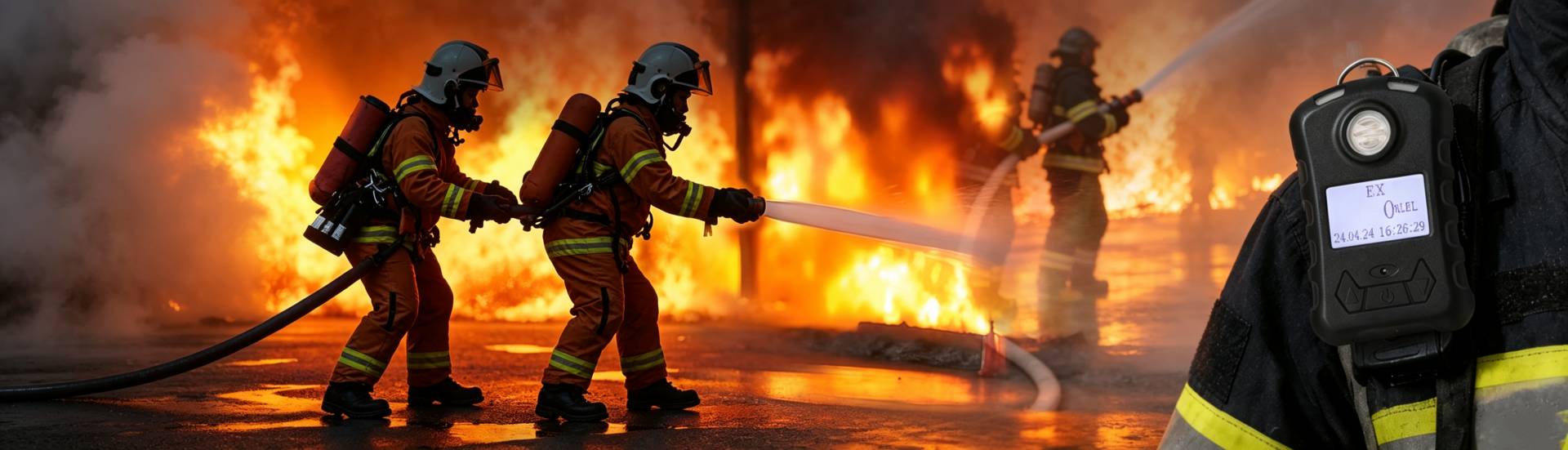
Refineries involve complex production processes, including crude oil processing, catalytic cracking, hydrogen production, storage tank management and fuel transportation. During these operations, gas leakage may occur in pipelines, valves, compressors, storage tanks and production equipment. Without effective monitoring measures, gas leakage may lead to fire, explosion or serious personnel poisoning accidents.
Therefore, a reliable gas detection system is an important part of refinery safety management. Different production areas need to choose appropriate gas detection equipment according to the existing gas types, potential leakage sources and on-site working environment.
Combustible Gas Detection System
Combustible gas detection is a very important part of refinery safety protection. Methane, propane, butane, hydrogen and other hydrocarbons may leak during refining, storage and transportation.
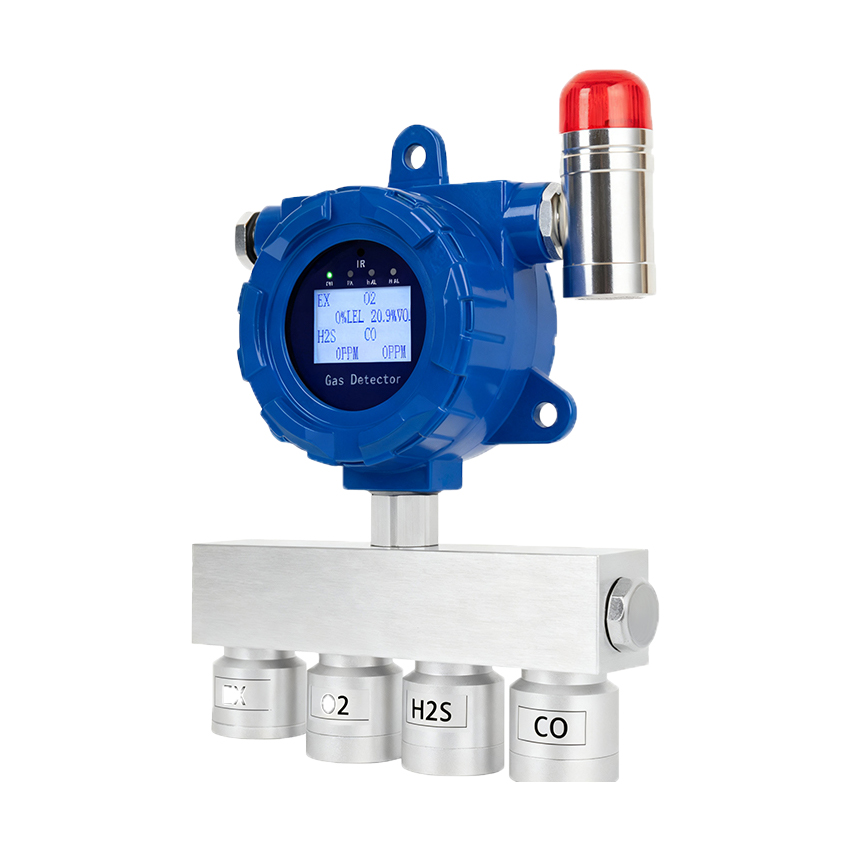
Stationary combustible gas detectors can continuously monitor the gas concentration around potential leakage points, and are usually installed near pipelines, compressors, pump sets, storage tanks and production devices.
Most combustible gas detectors take the percentage of the lower explosion limit (LEL) as the measurement unit. When the gas concentration reaches the preset alarm value, the system can start the acousto-optic alarm device or send an alarm signal to the factory control system.
For industrial sites that need continuous monitoring, a fixed gas detector supporting 4-20mA or RS485 output can be selected and connected to the gas alarm controller, PLC or DCS system to realize centralized monitoring.
Toxic Gas Detection System
In the production process, oil refineries may come into contact with or produce a variety of toxic gases, including hydrogen sulfide (H2S), carbon monoxide (CO), sulfur dioxide (SO2) and ammonia (NH3).
Among them, hydrogen sulfide is a dangerous gas that needs to be paid attention to, and high concentration exposure may lead to serious poisoning. H2S gas detectors are usually installed in crude oil processing units, sulfur recovery units, sewage treatment areas and other places where there may be a risk of H2S leakage.
Carbon monoxide monitoring is mainly used in combustion equipment, industrial furnaces and areas where incomplete combustion may occur. Other toxic gas detectors need to be selected according to the specific chemicals used or produced on site.
The fixed toxic gas detector can realize continuous monitoring, while the portable gas detector can help workers to check the air environment before entering the dangerous area.
Oxygen Deficiency and Oxygen-Enriched Environmental Monitoring
Oxygen detection is also very important in refineries, especially in the process of tank cleaning, container maintenance, pipeline inspection and confined space operation.
Insufficient oxygen concentration may lead to hypoxia or even suffocation, while excessive oxygen concentration will increase the risk of combustion.
The oxygen concentration in normal air is about 20.9% VOL. According to the commonly used industrial safety criteria:
-
The oxygen concentration is lower than 19.5% VOL, which is usually considered as an anoxic environment.
-
The oxygen concentration is higher than 23.5% VOL, which is generally considered as an oxygen-enriched environment.
Portable multi-gas detector equipped with oxygen sensor can help workers check oxygen concentration before entering confined space and during operation, thus reducing operation risk.
Portable Multi-Gas Detection System
Fixed gas detector can realize continuous monitoring in the area, but it can’t completely replace personal portable gas detection equipment.
Maintenance personnel, patrol inspection personnel and outsourced construction personnel in refineries often need to move between different production areas, and the gas environment in different areas may change at any time. Therefore, portable multi-gas detector is very important for personal safety protection and confined space operation.
Common four-in-one gas detectors can usually monitor the following four gases at the same time:
-
Combustible gas (LEL)
-
Oxygen (O2)
-
Hydrogen sulfide (H2S)
-
Carbon monoxide (CO)
In the process of refinery equipment maintenance and emergency inspection, the portable multi-gas detector equipped with sampling pump can help workers to detect the internal gas concentration in advance before entering storage tanks, pipelines and closed equipment.
HIREP provides portable multi-gas detection solutions suitable for industrial environment. Among them, HRP-B1000-C Portable 4-in-1 Gas Detector can be used to monitor combustible gas, oxygen, carbon monoxide and hydrogen sulfide, which is suitable for various industrial working environments with gas risks.
Integration of Fixed Gas Detection System
The gas detection system in oil refinery should not only be composed of several independent detectors. In order to realize effective safety monitoring, each detection device needs to establish communication connection with centralized alarm and control system.
A typical industrial gas detection system usually includes fixed gas detector, gas alarm controller, signal transmission equipment and acousto-optic alarm device.
According to the project requirements, the detector can transmit gas concentration data through 4-20mA, RS485 or other supported communication interfaces. The monitoring system can display the gas concentration, identify the alarm position, record abnormal events and send signals to the factory PLC or DCS system.
HIREP HRP-T2000-G Fixed Multi-Gas Detector can be used as one of the equipment choices for industrial fixed gas monitoring.
For toxic gas monitoring requirements, HRP-T2000-C Fixed LCD Toxic Gas Detector can be considered according to the target gas and technical requirements of the project.
How to Choose a Suitable Gas Detection System for Refinery?
When selecting gas detection equipment, the refinery needs to make a detailed evaluation of the production process and potential gas leakage sources.
Different gases need different sensor technologies. For example, catalytic combustion or infrared sensors can be used to monitor combustible gases, while electrochemical sensors are widely used to detect toxic gases and oxygen.
The installation location of equipment shall be determined according to the layout of production equipment, gas characteristics, ventilation conditions and potential leakage points. At the same time, it is necessary to consider the density of the target gas and judge whether it is lighter or heavier relative to the air, so as to reasonably select the installation height and position of the detector.
In addition, the refinery also needs to comprehensively consider the following factors:
-
Site ambient temperature, humidity and other environmental conditions.
-
Explosion-proof grade and protection grade requirements of equipment.
-
Sensor response time and detection accuracy.
-
Convenience of equipment installation and post-maintenance.
-
4-20mA, RS485 and other communication interface requirements.
-
Sensor calibration cycle and daily maintenance requirements.
A perfect gas detection system usually needs to combine fixed gas monitoring, portable personal protection and centralized alarm management. By selecting appropriate detection equipment for different application scenarios, the refinery can improve the early warning ability of gas leakage, reduce the risk of production and operation, and provide reliable guarantee for safe production.


 WhatsApp: 8619339980364
 E-mail: contact@hirepsafety.com
