
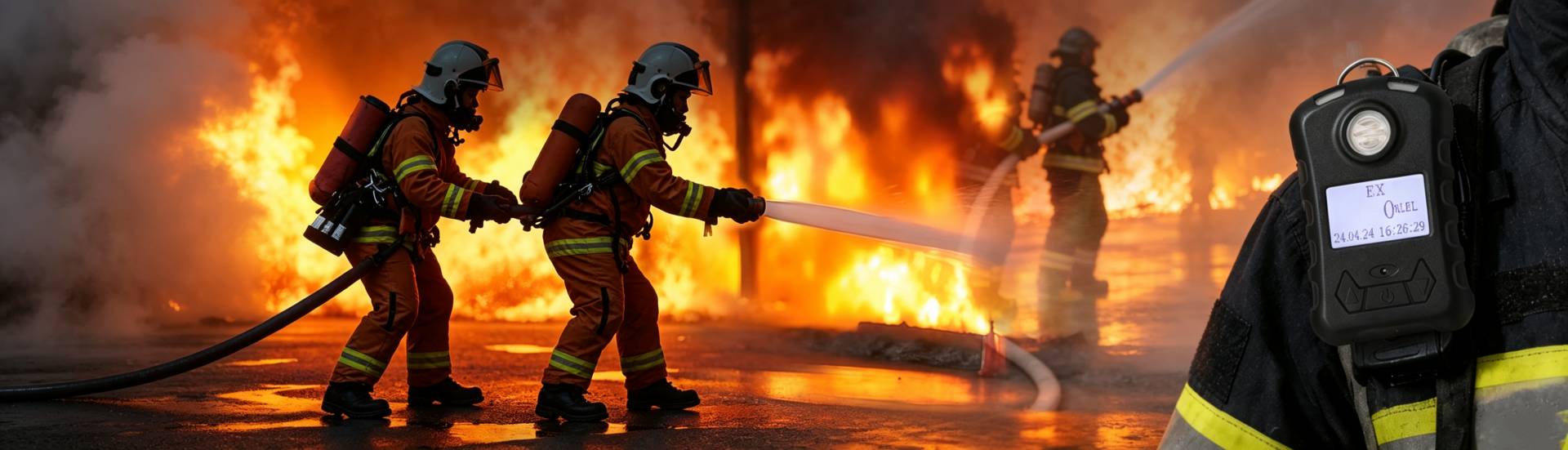
Portable 4-in-1 Gas Detector for Industrial Safety
I. Common Gas Risks in Industrial Environment
Gas leaks are not always easy to find. In oil and gas facilities, chemical plants, mines and sewage treatment plants, workers may face risks such as abnormal concentration of combustible gas, toxic gas or oxygen. Especially in confined space, gas is easy to accumulate, and the danger is often difficult to detect in time.
Portable 4-in-1 gas detector can monitor a variety of gases through one device, which is suitable for equipment inspection, maintenance and confined space detection.
2. What Gases Can Be Detected by the Four-in-One Gas Detector?
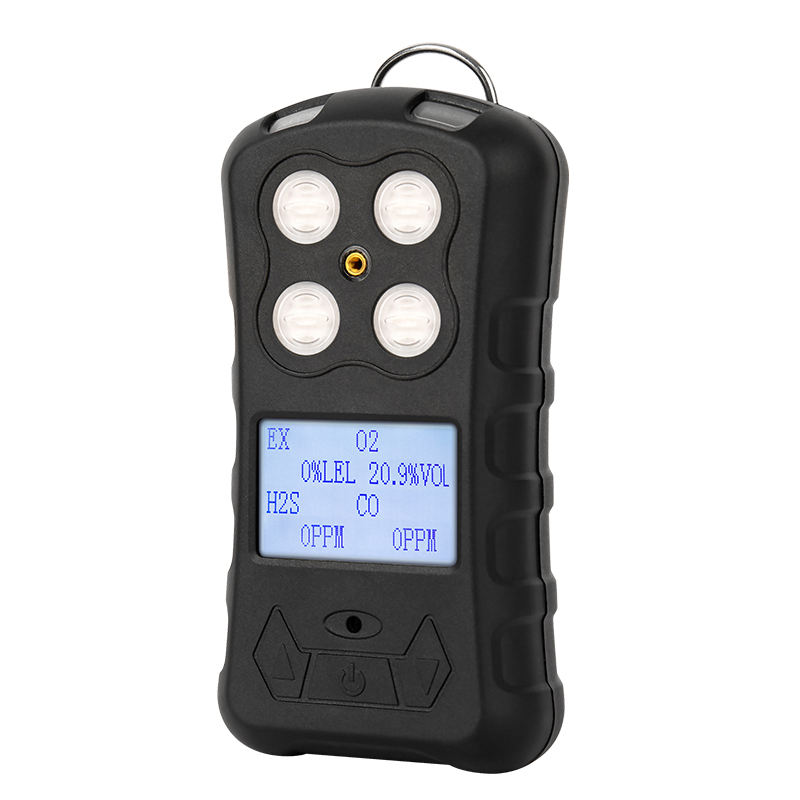
Common four-in-one gas detectors mainly monitor the following four gases or indicators:
- Flammable gas (LEL): Helps identify the concentration of flammable gas that may cause fire or explosion.
- Oxygen (O): Monitor the oxygen concentration, and find out the oxygen deficiency or oxygen enrichment in time.
- Carbon monoxide (CO): Detection of a toxic gas that may be produced by incomplete combustion.
- Hydrogen sulfide (HS): Monitoring toxic gases that may exist in sewers, sewage treatment facilities and oil and gas operation sites.
The specific gas to be detected depends on the equipment model and sensor configuration. Before purchasing, you should first understand the possible gas risks in the working environment, and then choose equipment with corresponding sensors and suitable measurement range.
Third, the Main Application Scenarios of Portable Gas Detector
Portable multi-gas detector is widely used in industrial sites where the gas environment may change with the operation.
In the oil and gas industry, workers can use the detector to check the gas status of pipelines, storage tanks and equipment maintenance areas. In chemical plants, gas detectors can be used for equipment inspection and daily maintenance to help staff find potential risks in time.
Sewage treatment plants and underground drainage systems may have problems such as insufficient hydrogen sulfide, combustible gas and oxygen. Gas detection is also very important before entering storage tanks, manholes and other confined spaces.
The specific monitoring method should be determined according to the site conditions. For confined space operations, the staff should follow the established entry procedures and continuously monitor the gas concentration according to the risk assessment requirements.
4. How to Choose a Suitable Portable Four-in-One Gas Detector?
When choosing a portable gas detector, you can’t just look at how many gases the device can detect. Sensor configuration, measuring range, alarm function, battery life and environmental protection performance are all factors to be considered.
A clear display screen is convenient for workers to quickly read the gas concentration, while sound, light and vibration alarm are helpful for workers to find abnormalities in a noisy environment in time.
Routine maintenance is equally important. Before use, check the state of the equipment, conduct collision test according to the manufacturer’s requirements, and arrange calibration according to the specified period to ensure the normal detection performance of the equipment.
Five, HRP-B1000-C Portable Four-in-One Gas Detector
For industrial users who need portable multi-gas monitoring, they can learn about HRP-B1000-C portable four-in-one gas detector.
This model is used to monitor combustible gas, oxygen, carbon monoxide and hydrogen sulfide. The equipment is equipped with LCD display screen, which is convenient for users to check the gas concentration readings and give an alarm when the preset alarm conditions are reached by means of sound, light and vibration.
The equipment can be used for industrial site inspection, equipment maintenance and gas detection. Before purchasing, it is recommended to confirm whether the sensor configuration, measuring range and related certification meet the requirements of the actual working environment.
6. How to Ensure the Reliability of Gas Detection Results?
Only when the gas detector is used correctly and maintained regularly can it play a better role. Before each use, the equipment should be checked to confirm that the alarm function is normal, and the function test and calibration should be carried out according to the manufacturer’s requirements.
If the equipment gives an alarm, the staff should take measures according to the on-site emergency procedures and evacuate the dangerous area immediately if necessary. The alarm should not be ignored or eliminated only by modifying the alarm settings.
Choosing appropriate detection equipment and establishing standardized gas monitoring process will help industrial enterprises to find potential dangers in time and provide more reliable safety guarantee for on-site operations.


 WhatsApp: 8619339980364
 E-mail: contact@hirepsafety.com
